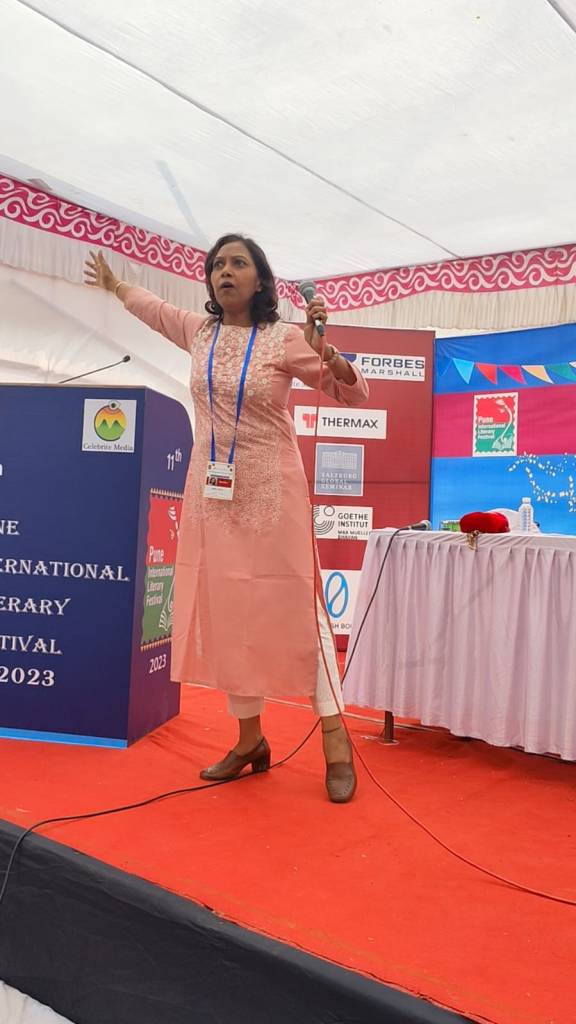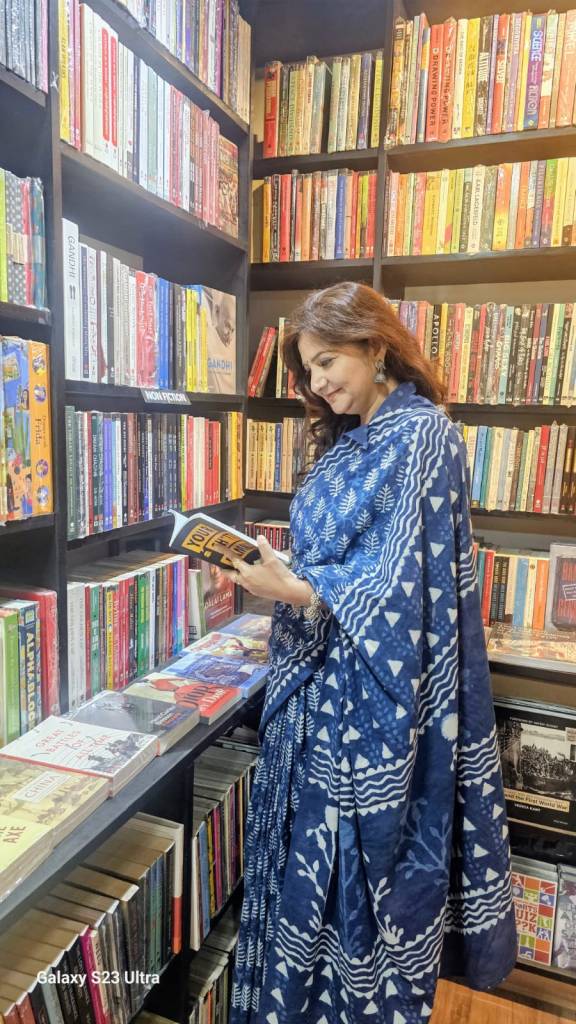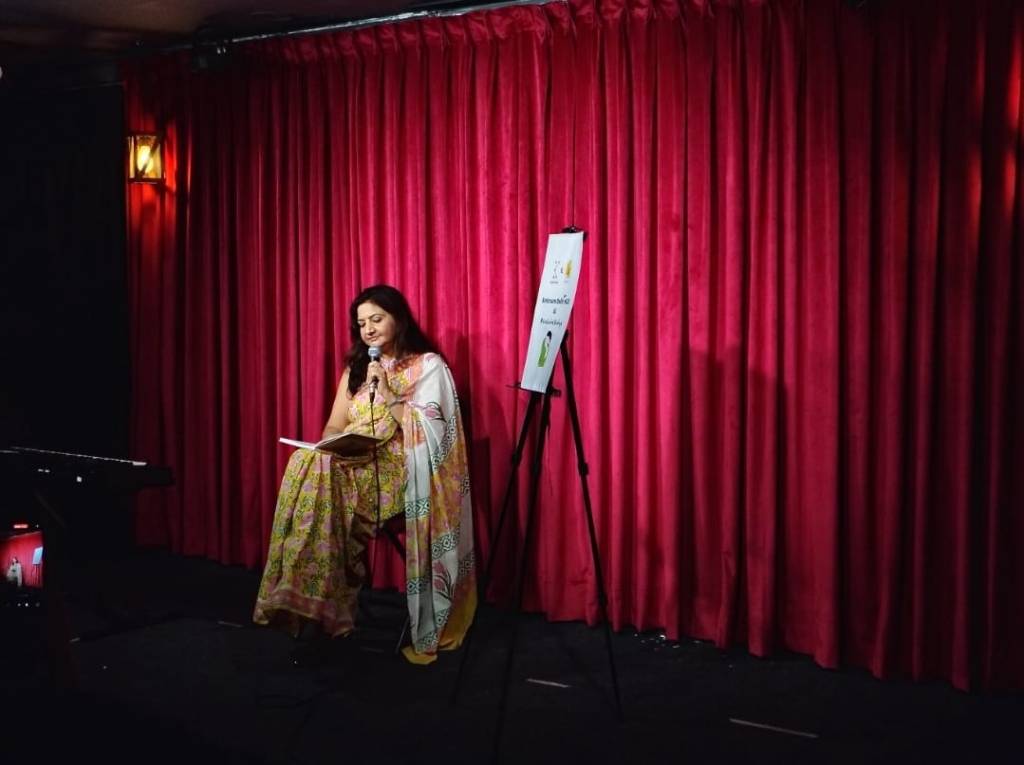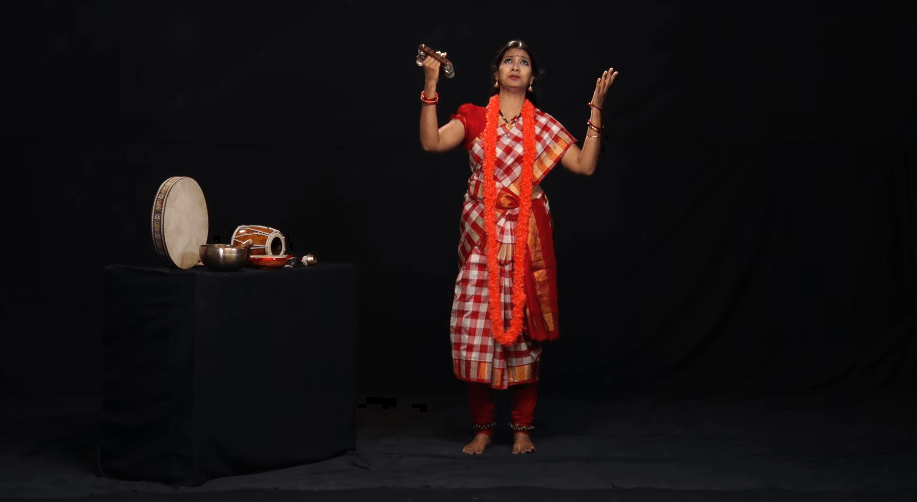
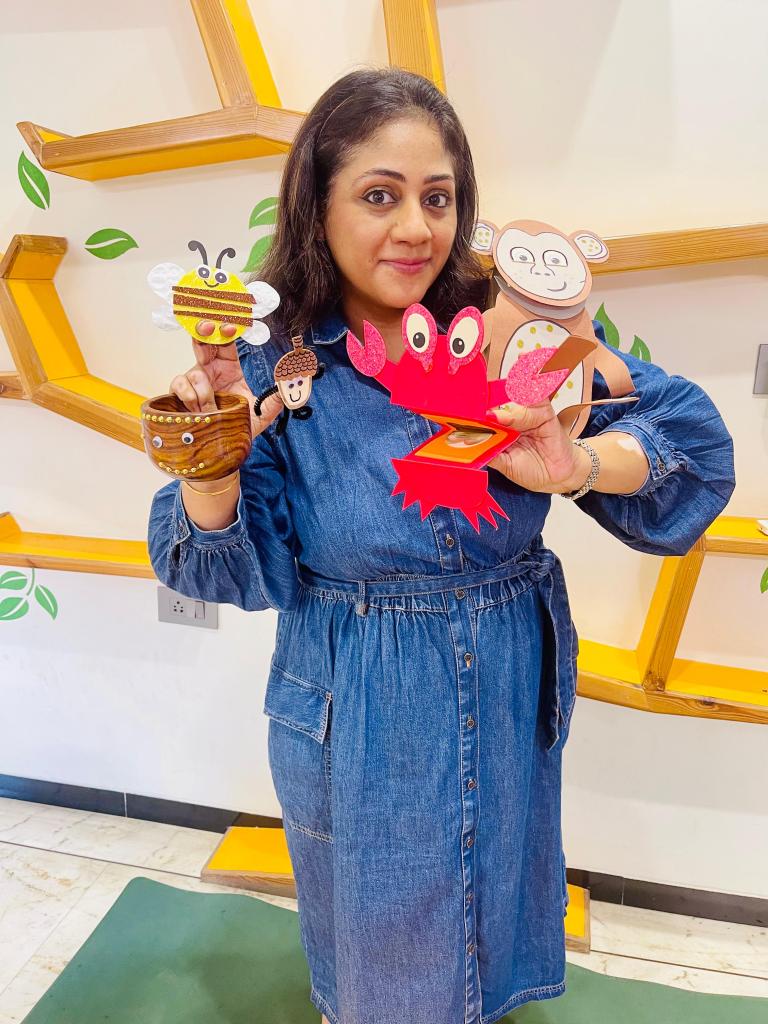
“Thinking Hearts and Storytelling Minds” – Interview with Tripat

Your career journey?

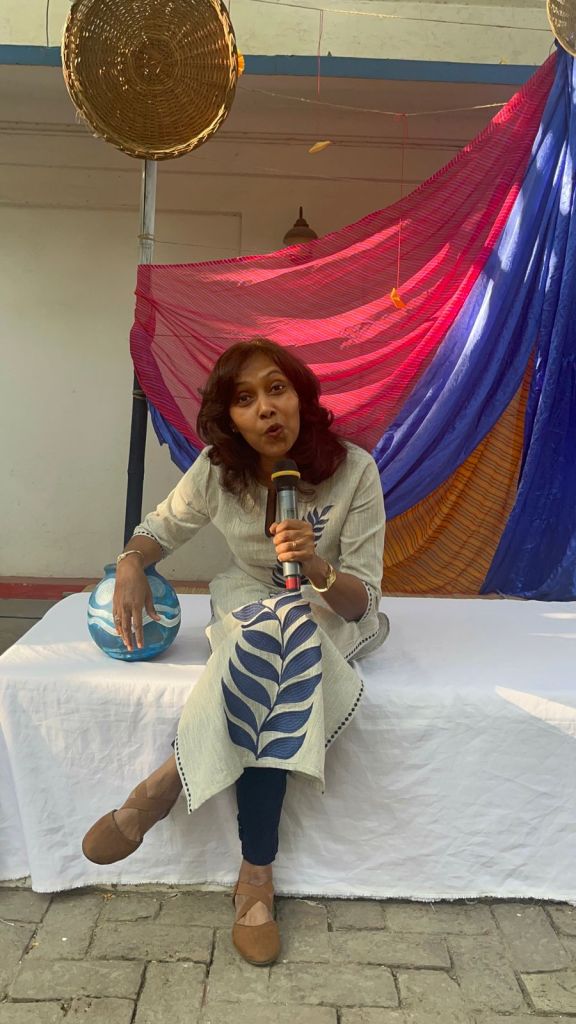
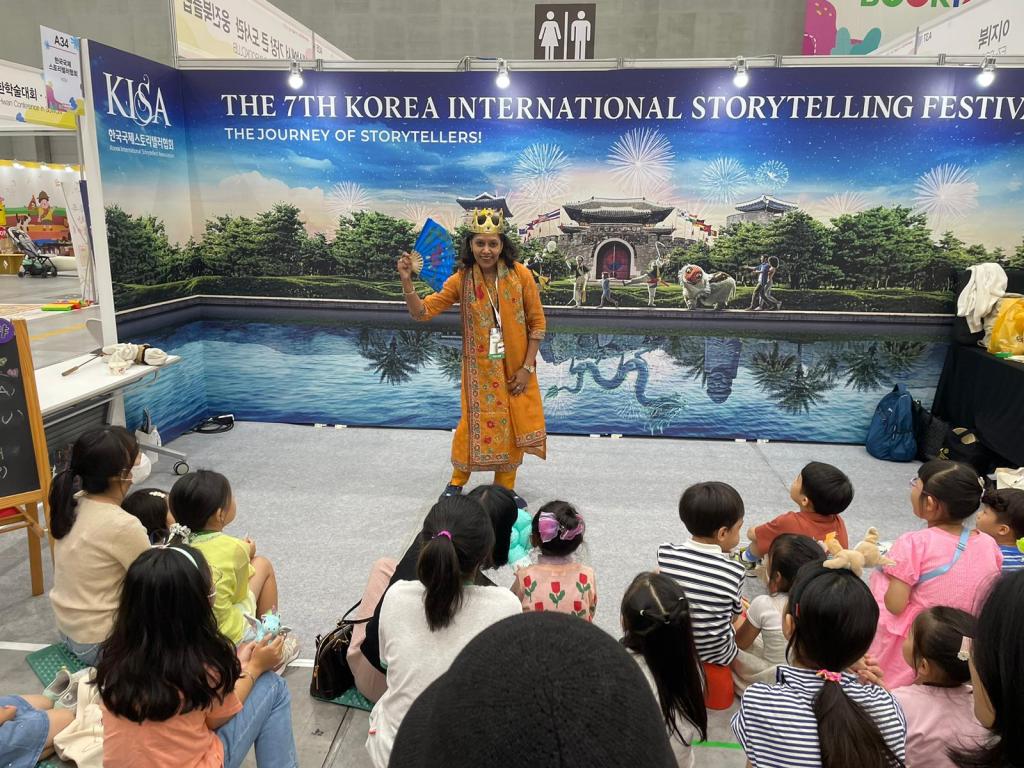
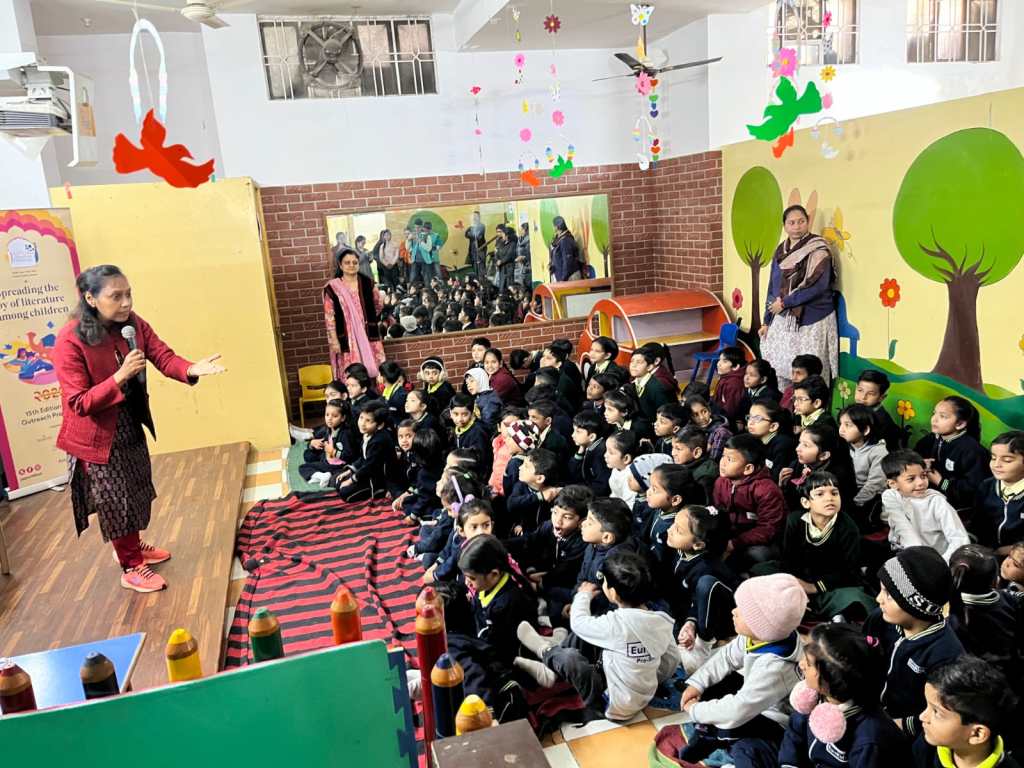
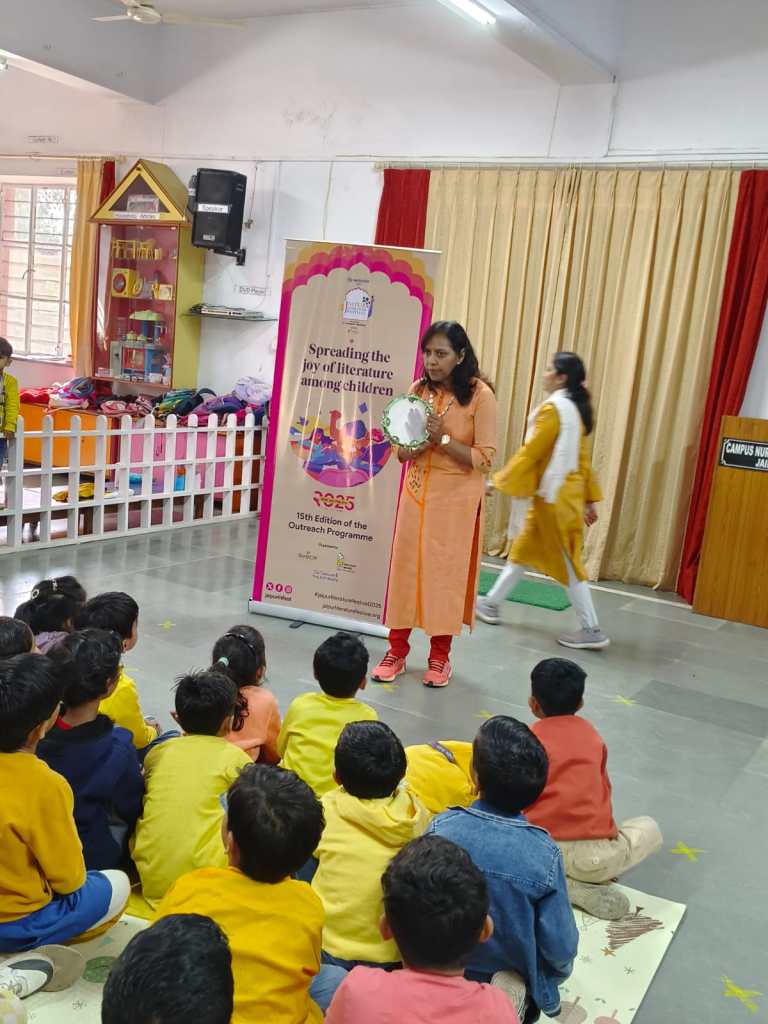
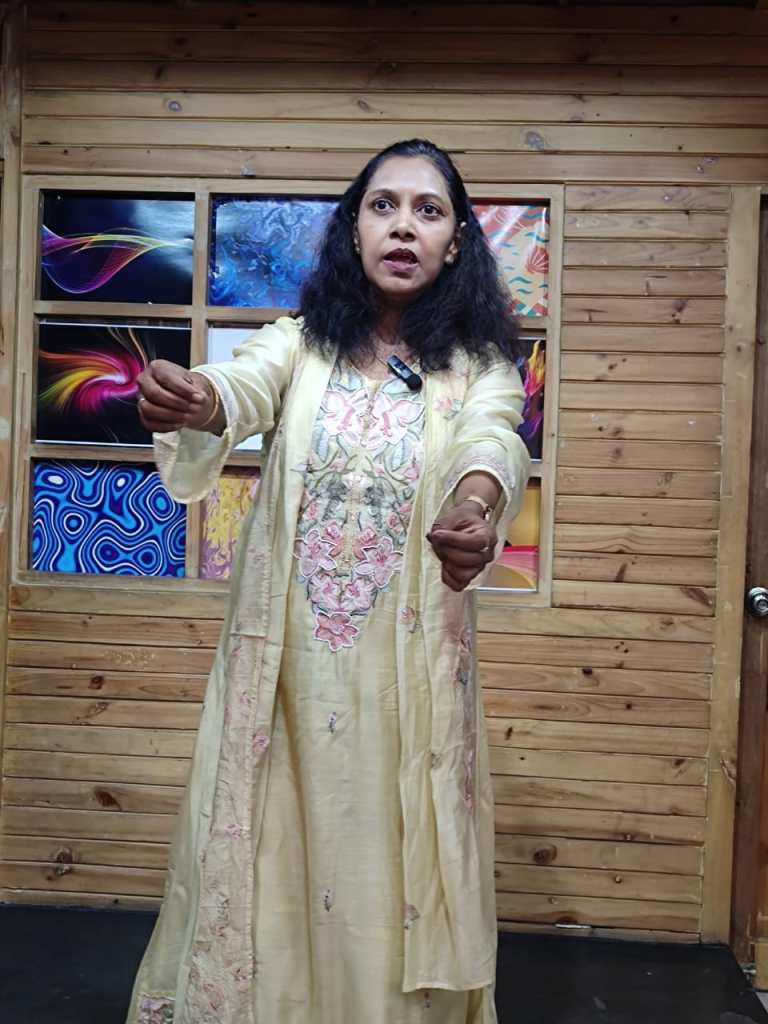
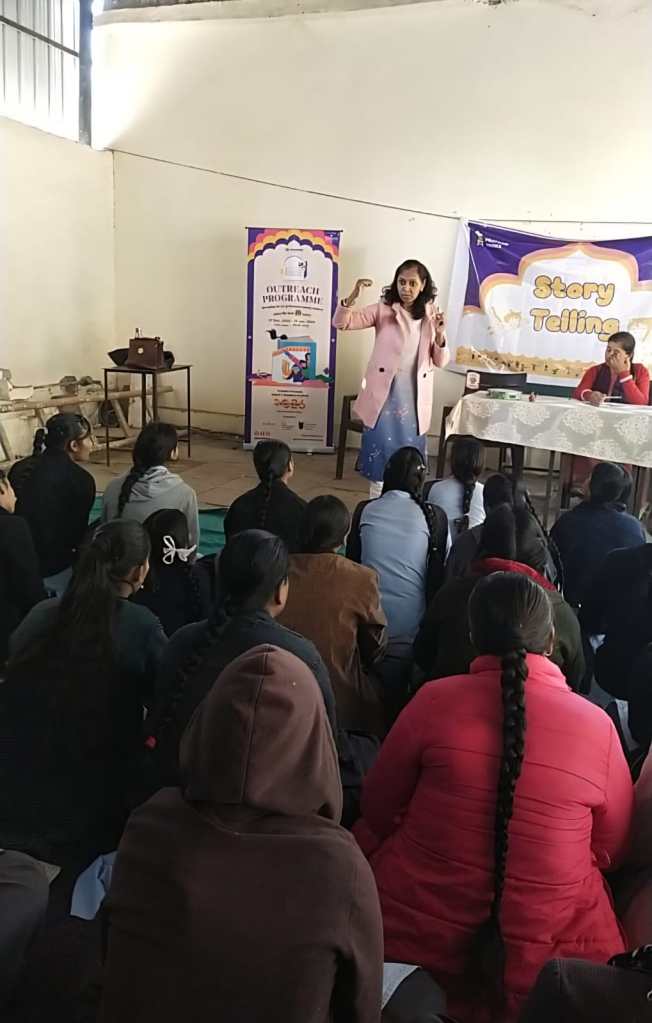
I started as an MBA aspirant and did an MBA with Marketing as the main subject and Finance as the minor subject. I was in the banking sector. I was doing well. However, it was not what I wanted to do. Banking was not filling my cup. We shifted from Mumbai to Ahmedabad. I was not travelling so much with the kid. I started Thinking Hearts. We would not contract with anyone. Ours is a nomadic brand. We would take our bag of stories with us and share the stories, one story at a time. I have seen the magic unfolded at that time. Someone in the audience is seeing opportunities and possibilities through the story. The audience can explore the world through stories – Korea, Japan etc,. If there is a white tiger in the story, they try to understand the white tiger. They try to see the real story. What is the real story in “Three for free” a Taiwanese tale about how a mountain was eaten. The story is about how the top half of the mountain was eaten by a group of greedy villagers when the mountain was offered as food by the Mountain deity. Such stories have different meaning for different people. The basic theme in this story is that there is nothing free in this world.

Could you talk about your organisation Thinking Hearts?

Thinking Hearts is inspired by my child’s uninhibited ability to express and identify what he would in the world. Recently I attended a theatre workshop by Micheal Chekov. During this workshop he talks about a quote, “Artists think with their hearts and feel with their minds.” From around the 1935 to 1945 a practitioner thought of the Thinking Hearts Philosophy. I had joined this workshop for learning movement, expressions etc, and found out about this older philosophy also called Thinking Hearts.

I just gave Thinking Hearts all I have. We don’t sign any contracts. We have done free workshops in Ahmedabad – NGO schools and kids events.

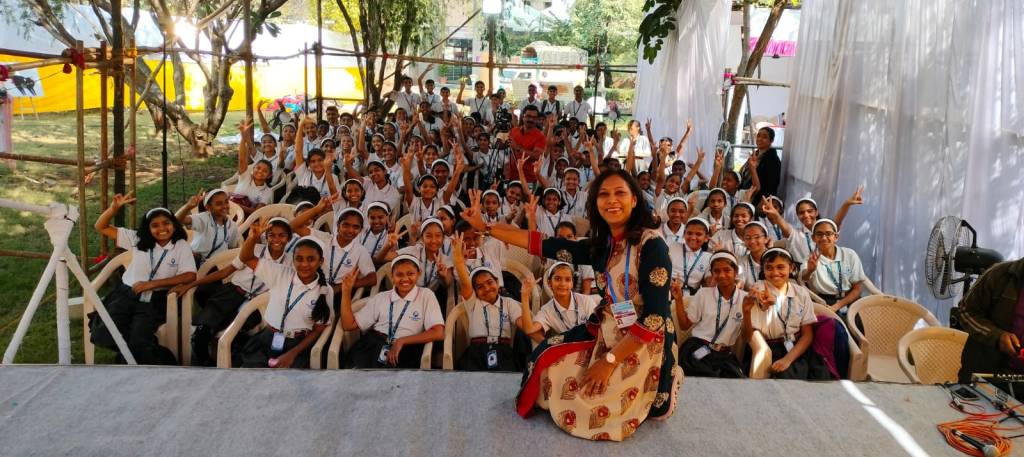
When I do a storytelling session the kid’s eyes just light up. They are following you like a CCTV camera. They just feel and take it all in. The moment that is most important, the aha moment – i do my best for that.

Could you talk about your storytelling mentors?

My mentors have been Geeta Ramanujam, Roger, Shiela Wee, Kiran Shah and Jeeva Raghunath.

I met Geeta Ramanujam two years in the Himalayas where she was doing a Storytelling Certification Course. I had heard a lot about her. In the first class she made a deep impression. She would mould herself to do something transformational. She has become an expert at this.

I met Roger when he visited Ahmedabad for 5 days – sharing stories and sharing how to deliver the stories to adults. It was a lot of soul food. I learnt how to connect with audiences.

Geeta Maam taught about different types of listening. She taught us about how audiences feel when they listen to a story. The heart becomes a part of the core.

I met Shiela Wee and Kiran Shah as a part of FEAST. They spoke about how to capture your story, expressions while telling a story, how you the storyteller can feel what the audience feels when they feel a story.

I am doing a mentorship with Jeeva Raghunath maam on storytelling for adults.

Could you talk about you being a mentor to your storytelling audience?

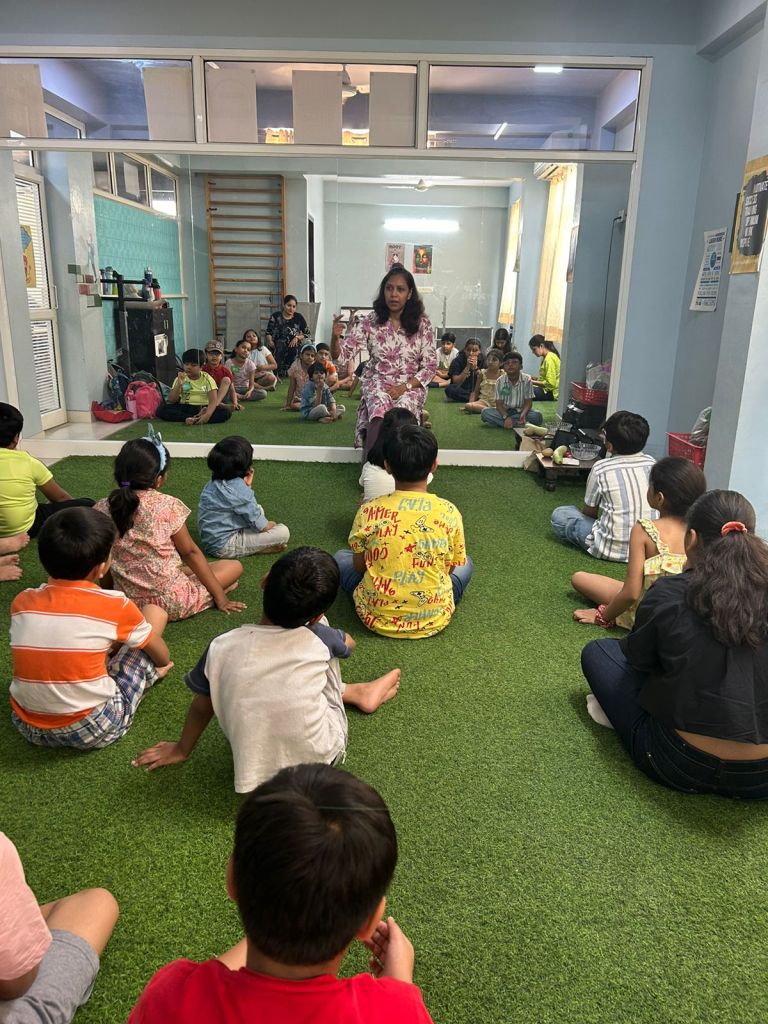
Every child comes from a different ecosystem. They all embrace different value systems, different ways of thinking. I can’t judge, I can’t mould. It is my duty to listen well. I listen to how their voice and language is changing after the story. The children do creative journalling. They do work around the story – Where the story came from? What book the story was originally from? If they can make a puppet or some prop with which they can share the story when they get home. How they see the story differently? We work together on story structure modules.

A child who has been silent through 8 sessions speaks up in the 9th session. The story in hand is of a mermaid being captured by a boat. So, the child speaks up and says put a tracking device on the mermaid. He was 5 years old and was not even able to say the words clearly. I asked him several times. Then we sat with him for three sessions to understand his perspectives on the stories and he had some much to share. My work is done.

Could you talk about your storytelling style?

My style is more participative. That’s why I attend theatre workshops too. I have learnt that even a little gesture matters. I usually end the sessions with hands on activities. In the story of the three dolls, I teach children about friendship. The Prince doesn’t know how to choose his friends. All children ask – Is she my friend? Is he my friend? Sometimes children feel left out in a group. The question was how to present such a story in front of children, I made mud dolls with the Kumhar, potter. I sat with him and made three distinct dolls with straw placed in the ear and the other end in a different location for each of the three dolls. The child can visualize which type of friend she or he wants –

One who hides all secrets

Or One who does not share knowledge with you

Or One who hears gossip about you and tells you instead of participating in this gossip

Where the straw is placed on the dolls helps the child visualize these scenarios. The question that is asked of the audience is – which doll do you want to be?

There is this story of a single grain of rice. A girl wins a bet with a Raja for getting a single grain of rice in front of five of the villagers. It is interesting how the story unfurls. The Raja agrees to double the rice, everyday for the next 30 days. On the 30th day, 56 elephants carry the rice into 4 storerooms. I had made 56 cut outs of elephants for this. By doubling the quantity of rice Brahma Bulls etc, are needed to carry the sacks of rice.

So the story goes –

32 Brahma Bulls carrying the rice.

56 elephants carrying the rice

Even a little child has some takeaway.

Could you talk about the distinguishing features of Indian stories, as compared to world folktales?

In Indian stories you find everyday life blending with the divine. There is a lot of complexity in Indian stories, moral complexity – ‘what is the truth?’ There is a lot of diversity – stories from Gujrat, Nagaland, Kerela – with different languages, different values. Food stories, different types of stories. There are a lot of sources for stories the Panchatantra, the Katha Sarit Sagara.

Could you talk about your personal favourite story?

I like the trickster spider tales – the Anasi stories. My personal favourite story is a Bantu story, “The story of the tree.” In this story, the animals get together when there is a famine and the winner is the underdog. The story speaks in 100 voices. There is wisdom and wonder.
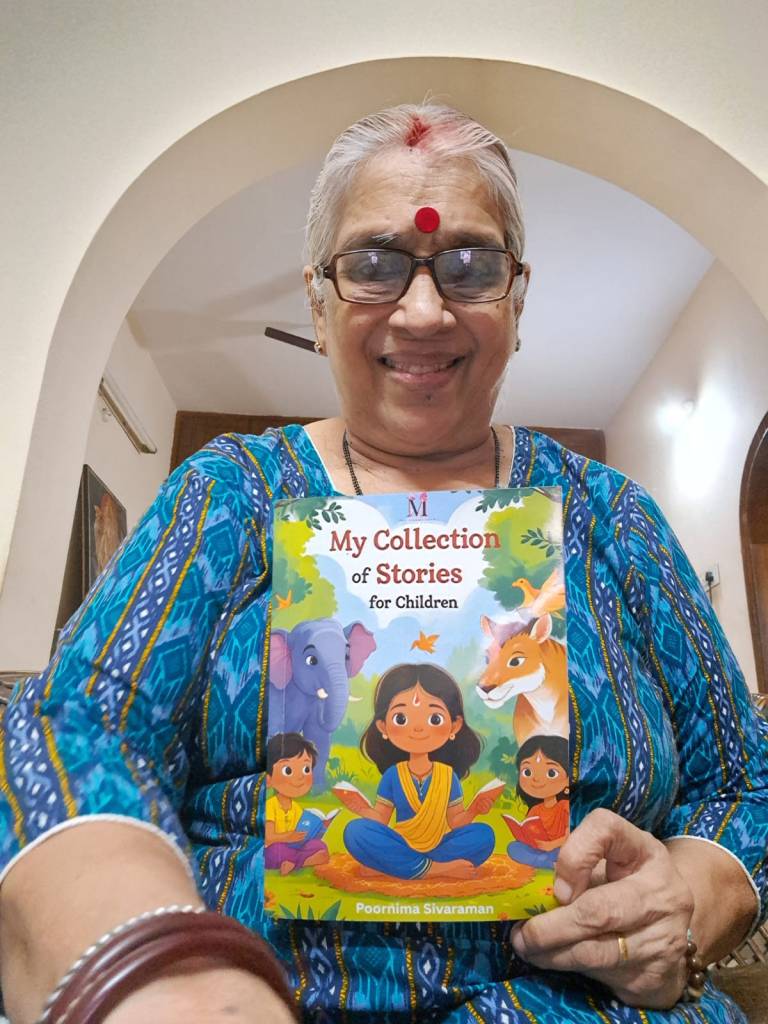
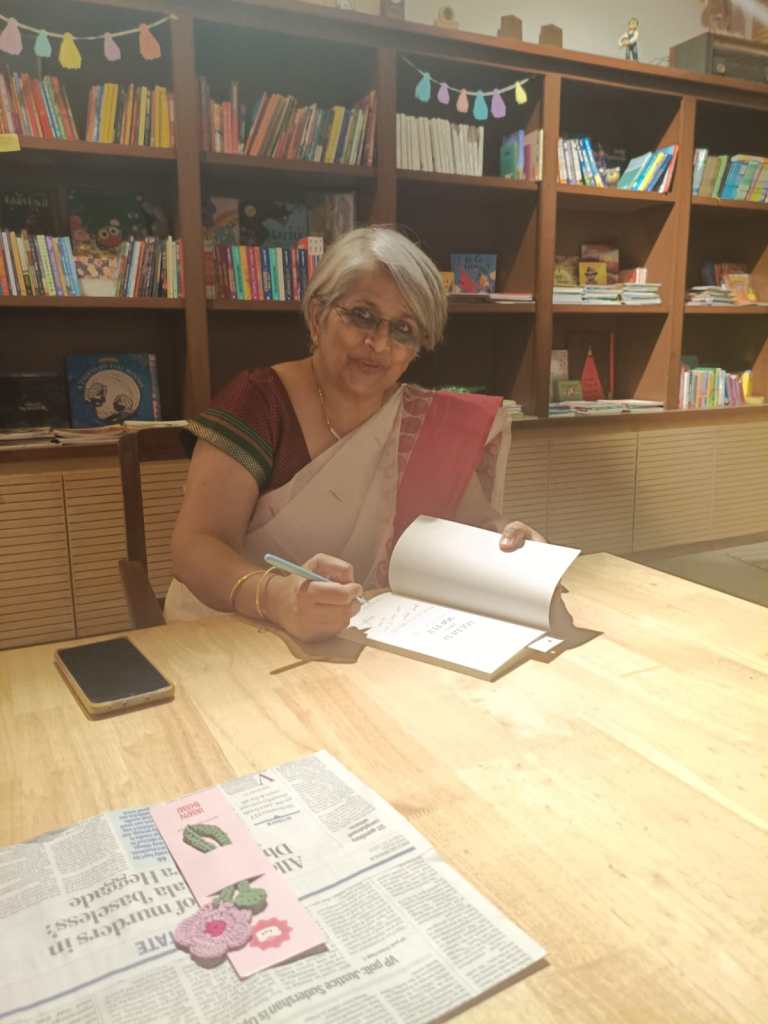
“Teaching, Writing and Storytelling – all for a good cause” – Interview with Poornima Sivaraman

Could you talk about your career journey in writing?

My journey in writing started with writing a diary when my father used to bring back diaries from his office. In 1989 when I moved from Patna to Pune we had a Remington typewriter. I started typing articles which got published in the Indian Express. They would give topics like ‘Write about your mother’. They would pay for this 100, 150 Rs. Life went on, my children got married. My writing career began again slowly during the covid time. At this time, there started a platform called Momexpresso. Typically, here the stories would be 100 words, 300 words, 500 words. It was my main time to write. Unfortunately, the platform closed down in 2023. I was on a poor digital model then. I thought I had saved everything, but I lost all my writing. Everything was gone. Being a psychology student, and trying to find a solution I created a group for MomExpresso. I started writing again for TMC – The Momma Clan run by Harshita Udani. We would give writing goals – 600 words, one line, self prompts etc. I soon had content ready for a book. Being a teacher, I wrote small small stories. Harsita Udani, was also a publisher and she asked, ‘when do you want to publish?’ I decide to publish for my 75th Birthday in June. Harshita got all the illustrations made. The book got published and 80-85 copies sold. I also donated 15 copies. One of the schools, bought five copies for the library. I have published in 4 anthologies. I want to slow down. But maybe I will surprise people with new writing next year.

Could you talk about your knowledge system? Your value system?

As I grew up I saw my mother and grandmother – how they took care of my family. My values are very simple. When someone is distressed, I try to help them. I do my duty. God has given a lot to us – two times to eat, a home to stay. God has made us all different from each other so that we can all learn from each other. We often crib about everything. In winter about the cold, in summers about the heat. We keep cribbing. This is not good. My philosophy is to be good to everyone.

Life is too competitive these days. Children are expected to get 99 or 100 out of 100, sometimes even 110 out of hundred. Even 60% children are doing well. When I was teacher, I used say just as we have five fingers, all useful, all different, we have to learn to accept difference in children too.

“The Poetic Flow, the Thread of Stories” тАФ Interview with Mangal D Karnad

Your career journey?

I started working in July 1985 тАФ fourteen years in a public sector enterprise as a software developer. Life happened in between. Marriage, children. When I quit in 2000, I decided not to go back to software. I moved to the private sector тАФ retail first, with Gokaldas Exports’ domestic brand Wearhouse, then to Vedha Automations, a company that sold software to retailers, which was eventually taken over by Tally. I became their Chief Marketing Officer. In a peer-reviewed survey, I was recognised as the best CMO by CMO Asia.

In 2015, I co-founded FableSquare Business Services, a digital marketing agency. It’s been eleven years now тАФ challenging and equally rewarding. We’ve done marketing for companies big and small.

So the arc has been: programming to sales to marketing to communications to entrepreneurship. Writing has run alongside all of it.

How did writing begin?

My journey as an author began around 2008. I wrote on entrepreneurship for a business magazine called Business Gyan, for about two years. Around the same time, I attended a creative writing workshop and started writing poetry. Over the years, I built up a collection of 90 тАУ 100 poems. I selected 50 for Folded Away Softly. My idea behind the book was to express myself тАФ to put down observations and experiences that I’d been carrying.

My second book, Malli and the Mulky Stories, is about incidents from my childhood, set in the late 1960s and 1970s. Most of it is true to life, not too fictional. Children will benefit from reading about a time very different from their own. I also feel it will be great for parents and grandparents to read it with children, as the stories are of a time when children had no digital gadgets, less toys and more imagination and creativity.

Could you talk about your connection with languages?

I studied in a Kannada medium school. I speak Konkani at home, it is my mother tongue, a very sweet language. We use the Devanagari or Kannada script. Apart from that, I speak Tulu, Kannada, Hindi, and English. I understand Havyaka, a dialect of Kannada spoken largely by the Havyaka Brahmin community, but I’m not confident enough to speak it.

Why didn’t I write in Kannada? As Mangaloreans, we speak a bookish kind of Kannada. If you watch some of the older Kannada movies, there’s always one character who speaks in our Mangalore-style Kannada тАФ and that character is the comedian. After 1986, I moved to Bangalore, and now after many years here, my Kannada is a bit mixed up. I can’t express myself as well in Kannada as I’d like. It will take some practice, and I’ve started that.

What do you focus on in your writing?

It is mostly my life experiences.

In Folded Away Softly, I’ve written in the first person, but the poem could be about something I observed, not necessarily something that happened to me. It’s written for Indian audiences, and from the responses I’ve received so far, people relate to what I’ve written.

Malli and the Mulky Stories is mostly about my childhood experiences. Every story has a section about what Malli learnt from a particular incident, the takeaways and an author’s note. Today, children spend a lot of time on screens. In our time, we had physical activities, we were creative in our games. The book is a documentation of that life тАФ of Mulki, a small town near Mangalore, and the childhood that happened there.

When I started writing, it was to document my opinions, thoughts, and feelings. The storybook is a documentation of a life gone by.

Could you talk about your connection with books?

My mother and grandmother were avid readers. As a young girl, I used to visit the District Central Library at least once a week to borrow books. I read a lot of Kannada books. I read Triveni, M.K. Indira, Kuvempu, S.L. Bhyrappa, Beechi, and many others.

It was during my 10th grade that my father suggested I start reading English books. I moved to Jeffrey Archer, Sidney Sheldon, Wilbur Smith, Arthur Hailey, Agatha Christie, Ayn Rand, Harold Robbins, Barbara Cartland тАФ a wide range.

Growing up in a small town had its charms and its limitations. We had limited access to movies, so books took us to a different realm. They gave us a glimpse of a world and a lifestyle beyond what we knew.

What are you working on now?

The second book in the Malli series. Twelve stories in chapter book format, each typically 1,000 to 1,200 words, each with an illustration. My target audience is children aged 7 to 12. I see children as intelligent beings, so I’ve used adult language but not complex words.

After the Malli series, my next book will be non-fiction, most likely on business-relevant subjects. I’m a business communication person at heart and by profession, that thread has never left.

About the illustrations in Folded Away Softly?

My daughter-in-law Dhanya Jinapal did 20 odd illustrations, and the rest were by Naganath Gowripura. The illustrations are based on my specifications, based on what wanted each one to convey. They’re not meant to illustrate the poem literally. They’re meant to sit alongside, the way the backstories or the context does

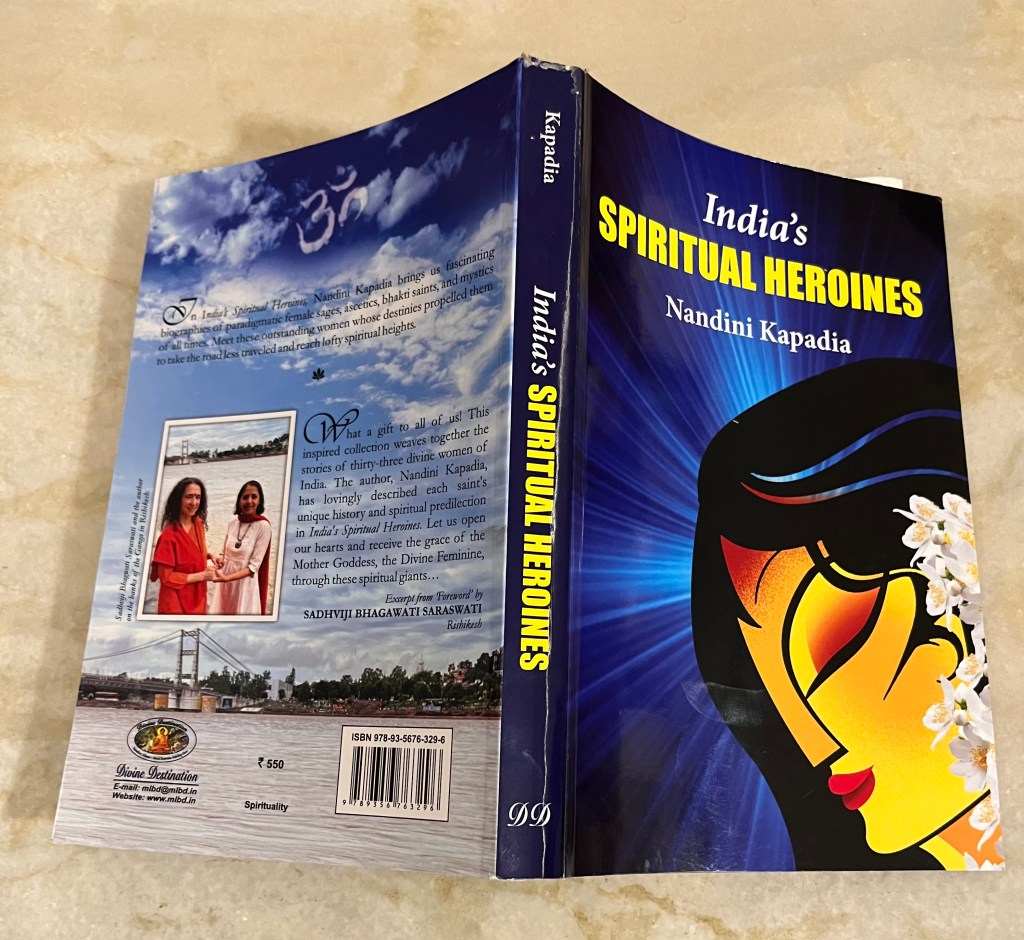
“The enlightened women of India” – Interview with Nandini Kapadia, Author of India’s Spiritual Heroines

Could you talk about the tradition of revering IndiaтАЩs women sages as part of our heritage?

In Hinduism, we worship and revere goddesses as emblematic of Shakti, the all-powerful feminine energy, but ironically, in reality, the position of women in India has always been secondary or peripheral. From the olden times, our society was (and still is) patriarchal and patrilineal which by default becomes disadvantageous to women.

Perhaps the Rig Vedic Age is the only time in history where women enjoyed some freedom and were respected. In fact, it is known as the golden period for women. During that period, a handful of rishikas like Gargi, Maitreyi, Ghosha and Lopamudra came to prominence for their intelligence and scholarship. Thereafter, from the Later Vedic Period to contemporary times, womenтАЩs status steadily declined. A harsh patriarchal system seized their rights and shackled their spirit. Their social mobility dwindled as they were confined within the four walls of their homes. They lost their dignity, respect and were forced to be subservient to the male members of the household and society.

Thus, in my view, women across all spectrums were never allowed to become an intrinsic part of the heritage. So, the title of my book says тАЬheroinesтАЭ because despite such tremendous degradation in their status, some extraordinary women broke the mold to pursue their calling, made a mark for themselves and paved the way for others to follow.

Having said that, I am happy that in recent years, feminist campaigns to fight against inequality between the sexes have forcefully brought to light the suppression and marginalization of women worldwide. India too seized the moment by launching various initiatives under the тАЬStree ShaktiтАЭ (Woman Empowerment) banner. It has helped to generate awareness of womenтАЩs rights and create opportunities for them that are equal to those for men in all spheres of life. I am very optimistic that womenтАЩs empowerment will lead them to contribute meaningfully and creatively to our heritage.

Why did you choose this topic? What motivated you to select this subject?

One answer to that is my own life, my spiritual inclinations and predilections. For reasons I donтАЩt want to get into, from childhood I often felt dejected and worthless. That gnawing feeling was instrumental in a lot of soul-searching and introspection. It eventually led me to Ramana Maharshi whom I never met in person because I was born over a decade after his mahasamadhi. Nonetheless, he touched me deeply, healed my wounds and gave me succor.  It led me to think that there must be other women seekers like me down the ages who must have found answers through spirituality. I wanted to read about them, to know their stories. That is when I started looking for them but, to my surprise, found it was not so easy. I could not find a single anthological collection of biographies of Indian spiritual women from the olden to the modern times. It then struck me that this was a marvelous opportunity for me to fill the gap and bring their heroism into the limelight. That was the genesis of IndiaтАЩs Spiritual Heroines.

It was also my intention to acquaint young audiences of Indian origin living abroad with our rich heritage vis a vis women and their contribution in an area as sublime as spirituality. I have a son  in his late twenties who lives in California. He and others like him are not familiar with names like Gargi, Gangasati, or Ubhaya Bharati. They may have heard about Radha, Sita or Mirabai but do not know much about their lives or their contributions. This book would be a good starting point for them. It would also introduce them many facets of Hinduism.

Could you talk about the Vedic women sages?

Vedic women sages like Gargi Vachaknavi, Maitreyi and Lopamudra are the first women scholars of India. Gargi was the daughter of an eminent sage named Vachaknu. In modern parlance, she was a nerd whose sole interest lay in scriptural learning. Shunning stereotypes, she decided to follow her calling. She remained single and devoted her life to pursue knowledge. She was conferred the title Brahmavadini, one who is an expert in expounding the scriptures. A famous public debate between her and the renowned rishi Yajnavalakya showcases her sharp intellect and grasp of complex concepts. Maitreyi, too, was a scholar of repute. She was married to Yajnavalakya. A well-known passage in the scriptures between husband and wife has gifted humanity with the secret knowledge of the Self. Lopamudra was beautiful and learned. She was Sage AgastyaтАЩs wife and contributed hymns in the Rig Veda.

Could you talk about women saints of note?

As far as I am concerned, each and every saint is unique and all of them made immense contribution in their field, knowingly or unknowingly. Let us take Mirabai, for example, who scorned name, fame, riches, and royalty for her Giridhar Gopal. Three attempts were made on her life, but she remained unscathed and steadfast in her devotion. Or Akka Mahadevi, the rebel-mystic of Karnataka who, in defiance, walked out of the palace sky-clad. A beautiful young woman with only the lovely long tresses to cover her nudity, she roamed the earth freely and fearlessly with the name of Shiva forever on her lips. Then there was Lal Ded of Kashmir, who bore the most gruesome tortures at the hands of her mother-in-law. She left her home, wandered all over the exotic Kashmir Valley, and through her glorious vakhs, became immortal. Like her, Mirabai and Akka, too, were exceptional poets, and their works are sung even today.

Who is your favorite heroine?

As I said earlier, each one of my heroines is remarkable in her own right. But I found the character of Sister Nivedita particularly striking. She was one of Swami VivekanandaтАЩs foremost Western disciples. She came to India, lived frugally in the torrid heat of Kolkata and dedicated her life to the people. She had a magnanimous spirit and gave her all to better the lot of women, the disadvantaged as well as to IndiaтАЩs nationalist causes. In turn, India loved her back.

She had immense love for her guru and called Vivekananda тАЬthe kingтАЭ. Despite her own spirited, often rebellious, personality, she withstood the harsh discipline imposed on her by her beloved master. She was an epitome of selfless service and an ideal discipleтАж. A lovely woman.

I also found the character of Madalasa quite fascinating. She was an ideal queen who was steeped in the highest wisdom. She bore the king four sons. When they were infants, she would sing to them lullabies which, perhaps, no mother ever sang to their babies. She would recite to them about their true nature which is not the body of five elements but that which is тАЬever-pure, enlightened, and spotlessтАЭ. She instructed them not to be lured by the illusory world, and remain untouched by maya. These lullabies are known as тАЬMadalasa UpdeshaтАЭ and we need such mothers and such updesha more now than ever in this materialistic age.

What are your insights based on the study of women saints?

By studying the lives of these women saints, I learned that role models matter, especially for women. Research has proved that role models have a greater benefit for women who have long contended with gender biases and other issues. These icons can help women make informed decisions and influence them to make the right choices.

Their study also reiterated that no matter what, never give up on your goals and aspirations. These women proved that the claim to Self-realization, supreme knowledge, devotion, or spiritual leadership does not rest with men alone, that they are equal contributors to the spiritual fabric woven in the human mindset.

How does IndiaтАЩs goddess tradition and women saint tradition serve as soft power?

In Hinduism, the concept of Prakriti (female principle) and Purusha (male principle), or Shakti and Shiva denote the opposing universal forces which are inseparable. Their union is exalted as the root and womb of all creation. One cannot exist without the other and together they create a perfect balance and harmony. They are best represented in the form of Ardhanarishwar, which literally means the lord whose one half is male and the other female, equally split in the middle.

To put it differently, the most basic element, the atom, has negative and positive charge and both move in perfect balance which builds the entire universe. Hence, any system which is working in a coordinated fashion, there is always a balance of power.

Similarly, when women and men live together by complementing each other, supporting each other and respecting one another, there is peace and order. But if there is any imbalance in this equation, then there is chaos. So, even though normatively we may worship goddesses and women sages, it should translate into action in everyday life. Women play an imperative role in making a nation progressive and guide it towards development. Therefore, they must be respected and given their due place in society. Only then can a nation progress. As you know, the suppression and subjugation of women worldwide, including in India, has caused enormous harm and retardation to the socio-cultural advancement in the past. We have to change that right now with right thought and right action.

тАЬThe commitment to storytellingтАЭ – Interview with Shilpa Mehta, Story Rack тАУ Part 2

Could you talk about if we are in midst of a storytelling revolution? How IndiaтАЩs age old history of storytelling is responsible for this?

India has a rich culture of stories. We are definitely in the middle of a storytelling movement. This happened to the US in the 1970s. India is known for Shruti and rich traditional stories тАУ the Mahabharata, the Ramayana, the Panchatantra, the Jataka Tales, Vikram Betal, Akbar Birbal тАУ all these storytelling traditions are being revived in a new fashion. These storytelling festivals, global connections are resulting in a major revival of the art form.

Even if we say that television and social media has trapped us into our lives, people do want something more, something more entirely and storytelling is just that.

Could you talk about your MBA in Pune, and how it shaped you up as a storyteller?

MBA was different. While I prefer academics and have always enjoyed teaching, and I took a career into teaching, the MBA helped тАУ how to do things better, staying alert and in 1995 things were very different from what we are doing today. It was a different time at that time.

Could you talk about your experience┬а in writing academic books for primary school going children?

I wrote academic books for primary school going children, this was in collaboration with my younger sister. We wrote a series of books on environmental science and science. I tell stories to children and to adults. When I tell a story to a child it is different. You are teaching them empathy, kindness and how to appreciate culture. When you are telling stories to adults, it changes their perspective.

Could you talk about the responsibilities of being a storyteller?

I write also. I have been told that my written stories have changed the readerтАЩs perspectives. I am doing my bit in giving back to society. As storytellers, we are social entrepreneurs and we are agents of change. There is this quote by Jane Goodall, “If you can tell a story that reaches the heart, even if you do not know it at the time, you may have planted the seed of change,” and through my storytelling, I am doing that.

тАЬAwarded for excellence in StorytellingтАЭ – Interview with Shilpa Mehta, Story Rack тАУ Part 1

Shilpa Mehta, Story Rack has numerous accolades to her credit –

  • Hindi Saahitya Gaurav Samaan, 2026 by Saahitya Arpan Society, Dubai
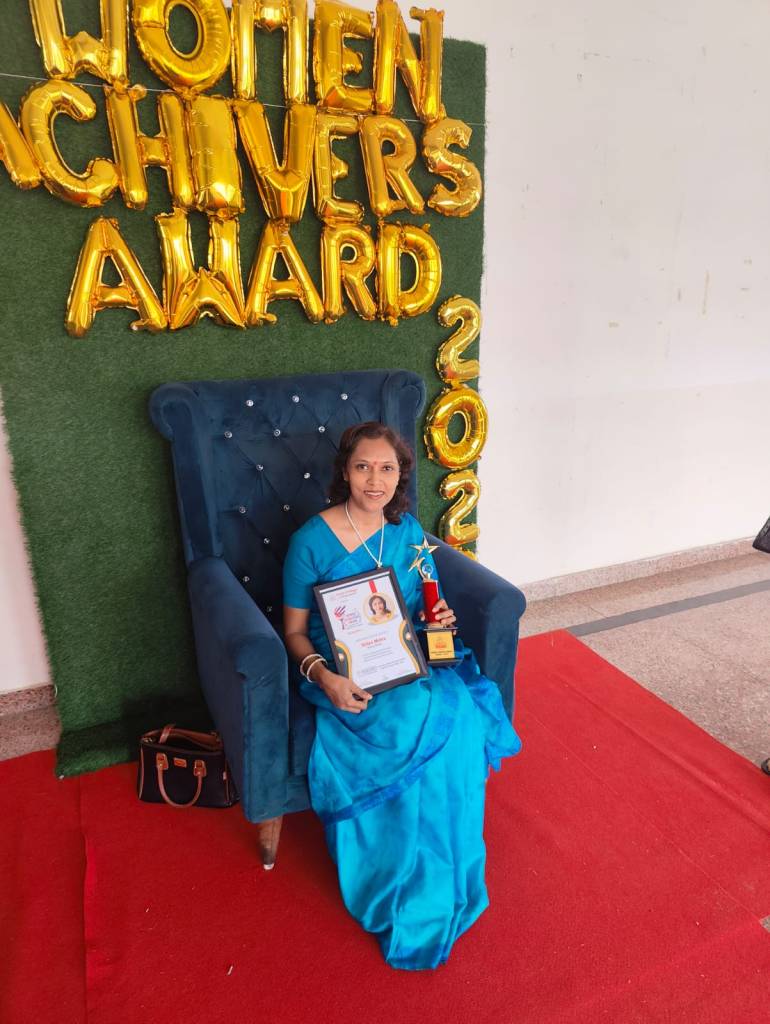
  • Women AchieverтАЩs Award by Rajasthan Chambers of Commerce and Industries-Young Women Entrepreneurs,2025
  • Women Inspiring Award by NHZ in Jaipur,2025
  • Inspirational Women Clan Award, for inspirational Storyteller,2024
  • Featured by WeWomen, on WomenтАЩs Day,2024
  • Honoured by Vishisht lifestyle on International Women’s Day 202
  • Top Mompreneur Clan E-AWARD 2023 by THEMOMMACLAN.
  • Women Achiever’s Award for performance Storytelling in Jaipur, 2023
  • Influence Star Award by Karyashala Foundation

Could you speak about your career journey?

I was into the educational space for two decades. I started my career teaching MBA and BBA students with stories. I had incorporated stories into my lectures then. Now there is talk of storytelling as a part of the pedagogy. But I was doing this in 1997. I have taught economics, project management and entrepreneurship through stories. Even case studies and these subjects were taught by me with stories to the students. Then I wrote academic books for primary school going children. Then Covid happened and it was a time for me to pause and reflect. I participated in an online storytelling event. I shared a personal story and got a lot of appreciation for that. That day I realised what I wanted to do storytelling. I had been a radio artist who acted in many radio plays from the 5th standard to the 12th standard. I had done this while I was in school for Vividh Bharati. Due to this background online storytelling seemed to be the natural thing to do. It was after this that I started practicing storytelling both online and in workshops. ┬аI also after this time started writing and my writing got selected in various anthologies. I write in both Hindi and English. Covid was the beginning of my journey as a storyteller and as a writer.

Could you talk about your experiences at various festivals?

I have performed at various platforms both online and offline. The performances at various festivals have been exhilarating. Through these festivals I have been exposed to different storytelling traditions. It has expanded my understanding of narratives. It is also a way of finding your tribe. You share ideas. Each and every minute at festivals has been a learning experience. It connects you to the world of storytellers who share your stories. They give you their time and help you focus on your craft. It is about being part of a diverse and vibrant community. We know each other for so long.

Could you talk your experiences as a radio artist in Vividh Bharati and how this shaped your career as a storyteller?

At that point of time, it was more of a happiness. Why it was more of happiness was that I would get a cheque at the end of each session. I was happy was I earning. It helped me to storytell. As a child artist I would get to interact with stalwarts. I have worked with Rajeev Varma. I am from Bhopal and I got to do many plays with him. He offered me a role in his theatrical play. It helped me to learn voice modulation, gesture, expression, though much of this was not visible on radio. I learnt that working with expressions and gestures was the best way to perform even through this was not visible on radio. I learnt all these things and soon it became a part of my system. It helped me when I did storytelling as all this was ingrained in my system. We would record the play after 3 days of rehearsals. I learnt to perform, developed a love for voices and learnt the basic nuances. I was well equipped when I came into storytelling due to this experience.

Could you talk about your engagement with narratives?

I had a wonderful childhood filled with books, stories and an insatiable curiosity. I was introduced to the wonderful world of oral storytelling by my father. I still remember all the stories тАУ kings, queens, stories from mythology and the folktales. These stories were not just stories they gave great opportunities which I could not have imagined.

тАЬThe rigours of Hindi-English storytellingтАЭ тАУ Interview with Astha Chadha

On your career journey?

I was born and brought up in Delhi. I did my school and collage from Delhi. After doing my post-graduation in Mass Communication from Delhi University, I did my first media internship at TransasiaтАЩs Swagat. I then joined Hindustan Times, Dainik Jagaran, Rashtriya Sahara and Amar Ujala. These are Hindi publications and Hindi newspapers. I then worked with the Electronic Media production centre of IGNOU. I joined AIR as a newsreader. Then, I got married and moved to Singapore where I worked at DAV Hindi School. I did a few shows in Singapore on Indian Diaspora. After that, I started working with a website called Inside Sport. Then we moved to the US. After coming back, I joined a Hindi Business news platform, Entrackr. Business was not my forte. For most of my career, I had worked in Art and Culture and Education and Career. In 2018, I started my journey into storytelling. I loved the mic and being on stage. When we moved back from the US, I used to teach social skills to my daughter through storytelling. In the global context, stories are used to teach children in the US, UK and Europe. I started writing social stories to cover topics like hygiene and puberty. The social stories can be a very good medium to teach special needs kids lot of things. When we moved to India, I wanted to take these stories to all the kids who needed this. The question was тАШhow is it possible?тАЩ I had an experience of working in radio. I tried to use that. I believe in telling stories of real life characters. When I had to teach my daughter, social skills, I used to make stories with real life characters.

During one of the online session,when I narrated the story about hygiene to the girls, the response was very good. I started telling more stories by joining online events during Covid.

I realised that storytelling is something which I am enjoying. I got associated with  lot of storytelling associations in India to know more and more about storytelling. I am in a resource panel of publications like NBT, which has given me an opportunity to perform in events like World book fair and Doon book fair.

I have been privileged to be a part of summer camp in  Rashtrapati Bhavan at New Delhi. My storytelling has given me an opportunity to perform in festivals like Kala Ghoda in Mumbai.

I love writing for kids which inspired me to be a part of 3 anthologies so far.

I love theatre and music and recently I have started pursuing my hobbies.

Do you think being in the media is different from being in storytelling?

When I joined the media, I was already into reading and music. I used to cover art amd culture events for different publications so I was kind of already doing storytelling. Because of this I could not see much difference between being in the media and storytelling. When I was a child, I used to tell a lot of stories. I still remember I used to send many stories to newspapers. There was always a storyteller in me from the very beginning. On Sundays, I would read the newspaper to my father. I used to read comics like Archies and Diamond comics in Hindi. Like any other 90s kid, my childhood was full of memories of different kids magazines like Nandan, champak and nanhe samrat.

Could you talk about the need for regional storytelling?

Once I got an opportunity to co-judged a festival . There were lot of Storytellers who had gathered there from different parts of India. The thing I noticed was, lots of participants were narrating a story in English. But I was happy to see that lots of kids did narrate in Assamese, Bangla, Odiya. Surprisingly, most of the kids from northern India narrated in English. They were doing it in other languages and I was so touched that they were not concerned with the judging and the parents encouraged the children to narrate the stories in regional languages or in their own mother tongue. Often in other places, very few tellers are comfortable in telling stories in their mother tongue. Adult storytelling is often in English.

As far as I am concerned, Hindi is my expressive language. For me, Hindi is the language I am more comfortable with.

рдХреНрдпрд╛ рдЖрдк рд╣рд┐рдВрджреА рд╕реНрдЯреЛрд░реАрдЯреЗрд▓рд┐рдВрдЧ рдХреЗ рдмрд╛рд░реЗ рдореИрдВ рдмрд╛рдд рдХрд░ рд╕рдХрддреА рд╣реИ?

рдореИрдВ рдкреНрд░реЗрдордЪрдиреНрдж, рд╢рд┐рд╡рд╛рдиреА, рдЕрдореГрддрд╛ рдкреНрд░реАрддрдо рдФрд░ рдЕрдиреНрдп рдХрдИ рд▓реЗрдЦрдХреЛрдВ рдХреА рдХрд┐рддрд╛рдмреЗрдВ рдкрдбрд╝рддреА рдереАред  рдЬрдм рдореИрдВ рд╕реНрдЯреЛрд░реАрдЯреЗрд▓рд┐рдВрдЧ рдореЗрдВ рдЖрдпреА рддрдм рдореИрдВрдиреЗ рджреЗрдЦрд╛ рдХрд┐ рдЬрдм рдореИрдВ рд╣рд┐рдВрджреА рд╕рд╛рд╣рд┐рддреНрдп рдХреА рдХрд╣рд╛рдирд┐рдпрд╛рдВ рдмрдЪреНрдЪреЛрдВ рдХреЛ рдкрдврд╝рд╛рддреА рд╣реВрдБ рддреЛ рд╡рд╣ рдмрдЪреНрдЪреЛрдВ рдХреЛ рдмрд╣реБрдд рдЕрдЪреНрдЫреА рд▓рдЧрддреА рд╣реИред

рдкрд░ рдореЗрд░рд╛ рдпреЗ рднреА рдорд╛рдирдирд╛ рд╣реИ рдХрд┐ рдЕрднреА рднреА рдмрдЪреНрдЪреЛрдВ рдХреЗ рд╕рд╛рд╣рд┐рддреНрдп рдореЗрдВ рдмрд╣реБрдд рдХреБрдЫ рдХрд░рдирд╛ рдмрд╛рдХреА рд╣реИред рд╕рдореНрднрд╛рд╡рдирд╛рдПрдБ рдЕрдирдВрдд рд╣реИред рдЖрдЬрдХрд▓ рдЗрд╕ рджрд┐рд╢рд╛ рдореЗрдВ рдмрд╣реБрдд рдХрд╛рдо рд╣реЛ рд░рд╣рд╛ рд╣реИ, рдРрд╕реЗ рдХрдИ publications рд╣реИрдВ рдЬреЛ рдмрдЪреНрдЪреЛрдВ рдХреЗ рд▓рд┐рдП рдХрд╛рдо рдХрд░ рд░рд╣реЗрдВ рд╣реИрдВ

рдХреНрдпрд╛ рдЖрдк рдмрддрд╛ рд╕рдХрддреА рд╣реИ рдХреА рд╕реНрдЯреЛрд░реАрдЯреЗрд▓рд┐рдВрдЧ рдХреА рджреБрдирд┐рдпрд╛ рдореЗрдВ рдХреНрдпрд╛ рдЪрд▓ рд░рд╣рд╛ рд╣реИ?

рдЬреИрд╕рд╛ рдХрд┐ рдореИрдВрдиреЗ рдЕрднреА рдмрддрд╛рдпрд╛, рдЖрдЬрдХрд▓ рдХрдИ publications рдЬреИрд╕реЗ рдкреНрд░рдердо рдмреБрдХреНрд╕, рдПрдХрддрд╛рд░рд╛ рдмрдЪреНрдЪреЛрдВ рдХреЗ рд▓рд┐рдП рдХрд╛рдо рдХрд░ рд░рд╣реЗрдВ рд╣реИрдВред рдЗрд╕рдХреЗ рдЕрд▓рд╛рд╡рд╛ рдмрдЪреНрдЪреЛрдВ рдХреА рдХрдИ magazines рднреА рдЖрдиреЗ рд▓рдЧреА рд╣реИрдВред social media рдХреА рд╡рдЬрд╣ рд╕реЗ children’s literature рдХрд╛ рдкреНрд░рдЪрд╛рд░ рдкреНрд░рд╕рд╛рд░ рдмрдврд╝ рдЪрд▓рд╛ рд╣реИред schools рднреА рдЗрд╕ рджрд┐рд╢рд╛ рдореЗрдВ рдХрд╛рдлрд╝реА рдХрд╛рдо рдХрд░ рд░рд╣реЗрдВ рд╣реИрдВред organizations рдЬреИрд╕реЗ NBT, рднреА рдЗрд╕ рджрд┐рд╢рд╛ рдореЗрдВ рдмрд╣реБрдд рдХрд╛рдо рдХрд░ рд░рд╣реЗрдВ рд╣реИрдВ

рдЕрднреА рдХреБрдЫ рд╕рдордп рдкрд╣рд▓реЗ рдореБрдЭреЗ рдПрдХ рдкреНрд░рддрд┐рдпреЛрдЧрд┐рддрд╛ рдореЗрдВ co-judge рдмрдирдиреЗ рдХрд╛ рдореМрдХрд╛ рдорд┐рд▓рд╛ рдкрд░ рджреБрд░реНрднрд╛рдЧреНрдп рдХреА рдмрд╛рдд рдпреЗ рдереА рдХрд┐ рдХрдИ рдмрдЪреНрдЪреЛрдВ рдиреЗ CHAT GPT рдХреЗ рдЗрд╕реНрддреЗрдорд╛рд▓ рд╕реЗ рдХрд╣рд╛рдирд┐рдпрд╛рдВ рд▓рд┐рдЦреА рдереАрдВl рдореЗрд░рд╛ рдорд╛рдирдирд╛ рд╣реИ рдРрд╕реА рдХрд╣рд╛рдирд┐рдпреЛрдВ рдореЗрдВ рднрд╛рд╡рдирд╛рдУрдВ рдХреА рдХрдореА рд╣реЛрддреА рд╣реИред рдХреЛрдИ рднреА рдЯреЗрдХреНрдиреЛрд▓реЙрдЬреА,рдорд╛рдирд╡реАрдп рд╕рдВрд╡реЗрджрдирд╛рдУрдВ рдХреА рдЬрдЧрд╣ рдирд╣реАрдВ рд▓реЗ рд╕рдХрддреАред

If you ask me about the importance of storytelling, I think any form of performing art тАУ storytelling, theatre, music or dance, is needed for children. Anything that connects them to nature and culture or give them a chance to express themselves is important.

рдХреНрдпрд╛ рдЖрдк рдХрд╣рд╛рдирд┐рдпрд╛рдВ рд╕реБрдирд╛рддреЗ рд╕рдордп рдХреЛрдИ рдХрд▓реЗрдХреНрд╢рдВрд╕ рдХреЛ рд╕реЛрд░реНрд╕ рдХреА рддрд░рд╣ рджреЗрдЦрддреА рд╣реИ?

рдореЗрд░реЗ рд▓рд┐рдП real life characters рд╣реА рдареАрдХ рд╣реИрдВред рдХрдИ рдмрд╛рд░ рдРрд╕рд╛ рд╣реЛрддрд╛ рд╣реИ рдХрд┐ рдЬреЛ рдХрд╣рд╛рдиреА рдореЗрд░реЗ рдорди рдореЗрдВ рд╣реЛрддреА рд╣реИ рд╡реЛ рдореБрдЭреЗ  рдСрдбрд┐рдпрдВрд╕ рдХреЛ рджреЗрдЦрдиреЗ рдХреЗ рдмрд╛рдж рд╕рд╣реА рдирд╣реАрдВ рд▓рдЧрддреА рдФрд░ рдлрд┐рд░ рдореИрдВ рд╡рд╣реАрдБ рдорди рдореЗрдВ рд╕реЛрдЪ рдХрд░ рдХреБрдЫ рдмрдирд╛ рдбрд╛рд▓рддреА рд╣реВрдВред

рдХреНрдпрд╛ рдЖрдк рдЕрдкрдиреЗ рдерд┐рдПрдЯрд░ рдПрдХреНрд╕рдкреАрд░рд┐рдпрдВрд╕ рдХреЗ рдмрд╛рд░реЗ рдореЗрдВ рдмрддрд╛ рд╕рдХрддреА рд╣реИ?

рдореЗрд░рд╛ рд╢реБрд░реВ рд╕реЗ рд╣реА рдЖрд░реНрдЯ рдПрдВрдб рдХрд▓реНрдЪрд░ рдХреА рдУрд░ рдЭреБрдХрд╛рд╡ рдерд╛ред рдпреВрдВ рдХрд╣рд┐рдП theater рдореЗрд░реЗ рд▓рд┐рдП рдЦреБрд▓реА рдЖрдВрдЦреЛрдВ рд╕реЗ рджреЗрдЦрд╛ рдПрдХ рд╕рдкрдирд╛ рдерд╛ред

Storytelling рдХреЗ рдЕрдкрдиреЗ рд╕рдлрд╝рд░ рдХреЗ рджреМрд░рд╛рди рд╣реА рдореБрдЭреЗ рдПрдХ рдерд┐рдПрдЯрд░ рдЧреНрд░реБрдк  рдЬреНрд╡рд╛рдЗрди рдХрд░рдиреЗ рдХрд╛ рдореМрдХрд╛ рдорд┐рд▓рд╛ред рд╣рдо рдХрд╣ рд╕рдХрддреЗ рд╣реИрдВ, рдореИрдВрдиреЗ  рдЕрдкрдиреЗ  рдЖрдк  рдХреЛ  рдерд┐рдПрдЯрд░ рдХреЗ рдорд╛рдзреНрдпрдо рд╕реЗ рдЬрд╛рдирд╛ рдФрд░ рдкрд╣рдЪрд╛рдирд╛ред рдореЗрд░рд╛  рдкрд╣рд▓рд╛  рдкреНрд▓реЗ  рдЧрд╛рдВрдзрд╛рд░реА  рдерд╛ред 2023  рдореЗрдВ  рдореИрдВрдиреЗ  рдерд┐рдПрдЯрд░  рдЬреНрд╡рд╛рдЗрди  рдХрд┐рдпрд╛ред рдореЗрд░рд╛ рдкрд╣рд▓рд╛ рдирд╛рдЯрдХ рдЧрд╛рдВрдзрд╛рд░реА mythology рдФрд░ рдЖрдЬ рдХреЗ рд╕рдордп рдХрд╛ рдПрдХ рдЕрдиреЛрдЦрд╛ рдореЗрд▓ рдерд╛ред theater рдореЗрд░реЗ рд▓рд┐рдП рдЕрднрд┐рд╡реНрдпрдХреНрддрд┐ рдХрд╛ рдорд╛рдзреНрдпрдо рд╣реИ рдФрд░ рдореБрдЭреЗ рдЬреАрд╡рдВрдд рд░рдЦрддрд╛ рд╣реИред

Ramayana in a folktale by Deepa Kiran

Watching Deepa Kiran perform once is an enlightening experience. But to watch her perform the same story twice is a process of renewal and revival. I first watched Ramayana in a folktale by Deepa Kiran, renowned international storyteller and storytelling teacher, whose style is so genuine and embellished with rare understanding and insights into Indic thought, during the Indica Storytelling Conference in December 2022. The second performance was her rendition of the “Ramayana in a folktale” in her youtube channel which she maintains with care and affection for a vast audience who turn to it for inner nourishments. The performance which is a reflection of what is culture and why in a country where there is so much traditional art form many of us still miss out on the “essential culture of the Ramayana itself.” The story is a metaphor for how the Ramayana is central to the Indian cultural context and yet remains alien to many Indians who have chosen samsara over nirvana. Also, the story is a take on how the rasa experience of the traditional storyteller can be a hilarious process of confusion for the non convert to the cultural spaces of India.