Your career journey?
I started working in July 1985 — fourteen years in a public sector enterprise as a software developer. Life happened in between. Marriage, children. When I quit in 2000, I decided not to go back to software. I moved to the private sector — retail first, with Gokaldas Exports’ domestic brand Wearhouse, then to Vedha Automations, a company that sold software to retailers, which was eventually taken over by Tally. I became their Chief Marketing Officer. In a peer-reviewed survey, I was recognised as the best CMO by CMO Asia.
In 2015, I co-founded FableSquare Business Services, a digital marketing agency. It’s been eleven years now — challenging and equally rewarding. We’ve done marketing for companies big and small.
So the arc has been: programming to sales to marketing to communications to entrepreneurship. Writing has run alongside all of it.
How did writing begin?
My journey as an author began around 2008. I wrote on entrepreneurship for a business magazine called Business Gyan, for about two years. Around the same time, I attended a creative writing workshop and started writing poetry. Over the years, I built up a collection of 90 – 100 poems. I selected 50 for Folded Away Softly. My idea behind the book was to express myself — to put down observations and experiences that I’d been carrying.
My second book, Malli and the Mulky Stories, is about incidents from my childhood, set in the late 1960s and 1970s. Most of it is true to life, not too fictional. Children will benefit from reading about a time very different from their own. I also feel it will be great for parents and grandparents to read it with children, as the stories are of a time when children had no digital gadgets, less toys and more imagination and creativity.
Could you talk about your connection with languages?
I studied in a Kannada medium school. I speak Konkani at home, it is my mother tongue, a very sweet language. We use the Devanagari or Kannada script. Apart from that, I speak Tulu, Kannada, Hindi, and English. I understand Havyaka, a dialect of Kannada spoken largely by the Havyaka Brahmin community, but I’m not confident enough to speak it.
Why didn’t I write in Kannada? As Mangaloreans, we speak a bookish kind of Kannada. If you watch some of the older Kannada movies, there’s always one character who speaks in our Mangalore-style Kannada — and that character is the comedian. After 1986, I moved to Bangalore, and now after many years here, my Kannada is a bit mixed up. I can’t express myself as well in Kannada as I’d like. It will take some practice, and I’ve started that.
What do you focus on in your writing?
It is mostly my life experiences.
In Folded Away Softly, I’ve written in the first person, but the poem could be about something I observed, not necessarily something that happened to me. It’s written for Indian audiences, and from the responses I’ve received so far, people relate to what I’ve written.
Malli and the Mulky Stories is mostly about my childhood experiences. Every story has a section about what Malli learnt from a particular incident, the takeaways and an author’s note. Today, children spend a lot of time on screens. In our time, we had physical activities, we were creative in our games. The book is a documentation of that life — of Mulki, a small town near Mangalore, and the childhood that happened there.
When I started writing, it was to document my opinions, thoughts, and feelings. The storybook is a documentation of a life gone by.
Could you talk about your connection with books?
My mother and grandmother were avid readers. As a young girl, I used to visit the District Central Library at least once a week to borrow books. I read a lot of Kannada books. I read Triveni, M.K. Indira, Kuvempu, S.L. Bhyrappa, Beechi, and many others.
It was during my 10th grade that my father suggested I start reading English books. I moved to Jeffrey Archer, Sidney Sheldon, Wilbur Smith, Arthur Hailey, Agatha Christie, Ayn Rand, Harold Robbins, Barbara Cartland — a wide range.
Growing up in a small town had its charms and its limitations. We had limited access to movies, so books took us to a different realm. They gave us a glimpse of a world and a lifestyle beyond what we knew.
What are you working on now?
The second book in the Malli series. Twelve stories in chapter book format, each typically 1,000 to 1,200 words, each with an illustration. My target audience is children aged 7 to 12. I see children as intelligent beings, so I’ve used adult language but not complex words.
After the Malli series, my next book will be non-fiction, most likely on business-relevant subjects. I’m a business communication person at heart and by profession, that thread has never left.
About the illustrations in Folded Away Softly?
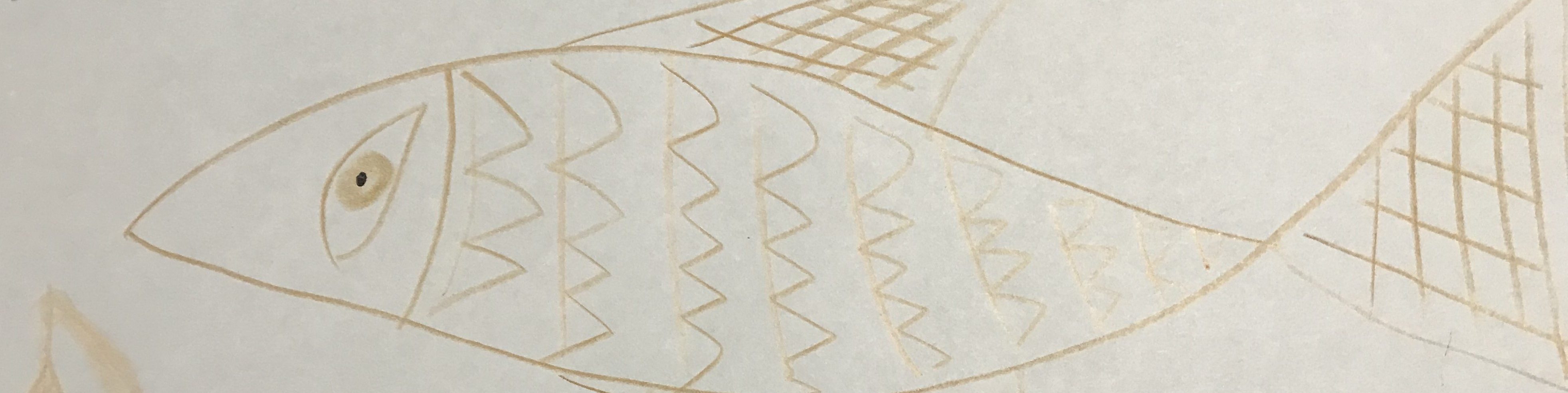
My daughter-in-law Dhanya Jinapal did 20 odd illustrations, and the rest were by Naganath Gowripura. The illustrations are based on my specifications, based on what wanted each one to convey. They’re not meant to illustrate the poem literally. They’re meant to sit alongside, the way the backstories or the context does

 Story Practices
Thank you so much for the interview Swetha, for capturing our conversation so well. If anyone wants to know more about me and my books please visit my website: https://mangalkarnad.com/#mybooks
With Gratitude
Mangal Karnad
LikeLike
I have read Folded Away Softly, and I really enjoyed it. The poems felt very relevant and relatable, and many of them stayed with me even after reading. Looking forward to reading more of your work.
LikeLike