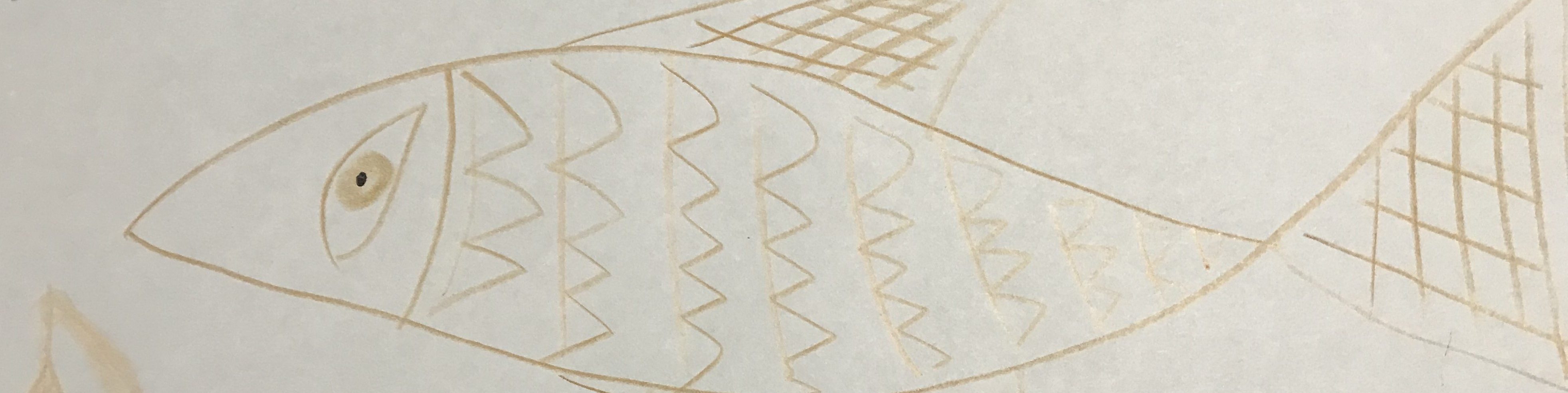
In the Pygmy myth, “The creation of humans”, isolation and loneliness of the creator god Khvum is the cause of the burst of creative activity eventually leading to the birth of humans. The god Khuvum is found in a village which clearly has food for him, edible nuts, and out of this food (here, specifically the nkula nuts) he creates the humans. The idea of the human being created from the nkula nuts, plants, basically food, is interesting because in they are food from the God Khvum – they are not food in the sense of his trying of devour or harm them – that was not the intent behind the creation. What he does want is company, and the company of beings who are not animals because the crocodile is already his companion. So, he uses the nkula nuts to create more beings who will feed his emotional needs.
The origin of humans from the nkula nuts, the origin of humans to be the benign companions of the creator God Khvum, the origin of human beings itself is the theme of this pygmy creation myth. This story like all stories, like all myths starts at the beginning – the first point in the universe. In this myth, in the beginning there existed a village. So unlike the dreamtime myth of the Australian aboriginals, the beginning is not set in space, in a mythical serpent of gigantic proportions, unlike the themes and dreams of the Buddhists, the void is not the cause of all that existed, here in the pygmy myth the rooted reality of a village – with all its connotations of settled life, earthiness and set patterns in the start – as the centre of the universe.
The crocodile as the companion of the creator god Khvum
In this pygmy creation myth, it is apparent that the creator god Khvum is not entirely alone, without companions. He has for a companion, the crocodile (perhaps the Nile crocodile itself), the most dangerous predator in Africa. The inclusion of this tiny detail, is profound in its consequences. The crocodile as the companion of the God Khvum, confirms rather brilliantly the god status of Khvum. Humans can’t have crocodiles as their companions, they cannot summon crocodiles to do their bidding, they cannot call forth a crocodile and ask for a canoe. Humans are terrified of crocodiles for reasons obvious and frequently treat them as that part of nature that need to be feared yes but also worshipped. Yet, humans being humans will also hunt crocodiles, eat crocodile pepper and use crocodile skin as clothing and decoration. Khvum as a creator god will not worship the crocodile but neither will he harm it. The worship of crocodiles as guardians of the sacred world stems from basic animistic beliefs that animals, especially predatory animals with the classic jaws and claws do possess the gateway to the realms of the sacred – the understanding of the spirit. African Traditional Religions and the natural world The self in its connection with the natural worlds is on a precarious journey. It is through nature, that humans are born, that they exist – yet the natural world in itself is a dangerous place for the human – be it the African rock python or the nile crocodile – the natural predator both scared and excited the human. Humans living in nature, amongst nature have or eons believed in the sacred – in the spirit nature of existence and in ancestor worship.
The god Khvum and Compassion
For Khvum to be considered a god by the Pygmy people, he would have to be by definition compassionate. The reason why a peoples would turn to the sacred, to a creator god – because they do believe in the power of gods and also in their compassionate nature. It is intuitive to suppose that all gods in traditional religions were considered compassionate and intelligent beings. The reason behind this is that humans turned to gods in their suffering, in their grief, in the misery, in their travails, in their problems, in their fight for survival against other tribes, against the forces of nature, against adversities, against diseases, etc. By nature peoples would believe that the creator god is invested with power and invests them with power when appealed to. In this myth, of course Khvum grants human’s with the gift of life, with the power of being brought into existence by the agency of a nkula nut. He wants friends but what do the humans desire more than the gift of life itself. This myth of the pygmy peoples of Africa is a positive life enforcing myth that draws upon the form of the creation myth to remind humans that they exist yes, but only because Khvum willed it, and that will had been a benign one. The god who smoked What sort of god was Khvum? A creator god who lived a relaxed life in the village.
A god who would smoke.
Images of gods smoking is not uncommon. In India, it is a well known thing, in perhaps in ancient cultures from around the world there were myths of several gods who smoked. Reason being that unlike the humans, the gods had unlimited power and really no work. They could create as they pleased and what they willed came into existence – in this case, the humans.

 Story Practices