Kathalaya Impact Series
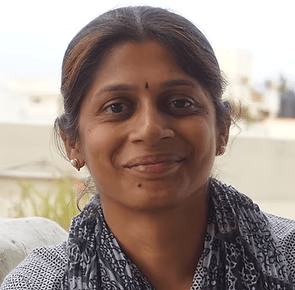
How did you first associate with Kathalaya?
In 2011, my cousin saw an Kathalaya advertisement in the Hindu newspaper. We wanted to enquire about and do the course. She was in Madurai and I was in Bangalore. I just dropped into the office and enquired about the team. It was nice meeting Geeta Maam. I did the first level beginners’ course with my cousin in 2011 January. It was a five day half day course.
I became a storyteller and started telling stories at a local school.
In 2011, my cousin came across a Kathalaya advertisement in The Hindu newspaper. We were both interested in learning more about their courses—she was in Madurai and I was in Bangalore. I decided to drop by the office to enquire, and that’s when I first met Geeta Ma’am. My cousin and I enrolled in the beginners’ course in January 2011. It was a five-day, half-day program.
After completing the course, I began storytelling at a local school. Although I enjoyed it and worked until 3 p.m. each day, I still had some inhibitions.
One day, Geeta Ma’am asked if I would be interested in working at Kathalaya. I thought it would be a good opportunity and decided to join initially for three days a week. Since 2012, I have been a permanent employee at Kathalaya, handling administration. Over the years, I have listened to countless stories—shared by students during their courses and narrated by Geeta Ma’am herself. Being fully involved in administration has helped me shape my career at Kathalaya.
My journey with Kathalaya began in 2011, and it continues to be a meaningful part of my life.
You started your association with Kathalaya in 2011. Since then, what are the changes you have seen in the field of storytelling?
In every field these days, you can see a huge change. In the initial years, Kathalaya was the main centre for storytelling and then there were not many people who could tell stories. Now every place be it Indranagar or Koramangala is developed in storytelling. There are many storytellers and storytelling centers are being opened regularly.
People used to come to Kathalaya to learn storytelling. But we also saw that online storytelling became very popular. Online storytelling and podcasts became very popular. There was a huge change in this sense is what we felt. Except during Covid, Kathalaya did not prefer the online model for teaching storytelling. Storytelling is an art that requires personal connection. While people ask for online classes, we ask them to come for our in-person workshops. We can see how storytelling careers revolve around what we experience with people. Hence offline storytelling classes are better.
Another change we have seen is that earlier teachers, homemakers would attend storytelling classes. Now people in all fields, entrepreneurs, media people, corporate employees – people from different background learn storytelling to apply in their fields.
How has working with Kathalaya, which founded storytelling in India and many parts of the world, developed you personally?
It’s not just a course. Each one would come with their own feelings, their own anecdotes, their own wisdom, their own stories. You need someone to listen to your stories. People like being listened to. Their stories being heard. They need a person to hear the stories. Storytelling plays a very important role in sharing what happened yesterday.
Could you talk about the key achievements of Kathalaya?
Kathalaya which was founded by Geeta Ma’am, has spread the art of storytelling nationally and globally. Storytelling has spread everywhere. We have been conducting storytelling festivals all over India and the world. We have been in the Limca book of records. We have taught storytelling India and abroad. We have impacted more than 5,00,000 children. Many children who grew up listening to Geeta’s stories have now grown up and affectionately call her Story Ma’am.
 Story Practices
Leave a comment