It helps us connect the familiar with the unknown,
and in that process, we begin to connect more deeply with ourselves.
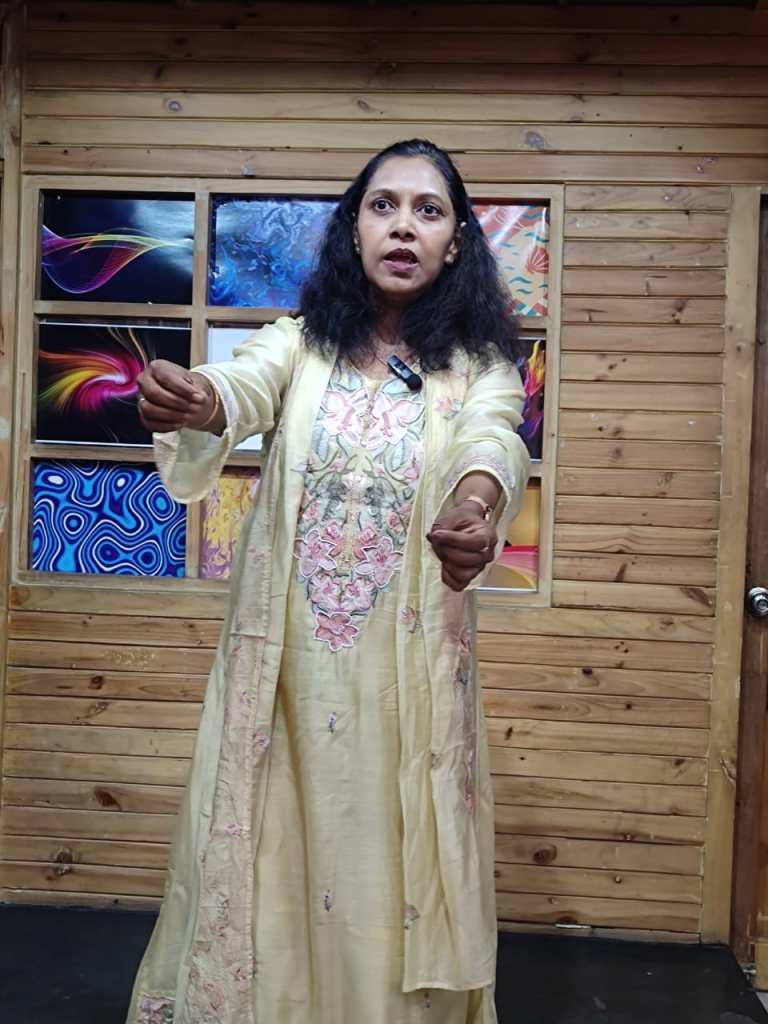
This June, Geeta Ramanujam will be facilitating the 8th Storytelling Course at the Himalayan Writing Retreat — a 4-day residential journey from June 12th to 15th.
Set in the serene beauty of the Himalayas, this is not just about learning storytelling.
It is about experiencing it — feeling it, living it, and allowing it to unfold within you.
As stories emerge, they begin to blend with your own inner journeys,
creating a space for reflection, expression, and meaningful connection.
This is not just a retreat.
It is a transformation.
If you are looking to pause, reconnect, and rediscover your voice through stories,
this journey might be just what you need.
Begin your journey with Geetha Ramanujam.
Certified Intensive Beginner Storytelling Course.
At Himalayan Writing Retreat, Satkhol, Uttarakhand
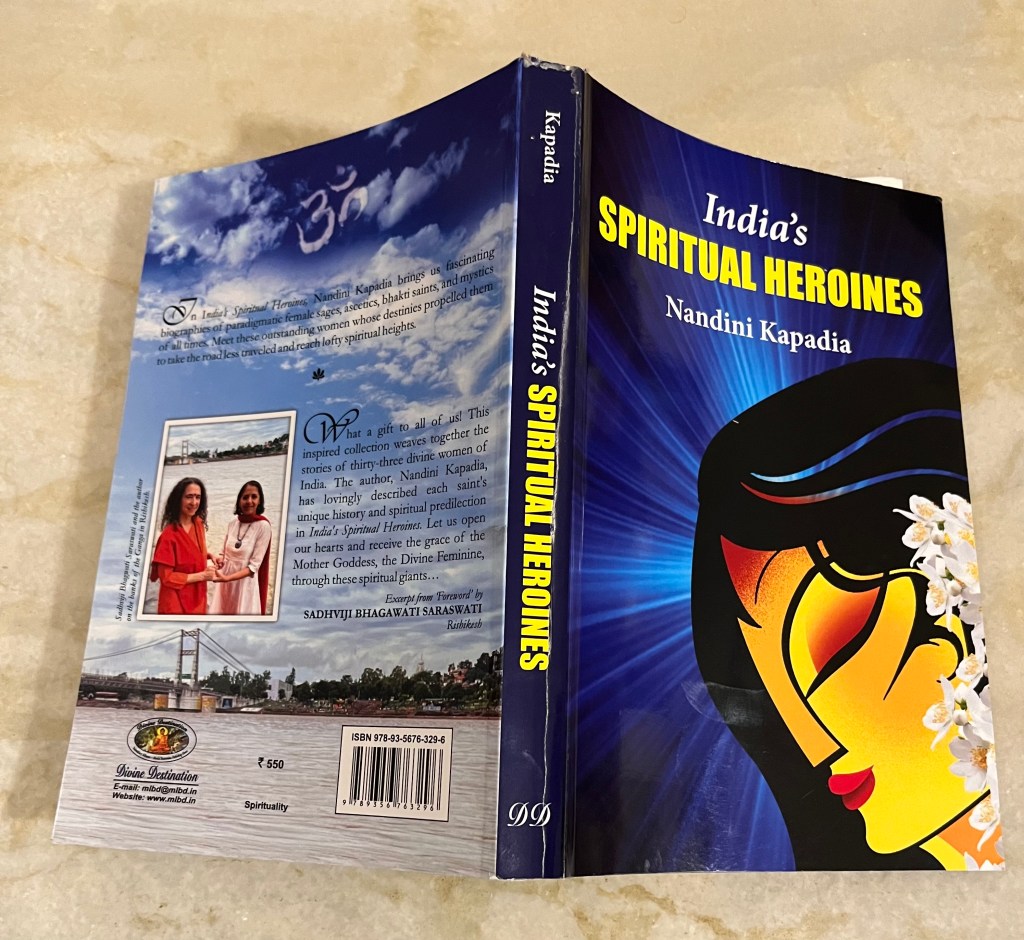
Could you talk about the tradition of revering India’s women sages as part of our heritage?
In Hinduism, we worship and revere goddesses as emblematic of Shakti, the all-powerful feminine energy, but ironically, in reality, the position of women in India has always been secondary or peripheral. From the olden times, our society was (and still is) patriarchal and patrilineal which by default becomes disadvantageous to women.
Perhaps the Rig Vedic Age is the only time in history where women enjoyed some freedom and were respected. In fact, it is known as the golden period for women. During that period, a handful of rishikas like Gargi, Maitreyi, Ghosha and Lopamudra came to prominence for their intelligence and scholarship. Thereafter, from the Later Vedic Period to contemporary times, women’s status steadily declined. A harsh patriarchal system seized their rights and shackled their spirit. Their social mobility dwindled as they were confined within the four walls of their homes. They lost their dignity, respect and were forced to be subservient to the male members of the household and society.
Thus, in my view, women across all spectrums were never allowed to become an intrinsic part of the heritage. So, the title of my book says “heroines” because despite such tremendous degradation in their status, some extraordinary women broke the mold to pursue their calling, made a mark for themselves and paved the way for others to follow.
Having said that, I am happy that in recent years, feminist campaigns to fight against inequality between the sexes have forcefully brought to light the suppression and marginalization of women worldwide. India too seized the moment by launching various initiatives under the “Stree Shakti” (Woman Empowerment) banner. It has helped to generate awareness of women’s rights and create opportunities for them that are equal to those for men in all spheres of life. I am very optimistic that women’s empowerment will lead them to contribute meaningfully and creatively to our heritage.
Why did you choose this topic? What motivated you to select this subject?
One answer to that is my own life, my spiritual inclinations and predilections. For reasons I don’t want to get into, from childhood I often felt dejected and worthless. That gnawing feeling was instrumental in a lot of soul-searching and introspection. It eventually led me to Ramana Maharshi whom I never met in person because I was born over a decade after his mahasamadhi. Nonetheless, he touched me deeply, healed my wounds and gave me succor. It led me to think that there must be other women seekers like me down the ages who must have found answers through spirituality. I wanted to read about them, to know their stories. That is when I started looking for them but, to my surprise, found it was not so easy. I could not find a single anthological collection of biographies of Indian spiritual women from the olden to the modern times. It then struck me that this was a marvelous opportunity for me to fill the gap and bring their heroism into the limelight. That was the genesis of India’s Spiritual Heroines.
It was also my intention to acquaint young audiences of Indian origin living abroad with our rich heritage vis a vis women and their contribution in an area as sublime as spirituality. I have a son in his late twenties who lives in California. He and others like him are not familiar with names like Gargi, Gangasati, or Ubhaya Bharati. They may have heard about Radha, Sita or Mirabai but do not know much about their lives or their contributions. This book would be a good starting point for them. It would also introduce them many facets of Hinduism.
Could you talk about the Vedic women sages?
Vedic women sages like Gargi Vachaknavi, Maitreyi and Lopamudra are the first women scholars of India. Gargi was the daughter of an eminent sage named Vachaknu. In modern parlance, she was a nerd whose sole interest lay in scriptural learning. Shunning stereotypes, she decided to follow her calling. She remained single and devoted her life to pursue knowledge. She was conferred the title Brahmavadini, one who is an expert in expounding the scriptures. A famous public debate between her and the renowned rishi Yajnavalakya showcases her sharp intellect and grasp of complex concepts. Maitreyi, too, was a scholar of repute. She was married to Yajnavalakya. A well-known passage in the scriptures between husband and wife has gifted humanity with the secret knowledge of the Self. Lopamudra was beautiful and learned. She was Sage Agastya’s wife and contributed hymns in the Rig Veda.
Could you talk about women saints of note?
As far as I am concerned, each and every saint is unique and all of them made immense contribution in their field, knowingly or unknowingly. Let us take Mirabai, for example, who scorned name, fame, riches, and royalty for her Giridhar Gopal. Three attempts were made on her life, but she remained unscathed and steadfast in her devotion. Or Akka Mahadevi, the rebel-mystic of Karnataka who, in defiance, walked out of the palace sky-clad. A beautiful young woman with only the lovely long tresses to cover her nudity, she roamed the earth freely and fearlessly with the name of Shiva forever on her lips. Then there was Lal Ded of Kashmir, who bore the most gruesome tortures at the hands of her mother-in-law. She left her home, wandered all over the exotic Kashmir Valley, and through her glorious vakhs, became immortal. Like her, Mirabai and Akka, too, were exceptional poets, and their works are sung even today.
Who is your favorite heroine?
As I said earlier, each one of my heroines is remarkable in her own right. But I found the character of Sister Nivedita particularly striking. She was one of Swami Vivekananda’s foremost Western disciples. She came to India, lived frugally in the torrid heat of Kolkata and dedicated her life to the people. She had a magnanimous spirit and gave her all to better the lot of women, the disadvantaged as well as to India’s nationalist causes. In turn, India loved her back.
She had immense love for her guru and called Vivekananda “the king”. Despite her own spirited, often rebellious, personality, she withstood the harsh discipline imposed on her by her beloved master. She was an epitome of selfless service and an ideal disciple…. A lovely woman.
I also found the character of Madalasa quite fascinating. She was an ideal queen who was steeped in the highest wisdom. She bore the king four sons. When they were infants, she would sing to them lullabies which, perhaps, no mother ever sang to their babies. She would recite to them about their true nature which is not the body of five elements but that which is “ever-pure, enlightened, and spotless”. She instructed them not to be lured by the illusory world, and remain untouched by maya. These lullabies are known as “Madalasa Updesha” and we need such mothers and such updesha more now than ever in this materialistic age.
What are your insights based on the study of women saints?
By studying the lives of these women saints, I learned that role models matter, especially for women. Research has proved that role models have a greater benefit for women who have long contended with gender biases and other issues. These icons can help women make informed decisions and influence them to make the right choices.
Their study also reiterated that no matter what, never give up on your goals and aspirations. These women proved that the claim to Self-realization, supreme knowledge, devotion, or spiritual leadership does not rest with men alone, that they are equal contributors to the spiritual fabric woven in the human mindset.
How does India’s goddess tradition and women saint tradition serve as soft power?
In Hinduism, the concept of Prakriti (female principle) and Purusha (male principle), or Shakti and Shiva denote the opposing universal forces which are inseparable. Their union is exalted as the root and womb of all creation. One cannot exist without the other and together they create a perfect balance and harmony. They are best represented in the form of Ardhanarishwar, which literally means the lord whose one half is male and the other female, equally split in the middle.
To put it differently, the most basic element, the atom, has negative and positive charge and both move in perfect balance which builds the entire universe. Hence, any system which is working in a coordinated fashion, there is always a balance of power.
Similarly, when women and men live together by complementing each other, supporting each other and respecting one another, there is peace and order. But if there is any imbalance in this equation, then there is chaos. So, even though normatively we may worship goddesses and women sages, it should translate into action in everyday life. Women play an imperative role in making a nation progressive and guide it towards development. Therefore, they must be respected and given their due place in society. Only then can a nation progress. As you know, the suppression and subjugation of women worldwide, including in India, has caused enormous harm and retardation to the socio-cultural advancement in the past. We have to change that right now with right thought and right action.
Could you talk about if we are in midst of a storytelling revolution? How India’s age old history of storytelling is responsible for this?
India has a rich culture of stories. We are definitely in the middle of a storytelling movement. This happened to the US in the 1970s. India is known for Shruti and rich traditional stories – the Mahabharata, the Ramayana, the Panchatantra, the Jataka Tales, Vikram Betal, Akbar Birbal – all these storytelling traditions are being revived in a new fashion. These storytelling festivals, global connections are resulting in a major revival of the art form.
Even if we say that television and social media has trapped us into our lives, people do want something more, something more entirely and storytelling is just that.
Could you talk about your MBA in Pune, and how it shaped you up as a storyteller?
MBA was different. While I prefer academics and have always enjoyed teaching, and I took a career into teaching, the MBA helped – how to do things better, staying alert and in 1995 things were very different from what we are doing today. It was a different time at that time.
Could you talk about your experience in writing academic books for primary school going children?
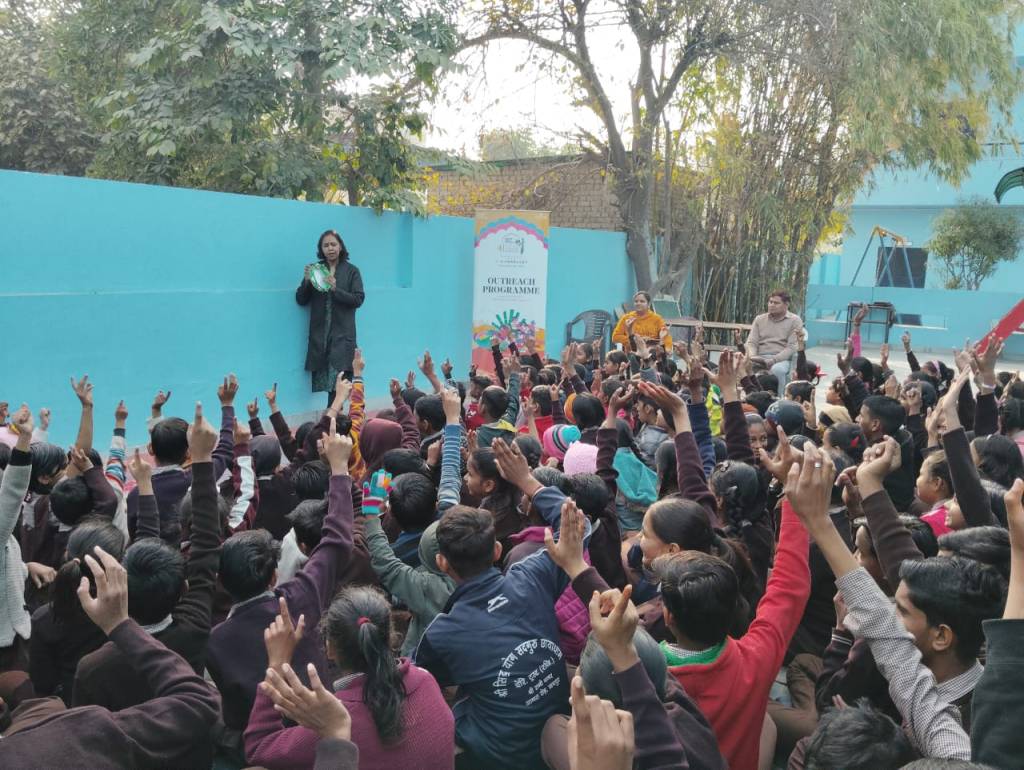
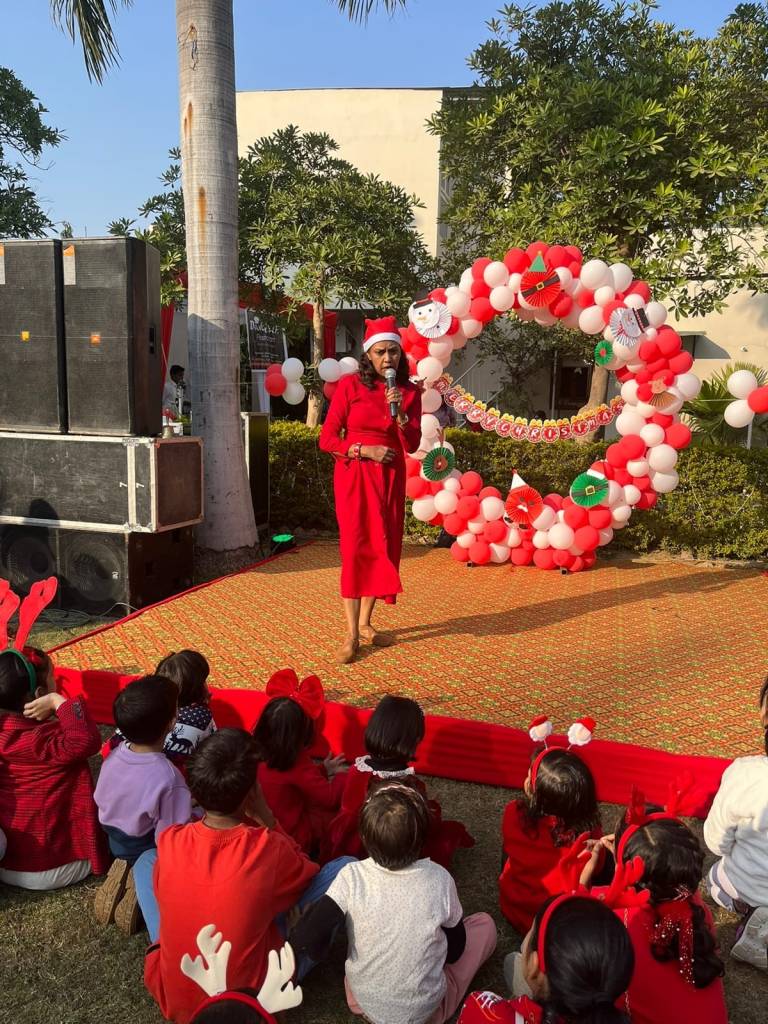
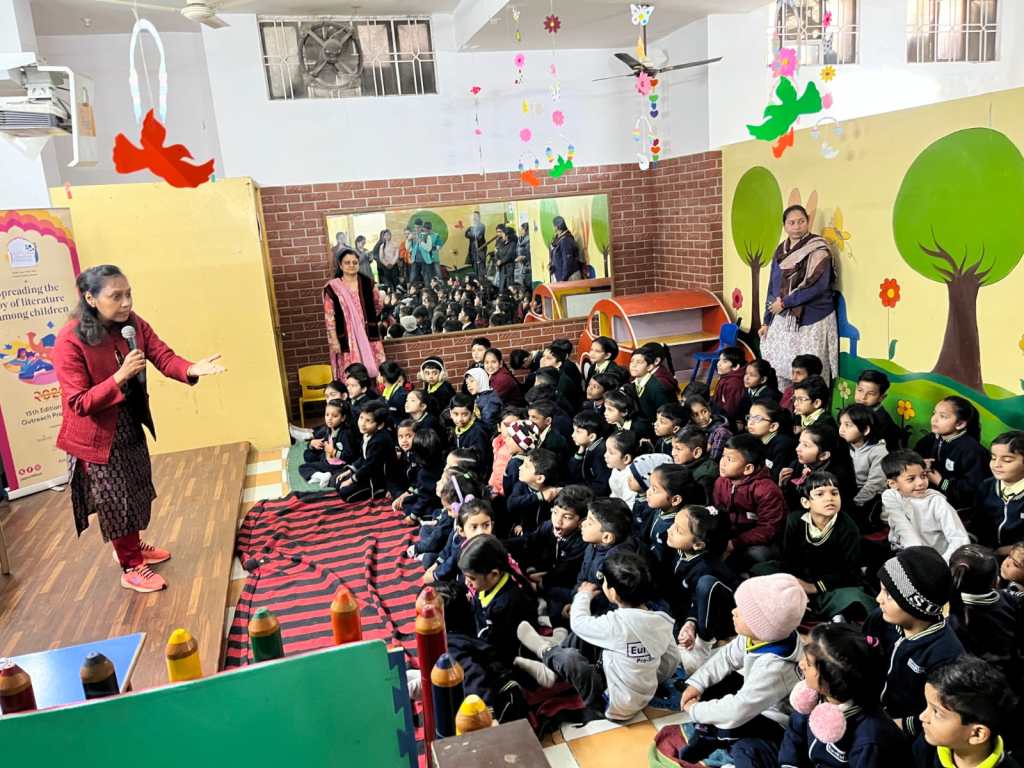
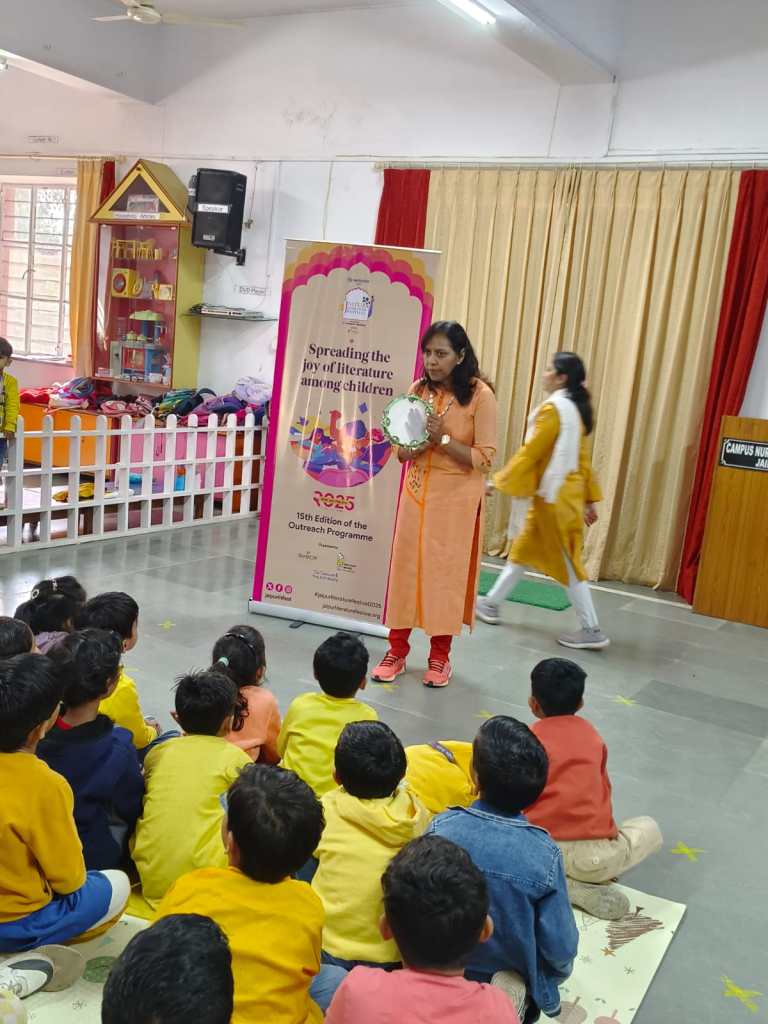
I wrote academic books for primary school going children, this was in collaboration with my younger sister. We wrote a series of books on environmental science and science. I tell stories to children and to adults. When I tell a story to a child it is different. You are teaching them empathy, kindness and how to appreciate culture. When you are telling stories to adults, it changes their perspective.
Could you talk about the responsibilities of being a storyteller?
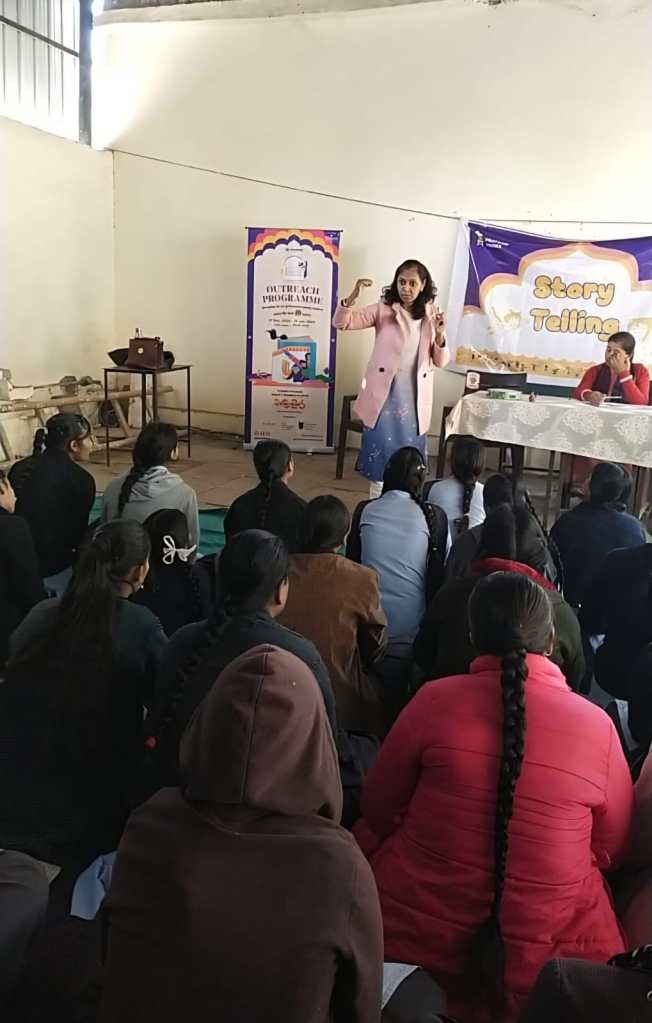
I write also. I have been told that my written stories have changed the reader’s perspectives. I am doing my bit in giving back to society. As storytellers, we are social entrepreneurs and we are agents of change. There is this quote by Jane Goodall, “If you can tell a story that reaches the heart, even if you do not know it at the time, you may have planted the seed of change,” and through my storytelling, I am doing that.
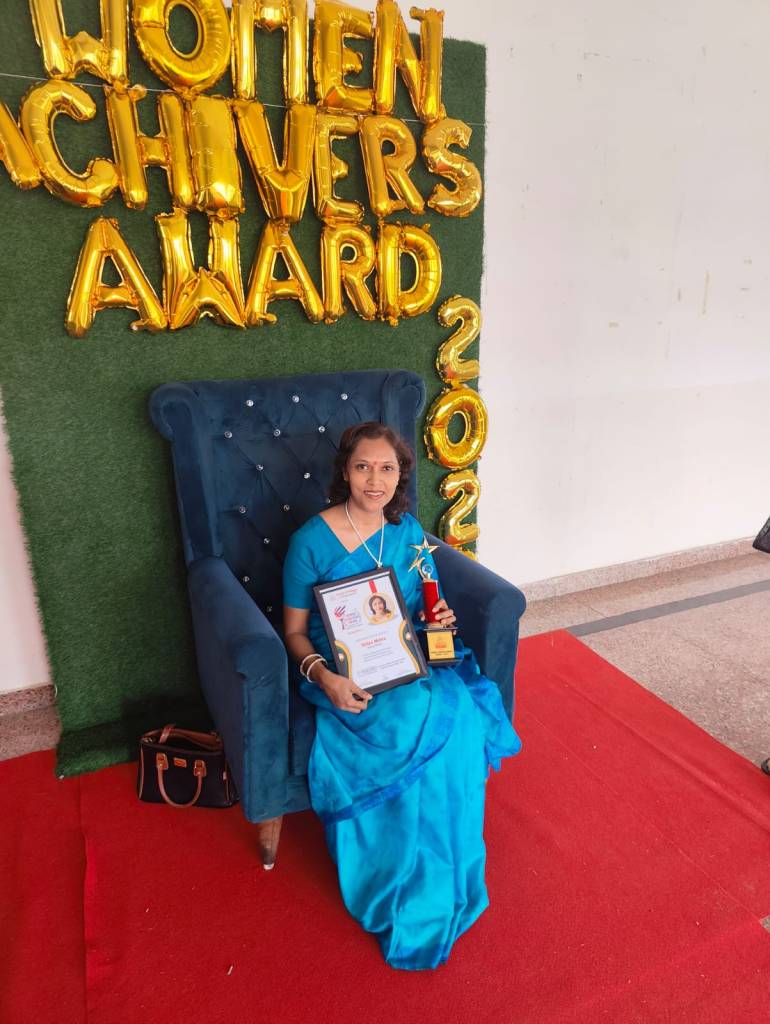
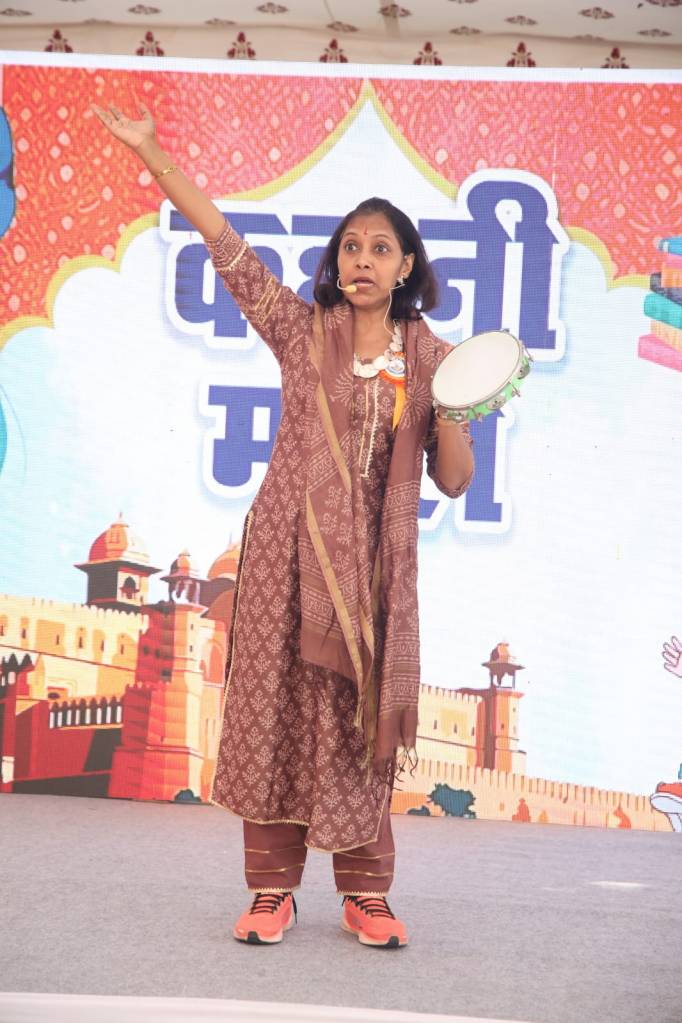
Shilpa Mehta, Story Rack has numerous accolades to her credit –
Hindi Saahitya Gaurav Samaan, 2026 by Saahitya Arpan Society, Dubai
Women Achiever’s Award by Rajasthan Chambers of Commerce and Industries-Young Women Entrepreneurs,2025
Women Inspiring Award by NHZ in Jaipur,2025
Inspirational Women Clan Award, for inspirational Storyteller,2024
Featured by WeWomen, on Women’s Day,2024
Honoured by Vishisht lifestyle on International Women’s Day 202
Top Mompreneur Clan E-AWARD 2023 by THEMOMMACLAN.
Women Achiever’s Award for performance Storytelling in Jaipur, 2023
Influence Star Award by Karyashala Foundation
Could you speak about your career journey?
I was into the educational space for two decades. I started my career teaching MBA and BBA students with stories. I had incorporated stories into my lectures then. Now there is talk of storytelling as a part of the pedagogy. But I was doing this in 1997. I have taught economics, project management and entrepreneurship through stories. Even case studies and these subjects were taught by me with stories to the students. Then I wrote academic books for primary school going children. Then Covid happened and it was a time for me to pause and reflect. I participated in an online storytelling event. I shared a personal story and got a lot of appreciation for that. That day I realised what I wanted to do storytelling. I had been a radio artist who acted in many radio plays from the 5th standard to the 12th standard. I had done this while I was in school for Vividh Bharati. Due to this background online storytelling seemed to be the natural thing to do. It was after this that I started practicing storytelling both online and in workshops. I also after this time started writing and my writing got selected in various anthologies. I write in both Hindi and English. Covid was the beginning of my journey as a storyteller and as a writer.
Could you talk about your experiences at various festivals?
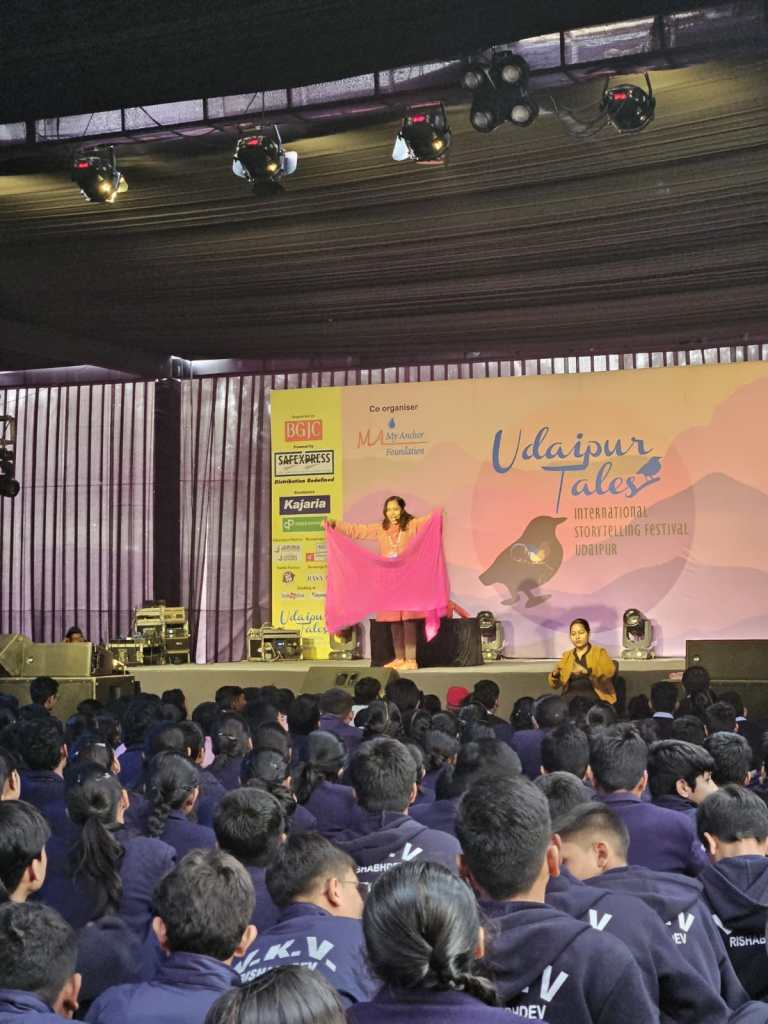
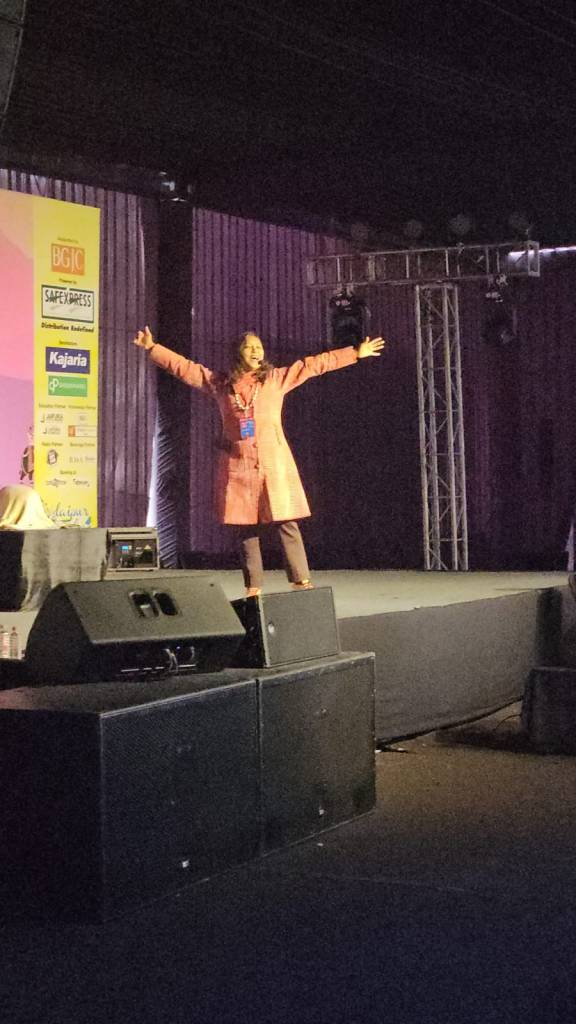
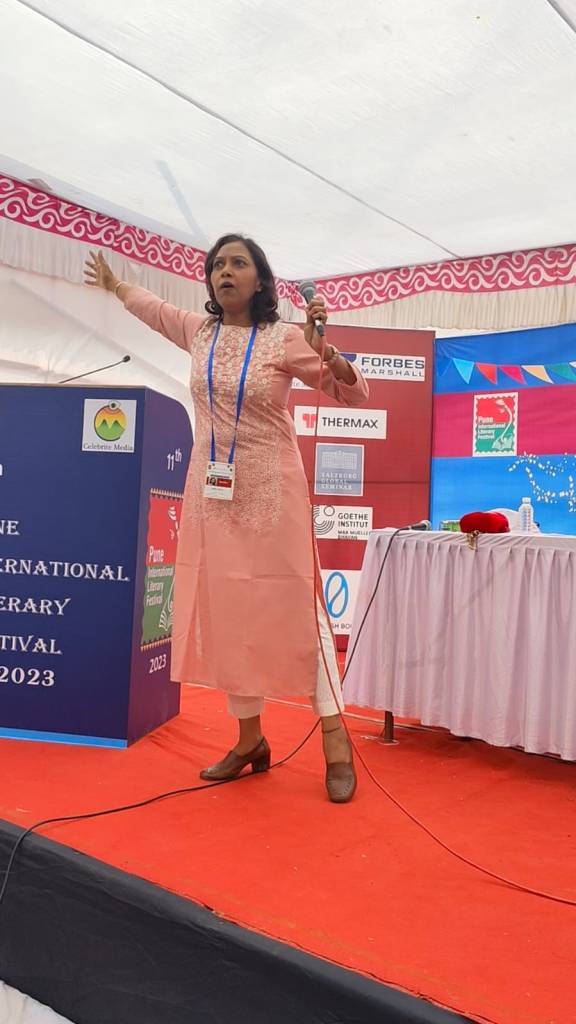
I have performed at various platforms both online and offline. The performances at various festivals have been exhilarating. Through these festivals I have been exposed to different storytelling traditions. It has expanded my understanding of narratives. It is also a way of finding your tribe. You share ideas. Each and every minute at festivals has been a learning experience. It connects you to the world of storytellers who share your stories. They give you their time and help you focus on your craft. It is about being part of a diverse and vibrant community. We know each other for so long.
Could you talk your experiences as a radio artist in Vividh Bharati and how this shaped your career as a storyteller?
At that point of time, it was more of a happiness. Why it was more of happiness was that I would get a cheque at the end of each session. I was happy was I earning. It helped me to storytell. As a child artist I would get to interact with stalwarts. I have worked with Rajeev Varma. I am from Bhopal and I got to do many plays with him. He offered me a role in his theatrical play. It helped me to learn voice modulation, gesture, expression, though much of this was not visible on radio. I learnt that working with expressions and gestures was the best way to perform even through this was not visible on radio. I learnt all these things and soon it became a part of my system. It helped me when I did storytelling as all this was ingrained in my system. We would record the play after 3 days of rehearsals. I learnt to perform, developed a love for voices and learnt the basic nuances. I was well equipped when I came into storytelling due to this experience.
Could you talk about your engagement with narratives?
I had a wonderful childhood filled with books, stories and an insatiable curiosity. I was introduced to the wonderful world of oral storytelling by my father. I still remember all the stories – kings, queens, stories from mythology and the folktales. These stories were not just stories they gave great opportunities which I could not have imagined.
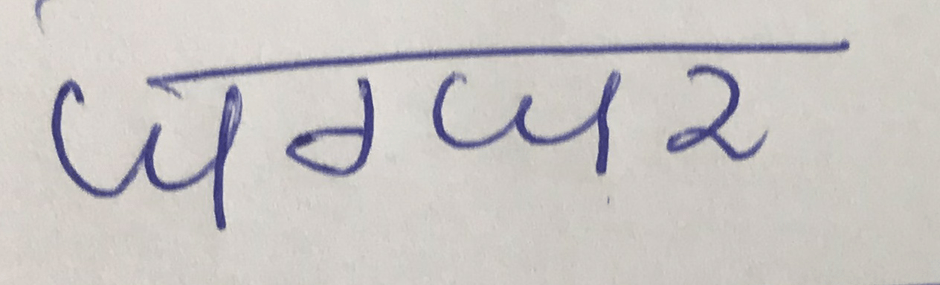
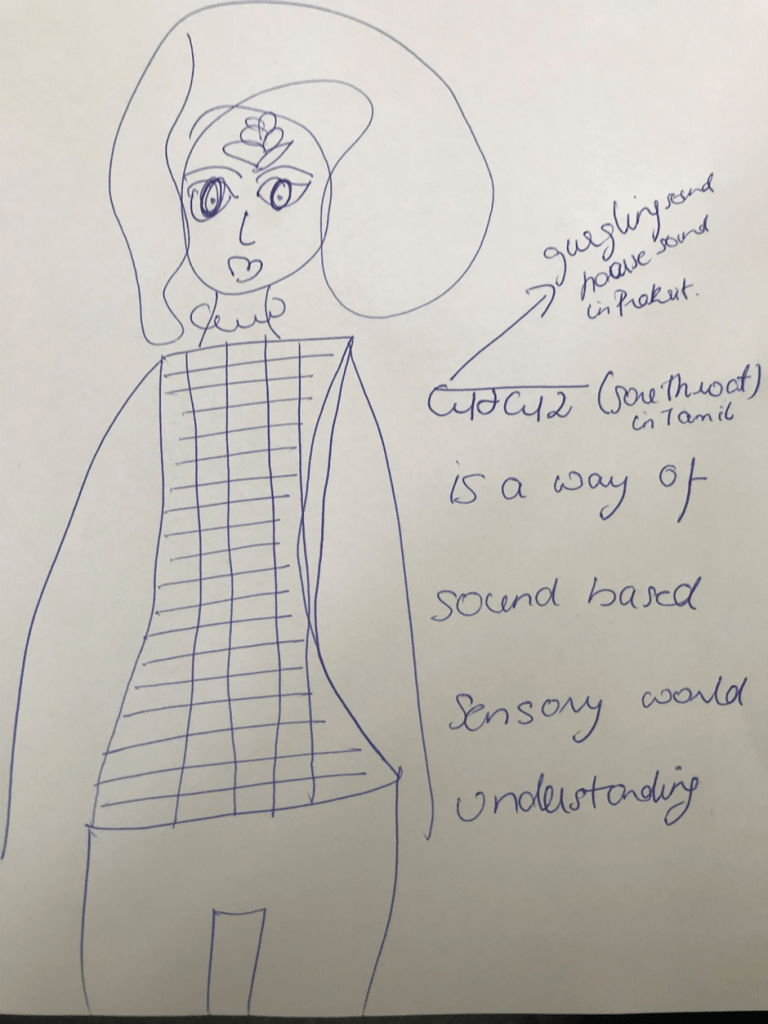
Ghargghara is a word commonly used in Tamil indicating the sour throat. This word derives from the Prakrits where the word gharghara is meaning a sound, a gurgling sound or the manner it is used in Tamil till today – a hoarse sound. Ghargghara sound is an affirmation of the fondness of the Indic mind for alliterative sounds. Indian thought is firmly rooted in the system of sounds that resound and resonate to heal and mesmerise the audience.
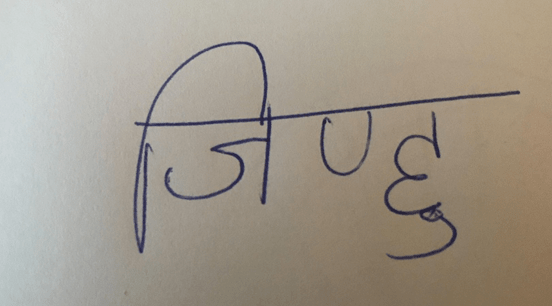
Jinhu in Prakrit means one who is victorious, he/she who wins, the one who has triumphed. It is also an epithet in Prakrit of Arjuna of the Pandavas, Sri Krishna, Vishnu and the Sun (Ravi). Jinhu is the nature of the self which triumphs over darkness and ignorance.
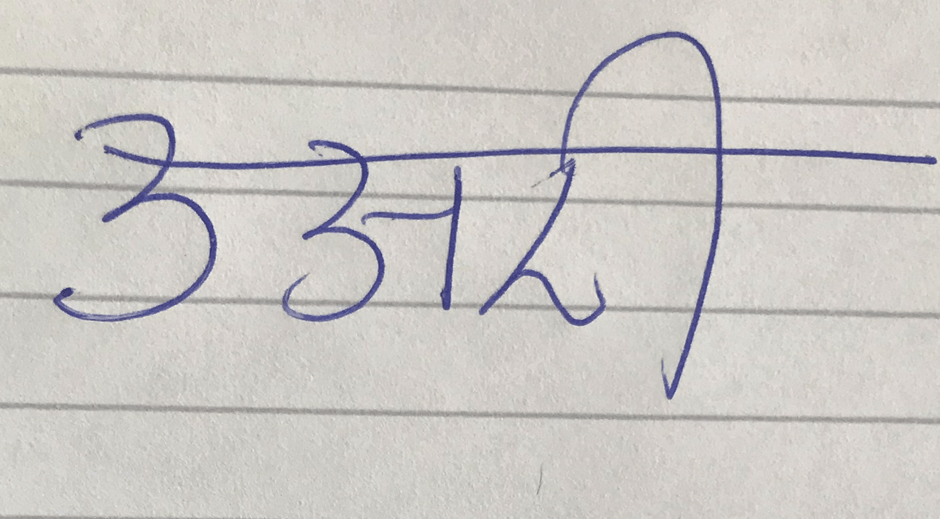
In the Prakrit tradition, Uaaree is the name of a demonic goddess attendant of Durga. Uaaree is same as the Sakini of the cakra goddesses described in the Sanskrit Lalitha Sahasranamam. If we don’t study the Prakrit literature and language we will not be able to fill important gaps in our understanding of the Indic and Indological.
I was born and brought up in Delhi. I did my school and collage from Delhi. After doing my post-graduation in Mass Communication from Delhi University, I did my first media internship at Transasia’s Swagat. I then joined Hindustan Times, Dainik Jagaran, Rashtriya Sahara and Amar Ujala. These are Hindi publications and Hindi newspapers. I then worked with the Electronic Media production centre of IGNOU. I joined AIR as a newsreader. Then, I got married and moved to Singapore where I worked at DAV Hindi School. I did a few shows in Singapore on Indian Diaspora. After that, I started working with a website called Inside Sport. Then we moved to the US. After coming back, I joined a Hindi Business news platform, Entrackr. Business was not my forte. For most of my career, I had worked in Art and Culture and Education and Career. In 2018, I started my journey into storytelling. I loved the mic and being on stage. When we moved back from the US, I used to teach social skills to my daughter through storytelling. In the global context, stories are used to teach children in the US, UK and Europe. I started writing social stories to cover topics like hygiene and puberty. The social stories can be a very good medium to teach special needs kids lot of things. When we moved to India, I wanted to take these stories to all the kids who needed this. The question was ‘how is it possible?’ I had an experience of working in radio. I tried to use that. I believe in telling stories of real life characters. When I had to teach my daughter, social skills, I used to make stories with real life characters.
During one of the online session,when I narrated the story about hygiene to the girls, the response was very good. I started telling more stories by joining online events during Covid.
I realised that storytelling is something which I am enjoying. I got associated with lot of storytelling associations in India to know more and more about storytelling. I am in a resource panel of publications like NBT, which has given me an opportunity to perform in events like World book fair and Doon book fair.
I have been privileged to be a part of summer camp in Rashtrapati Bhavan at New Delhi. My storytelling has given me an opportunity to perform in festivals like Kala Ghoda in Mumbai.
I love writing for kids which inspired me to be a part of 3 anthologies so far.
I love theatre and music and recently I have started pursuing my hobbies.
Do you think being in the media is different from being in storytelling?
When I joined the media, I was already into reading and music. I used to cover art amd culture events for different publications so I was kind of already doing storytelling. Because of this I could not see much difference between being in the media and storytelling. When I was a child, I used to tell a lot of stories. I still remember I used to send many stories to newspapers. There was always a storyteller in me from the very beginning. On Sundays, I would read the newspaper to my father. I used to read comics like Archies and Diamond comics in Hindi. Like any other 90s kid, my childhood was full of memories of different kids magazines like Nandan, champak and nanhe samrat.
Could you talk about the need for regional storytelling?
Once I got an opportunity to co-judged a festival . There were lot of Storytellers who had gathered there from different parts of India. The thing I noticed was, lots of participants were narrating a story in English. But I was happy to see that lots of kids did narrate in Assamese, Bangla, Odiya. Surprisingly, most of the kids from northern India narrated in English. They were doing it in other languages and I was so touched that they were not concerned with the judging and the parents encouraged the children to narrate the stories in regional languages or in their own mother tongue. Often in other places, very few tellers are comfortable in telling stories in their mother tongue. Adult storytelling is often in English.
As far as I am concerned, Hindi is my expressive language. For me, Hindi is the language I am more comfortable with.
क्या आप हिंदी स्टोरीटेलिंग के बारे मैं बात कर सकती है?
मैं प्रेमचन्द, शिवानी, अमृता प्रीतम और अन्य कई लेखकों की किताबें पड़ती थी। जब मैं स्टोरीटेलिंग में आयी तब मैंने देखा कि जब मैं हिंदी साहित्य की कहानियां बच्चों को पढ़ाती हूँ तो वह बच्चों को बहुत अच्छी लगती है।
पर मेरा ये भी मानना है कि अभी भी बच्चों के साहित्य में बहुत कुछ करना बाकी है। सम्भावनाएँ अनंत है। आजकल इस दिशा में बहुत काम हो रहा है, ऐसे कई publications हैं जो बच्चों के लिए काम कर रहें हैं
क्या आप बता सकती है की स्टोरीटेलिंग की दुनिया में क्या चल रहा है?
जैसा कि मैंने अभी बताया, आजकल कई publications जैसे प्रथम बुक्स, एकतारा बच्चों के लिए काम कर रहें हैं। इसके अलावा बच्चों की कई magazines भी आने लगी हैं। social media की वजह से children’s literature का प्रचार प्रसार बढ़ चला है। schools भी इस दिशा में काफ़ी काम कर रहें हैं। organizations जैसे NBT, भी इस दिशा में बहुत काम कर रहें हैं
अभी कुछ समय पहले मुझे एक प्रतियोगिता में co-judge बनने का मौका मिला पर दुर्भाग्य की बात ये थी कि कई बच्चों ने CHAT GPT के इस्तेमाल से कहानियां लिखी थींl मेरा मानना है ऐसी कहानियों में भावनाओं की कमी होती है। कोई भी टेक्नोलॉजी,मानवीय संवेदनाओं की जगह नहीं ले सकती।
If you ask me about the importance of storytelling, I think any form of performing art – storytelling, theatre, music or dance, is needed for children. Anything that connects them to nature and culture or give them a chance to express themselves is important.
क्या आप कहानियां सुनाते समय कोई कलेक्शंस को सोर्स की तरह देखती है?
मेरे लिए real life characters ही ठीक हैं। कई बार ऐसा होता है कि जो कहानी मेरे मन में होती है वो मुझे ऑडियंस को देखने के बाद सही नहीं लगती और फिर मैं वहीँ मन में सोच कर कुछ बना डालती हूं।
क्या आप अपने थिएटर एक्सपीरियंस के बारे में बता सकती है?
मेरा शुरू से ही आर्ट एंड कल्चर की ओर झुकाव था। यूं कहिए theater मेरे लिए खुली आंखों से देखा एक सपना था।
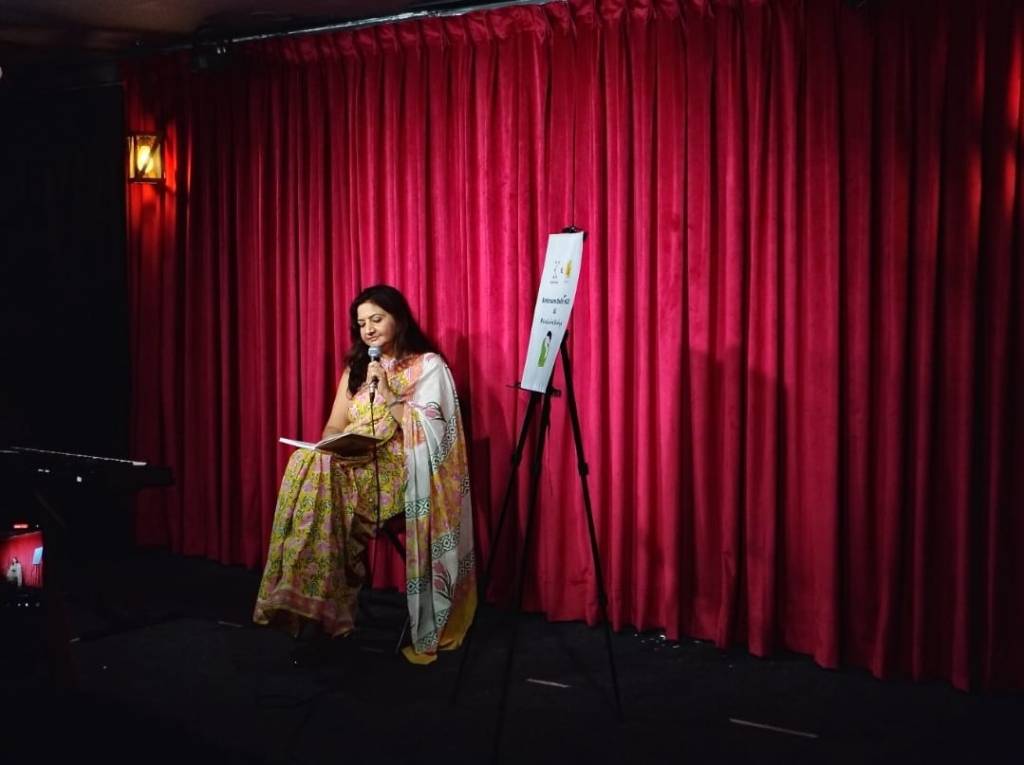
Storytelling के अपने सफ़र के दौरान ही मुझे एक थिएटर ग्रुप ज्वाइन करने का मौका मिला। हम कह सकते हैं, मैंने अपने आप को थिएटर के माध्यम से जाना और पहचाना। मेरा पहला प्ले गांधारी था। 2023 में मैंने थिएटर ज्वाइन किया। मेरा पहला नाटक गांधारी mythology और आज के समय का एक अनोखा मेल था। theater मेरे लिए अभिव्यक्ति का माध्यम है और मुझे जीवंत रखता है।
 This is not just a retreat.
 June 12-15
  8277389840
 Story Practices