Crafting a fantasy narrative with India-Cambodia Shared Roots — Interview with Sunil Kumar

You have written for the Indica India-Cambodia anthology Shared Roots. Could you talk about your journey as a writer?

My journey in writing started in school. I won a prize for penning a poem on a Jesuit poet. The school used to send me for elocution, composition and quizzing. Was also the editor of the school magazine. Later on, I worked in technical writing and technology journalism. I was writing day in and day out- features, news, bios et al. I was interviewing CTOs, CEOs from around the world. I have interviewed many prominent people like Mr Narayan Murthy, Mr. S. Ramodarai of TCS, the Dean of Wharton Global Initiatives Harbir Singh, Organizational Behaviour savant Peter Senge, Data Mining expert Bill Inmon and the distinguished scholar ex- president Dr. A.P.J. Abdul Kalam.

Then, I started my own set up which has been engaged digital marketing and content creation. I wrote the novel Surreal City in 2012 and had written while in college an anthology of poetry ‘Existential Angst’. The noted Indian English language poet and reader — University of Mumbai Nissim Ezekiel facilitated publication through Jaico. They made it available in the US and the UK through Amazon, Barnes&Noble etc. It was catalogued in the British Council, Sussex and the U.S. South Asian Literature List. I was into journalism night and day so it was non-stop writing. Recently I worked on several research papers in disparate fields such as Gaudiya Vaishnavism, Jaina merchants, Indo-Greek cultural interaction and technological disruption.

Your experience in participating in the Indica India-Cambodia Anthology Shared Roots?

I sent the story to Indica in late 2021, so it has been such a long journey to paraphrase Rohinton Mistry. We all liked how Shri Ratul Chakraborty the curator of the anthology helped and took charge of the whole book. Ratul has been a very positive influence. I would like to thank Shri Hari Kiran Vadlamani, Founder of Indica, for his dharmic vision. He arranges conferences that focus on Indic and Dharmic issues. Mr. Hari Kiran is very unique in that sense. He has encouraged so many writers in this ecosystem and Swarajya is also owned by Kovai media, part of the Indica Group.

Could you talk about cultural heritage as a shared experience between nations?

Indian soft power which was widespread in ancient times has taken a back seat to China. The academic Samuel Huntington came up with the idea of ‘Clash of Civilisations’. In that sense in India, there has never been a volatile clash. We have always been a very assimilative culture. These are latter day nomenclatures. There is no country like India in terms of cultural heritage. Like the noted academic Philip Rawsonw wrote in the Art of South East Asia with specific reference to Cambodia, “The culture of India has been one of the world’s most powerful civilising forces” India is the prime example of cultural soft power. Due to internal dissensions and fault lines, we haven’t been able to cash in and leverage on that.

Which aspects of shared Indo-Cambodian culture did you explore in your short story?

My protagonist is a lady called Jayalakshmi Vijayan, a Tamizh Brahmin who is the descendant of an ancient lineage or kula. The story has mentioned Tamil and Khmer kings both participants in the movement of Indic cultural values to Cambodia. I took that aspect and crafted a fantasy narrative. The protagonist’s family is thrown out of Cambodia. I attempted to weave in history, actual kings, Tantra, Vaishnavism, Lord Hanumana and Shaivism, both in South India and Cambodia.

Themes in your short story?

History, courage are themes. The story is about a typical Indian corporate executive who works in a highly stressful high-profile job in Mumbai. I attempt to transfer her to a centuries old Cambodian set up. Presently, we have a disconnect between our ancient heritage, deep roots and what we are currently at. Western education, Marxist histography and English education have all severed us from our cultural roots and the sheer expanse and influence of our Dharmic civilization. History, alienation, deeper love and the bond between two ancient cultures are the main themes without making them tropes or mere jingoistic sentiments.

The importance of creating shared cultural narratives liked Shared Roots?

There has been an excessive focus on Delhi based history, the sultanate era, and after that Mughal history. Southern history, the East, the North East and many other regions have been ignored. We have figures like Raja Marthanda Varma, Rani Abbaka, Lachit Borphukhan from Assam, the Cholas, the Chalukyas or Lalitaditya Muktapida from Kashmir. There has been an excessive focus on the national capital, the so called graveryard of empires. We need newer narratives that help us reflect, admire and be proud of the greatness, the Brahma-Kshattra spirit and the Dharmic backbone of Indian history. We all look up to whoever the west honours. I would like to again thank the Indica founder as he has created a place where these kinds of narratives can have a voice and gain some traction.

Viewing the world through the lens of the Mahabharata – Interview with Pranshu Saxena

Your story is published in the Indica anthology Shared Roots, could you talk about your journey as a writer?

It started a long time back. In the late 80s, my first published work was a Poem in Times of India. Each writer is product of his/her experiences, and the past which pour through the ink on to the paper or the screen now. It all started with my grandmother, Kamla Chaudhary, who was the first female novelist to write a novel in Hindi. Her poetry on inner-self and peace sustained her decades long struggle for freedom of India. Recently recognized by release of Amar Chitra Katha about her. My mother has written many books — children’s books, history in fiction and non-fiction and environment and adventure novels. She was one of the pioneers to use fiction to highlight Environmental causes, “For the Green Planet” which also involved Aliens (the cover used the archetypal ET image drawn by Satyajit Ray in the sixties) and Curse of grass (which explored the origins of chipko movement in 18th century India).

I, on other hand, was always interested in nonfiction especially History. I would spend afternoons and evenings pouring over library books and copying notes onto my frayed notebooks. History is very blunt, not every hero rides off into the sunset, not every heroine gets her due, so I would frame the notes, the story into something palatable to me and that was my first foray into fiction. First writings were all on History and Cricket. There were always ideas to write fiction mostly based on Historical events, never completely germinated till the advent of really horrible in my opinion story telling of Starplus Mahabharat Serial.

We created a page (https://www.facebook.com/RealMahabharata.) to counter the false narratives presented in that serial and there I used fiction as medium to also delve deeper into some of the aspects and teachings of Mahabharata.

A serendipitous consequence was introduction through that page to the Authoress Saiswaroopa Iyer who selected my story, my first fictional prose published through Indic Academy in Unsung Valour — Forgotten Warriors of Kurukshetra.

When I was little my nana, my grandfather used to read from Shanti Parva and Anushasan Parva as Mahaparenting tool, probably. So, my introduction to the Mahabharata was through the heavy and layered powerful morality tales of Shanti Parva (and Yoga Vashishtha) read by my grandfather. When he passed away, I started reading the C Rajagopalachari version and then the 1980s Kamala Subramanyam expanded version. My mother had borrowed the Kamala Subramaniyam’s translation of the Mahabharata to write a story on Ekalvya and so I used the book write the 700 odd pages into my frayed notebooks for references.

I would like to point out that I was disappointed with later 2005 edition of Kamla Subramaniyam’s book. For some reason, it has been edited and certain sections removed. After that, I studied the Bharat Press edition of Mahabharata, which my grandfather had, plus Geeta Press edition, The Indonesian Mahabharata, Wayang, Bhandarkar Oriental Research Institute Mahabharata, the Kannada Mahabaharata et all and other texts and writers like Alh Hiltebeitel. So, modesty aside, I consider myself an expert on Mahabharata and even have studied how legends and stories come into being and enter vox populi, the public perception.

Take for instance the Serampur Baptist Press, which was under the control of the Danish Kingdom, and outside the control of East India company then, they published Bible in local languages and used Biblical stories to modify Indian Epics. Case in point where the story of Abraham, Sarah and Sacrifice of Isaac was converted to story of Karna, his wife Padmavati and son. That is the genesis of term Daanveera Karna in our lingo. It is not there in Mahabharata. Using the Biblical stories masquerading as Mahabharata stories Karna who was then the main villain of the Mahabharat is now ‘Danveer’ Karn and that image is again and again buttressed in TV serials. So his place as the villain has been taken by the Avatar of Neutrality, Dwapar, in Mahabharata as Shakuni.

Back in Delhi days, I used to accompany my mother to a lot of conferences like, ‘Treatment of Nepalis in Bhutan’ or Boom discussions. In these conferences, a professor of cultural studies would come and present his paper. He was an expert on one of the tribes of Madhya Pradesh. Everything he would speak on in any event, any theme would be woven around and he would really talk about his speciality. Inspired by that and with the blessing of Sage Vaysa who said, everything in world can be found in Mahabharat, I also tend to write my stories mirrored in the events of Mahabharata. I keep on collecting ideas, incidents, characters and store them in the attic of my brain, the virtual wallet and when I am writing a story. I take out that batua, that wallet and select and weave these incidents and ideas into story form, buttressed by Mahabharat.

Colonial Todd in the Annals and Antiquities of Rajasthan recorded that crystal ShivaLings were found in Jyotisar, the lake, where Krishna taught Arjuna the Gitta. They were found by the Mughal Emperor Bahadur Shah I and placed in the Mughal ToshKhana, the treasury. Todd found them a hundred years later in the temples established in that period.

So, I came up with an idea, what if Pandavas had gone undercover to Virata to steal their treasury! And that was the genesis of my story Fellowship of Shivalingas in the Indica Anthology curated by Avatans Kumar titled Flight of Deities — Saga of Desecration and Devotion, an ode to excellent research and non-fiction tome by Dr Meenakshi Jain.

Here I told a story of Mughal India using Virata Parva from Mahabharata!

When Ratul Chakraborty proposed the Shared anthology, he had hinted on a connection to Mahabharata in his proposal. That elicited my interest.

The legend states that the famous Indian trader Kaundinya when he came to Cambodia, he carried the spear of Ashwathama. Now historians, do not place the events too far in the past, most place it around 2nd century AD.

However, 1000 years before there was a Land based Silk Route, there was the Jade Sea Route from Taiwan to Somalia, around 2000 BC, 2000 years before proposed date of Kaundinya.

Gaoshan, the Taiwan Adivasis used the trade route which connected Somalia to Taiwan through India, Australia and Indosphere long before the period, to the period of Mahabharata.

So, I brought the date of the Kaundinya voyage to Cambodia to the Mahabharata times!

India is a dharmic civilisation. We are the only civilisation to survive since that period, around 2000 BC. Life was not easy in ancient time, the resources were scarce and people looked at outsiders with trepidation and hostility. As Potential rivals for little resources there are. That lead to miserly exchange of ideas and development of terms now very popular in modern world, xenophobia or hatred of foreigner.

The opposite of this is Xenia — welcoming everyone, which is also a western concept which is Literally Vasudhaiva kutumbakam.

In Indian people believed in “Xenia”. In the “family” you accept the foreigner too. We are the only civilization to emphasize Athithi devo bhava. That large-heartedness is responsible for continuation and survival of Bhartiya Sanskrti, the Sanatana civilization.

There are a lot of Draupadi Amman temples in south from Gingee across the peninsula to the western ghats. They have Iravana and Potru Raja guarding the doors of the Temple. Potru Raja is the son in law/brother in law of the Pandava family. Iravana is an interesting addition to the temples. There are local legends that equate Iravana with what Homer describes the stories of Iphigenia and later writers added about Goddess Hecate, the immortal goddess of Fate.

In Mahabharata, we find an interesting story, the violation of the guest dharma by Jatasura — a brahmin who was also a rakshasa. He tried to kidnap Draupadi when they were living at a sage’s place during exile. In the Indic culture, the Moksha cycle stops if you violate guest dharma. So that was the seed of my story to show that Iravan survived the massive narsnahara of the Kurukshetra through the agency of Alambusha who thus did penance for the BRahmahuta Nirmoksha of his father, Jatasura.

And thus, the idea of a voyage sent by Bhima to look for Iravan which goes to Cambodia. The crew of the ship, the protagonists of my story are the survivors of the Great War, created by me in the Anthology Unsung Valour. Their journey is not only to find the missing Pandava prince but the journey to redeem their souls, to put balm on their memories and find a purpose in life after the brutality of the Great War.

To keep the story light and entertaining, I used the PG Wodehouse as my Guru. The Narrator is the Jeeves pastiche, the Hero a Bertie Wooster (who does get the girl this time), and a Bingo Little, the chap who falls in love every day and solid Psmith like Captain of the Ship.

Bertie came from original Cambodian legends and Captain Psmith from Rigveda. Others came from Ramayana and other texts.

One of least explored aspects of modern stories on Mahabharata or any Indic writing is the souls earing psyche damaging aftermath of the War. So I used the story to emphasize PTSD as a condition afflicting the protagonists and the eventual medicine, the succour to their damaged souls, the journey and the land of Cambodia becomes.

Cambodia has much in common with India. They revere ancestral deities and the concept of Archapada, higher consciousness, higher nature, the spirit world is close to their ethos. And they have among others stories of mongoose deities which created the character of Half Golden Mongoose that guides the crew to the shores of Suvarnabhumi Cambodia.

I wrote up some 250 pages of backstory. The father of the hero wanted to create a university in Kashmir — re-establish the Saptarishi Ashram that story I used as submission for Kashmir tales. As the learned Professor from 1980s used to do, work with your skill set and what you know, rest will fall in place!!

I wanted to also bring out the interaction of India with the Indosphere was totally opposite to the colonial experience of modern times.

The original merchants and traders went to Indosphere, not in self-interest but in pursuit of Sarasvati, knowledge and that is why we were welcomed by the locals and still do, because they also accepted or shared our Idea of Athithi Devo Bhava.

Our Dharmic contact was with the Far East. We are still part and parcel of their culture and civilization. An Indic import Buddhism is still the main religion in these areas. We were never colonisers. We went as Athithis and were welcomed as such.

As a dessert course, I read up on several Cambodian folktales and inculcated one of them as well.

Your experience in participating in the Indica India-Cambodia Anthology Shared Roots?

It was a great experience in getting to know more authors. I have been a regular participant in Otis’s workshops and Indica anthologies. And through this anthology I got to know new authors. Ratul has become a good friend. I credit him with giving the idea from get go.

I was inspired by the Seam Reap sojourns and the idea of spirit realm so endemic to the Cambodian culture in other stories in the anthology. For my story, I studied a little bit how PTSD works. Is it the spirit realm or is it the individual is looking from his own shattered mind, whatever gets you through the day.

In the Valmiki Ramayana, there was a huge attack by Meghnath on the Vanara army and he kills 66 crores (an interesting number that reappears in Mahabharat, significance lost with Laksha Alankara). There is total devastation. Vibhishana is looking for Jambavanta and finds the wounded Bear. Jamavant asks Vibhshan if Hanuman is alive. Then he says, ‘If Hanuman is alive, we are all alive.’ That was a beautiful rendition of bear err Vanara err Human spirit and its eternal optimism looking for that ray to illuminate the darkness of despair.

‘As long as Hanuman is with us, we are all fine.’

Pandavas and their soldiers lost everything in the war, family and friends. I wanted to bring that part of this. My narration, the narrator perspective revolves around the phantoms of his mind, discussing various things around the story line. That way I was combining a first person narrative cheating it using the phantasms to “tell” third person narrative.

Could you talk about cultural heritage as a shared experience between nations?

This is what drove the story. In Cambodia, they also have the idea of the MadhyaPada. This is the higher atmosphere where other beings live, the spirit realm. That experience — the belief in supernatural — it is concurrent in all cultures. I played into the idea of that. I studied a bunch of Cambodian folktales. When you look at some of the names in Cambodia — the Mathon Parbat (Mahendra Parvat from Orissa) etc. Kaling is the name of the center part of the main island in Philippines. There is this shared root with Orissa now. We have had these connections from long time back. I don’t need to get to Angkor Wat. They put Angkor Wat in the flag. I wanted to focus on Cambodia before Angkor Wat.

Another aspect I wanted to bring out were the ancient Cambodian tools, that they have used for thousands of years. These cannot be used as weapons. You can use them as defensive weapons, but you can’t use them as aggressive attacking weapons.

If you travel in Eastern Africa, children carry small axes, they act as guards against predators.

But in rural India, in Chhattisgarh and Madhya Pradesh and Dakshin Koshala of Orissa, they carry long bamboo pipes that create music and sounds to scare away predators. A less violent (except to ears) way to deal with accidents and incidents than using axes.

It is very non-violent — the person is safe as they walk through the forest. Our connection with Cambodia was also along same lines to have deep rooted affections, the interaction between Cambodia and India was not violent.

Themes in your short story?

Nonviolence — the basis of contact was not colonisation, Aththi devo bhava on macro level. For the characters of the story, the journey is where their tired souls find peace, find solace and balm from the effects of the Great War, in searching for Iravana, they find themselves.

The importance of creating shared cultural narratives liked Shared Roots?

Lots of these stories and common connections, these shared narratives are not well known. In the internet age all this remains hidden under the tweets.

From the very beginning people needed the stories — to experience other cultures, and other lands. We are the same people across the world, as an hindawi poem goes, ‘I saw myself everywhere’. The tactile sensation of having a book in your hand cannot be replaced.

Food is tasty well, but you also touch it with your hands, and aroma excites the nose and presentation calms the eyes. The stories should be prepared like that nice dish. The Book with multiple senses engaged, eyes on the story, mind on the story, hands holding the book or kindle, add the extra later visual representation of the same story cannot convey.

A book is the best way to emphasise the connect — the shared roots between India and Cambodia.
Sita as the centralising force of the Ramayana — Interview with Vaishali S

You have contributed to the Indica anthology Shared Roots. Could you talk about your journey as a writer?

My journey as a writer began when I was 15 years old. In the 11th standard, when I was 15 years old, I started composing the Ramayana. I completed when I was 19. When I was 24, I started composing another version of the Ramayana. This was completed when I was 25. This is my first published short story. It is called Unsent Letters.

I am a voracious reader. I have written poems in school. I publish poetry in my blog and share on social media. I like reading books on Indian puranas — Ramayanas, Bhagvatham. I don’t use the word mythology I use the word puranas.

Your experience in participating in the Indica India-Cambodia Anthology Shared Roots?

The journey began in 2021. I was newly married at that time, and this is the first story I sent for publication. I have to thank Ratul Ji for making me a published author today. I owe him tonnes of gratitude. For background research for this story I referenced the Anita Bose book, “Ramayana — Footprints in South East Asian Culture and Heritage” I read what she had written about Cambodia. After reading this book I found out that my favourite Ramayana had a huge role to play in Cambodia.

Could you talk about cultural heritage as a shared experience between nations?

I am a humble person and a simple student of life. I am happy to know that Indian culture influenced Cambodia, that the Angkor Wat is dedicated to Lord Vishnu. In Cambodia there are paintings depicting the Ramayana. My favourite epic Ramayana is called Reamker in Cambodia.

This is the story I found in Anita Bose’s book, “From the scripted chronicles of Chinese travellers, we can gather that the nations of Kambhoj and Siam were collectively referred to as Funan by the Chinese. Funan was ruled by a queen. Later a Hindu, following the advise of the deities, obtaining a bow in a divine dream, set off for business in that country. This Hindu was identified as ‘Hu En Tien,’ who was also famous as ‘Koundinya’.” I belong to Koundinya gotram. When I read Anita Bose’s book I realised he had a role to play in Cambodia.

Which aspects of shared Indo-Cambodian culture did you explore in your short story?

I explore the Reamker. The story is about a woman in a state of mental depression, she becomes fond of Cambodia and visits various places in Cambodia. She realises the greatness of Indian culture in Cambodia. She connects the dots and sees the shared roots between Indian and Cambodia.

Themes in your short story?

The basic theme involves the Reamker. It is about a woman in a state of depression who travels to Cambodia. I explore Indian culture in Cambodia and the shared roots between India and Cambodia. Ratul Ji is the back bone of the story.

The importance of creating shared cultural narratives liked Shared Roots?

In ‘The tales of Indosphere’, we can explore the shared culture of India and Cambodia and greatness of Indian culture outside India. It is very important that Indians must be aware of Indian culture, the youth and children must become aware of our culture and Sanathan Dharma.

What inspires you about the Ramayana?

Lord Rama is himself the greatest inspiration. He is the ideal in every way — Maryada Purushottam — he is the ideal son, ideal son, ideal brother and ideal enemy. Being ideal in every way is what inspires me about the Ramayana. Many of the characters like Sita and Hanuman are ideal. The main inspiration in Lord Rama.

Every time I read the Ramayana, it gives a new inspiration. Every time I read the Ramayana it is as if I am reading it for the first time. The entire Ramayana is my favourite. Every bit is my favourite. My most favourite part is when Lord Rama lifts the bow of Shiva and marries Sita. Every Indian must be aware of the greatness of our culture. Sita is the strongest female in the Ramayana. Ramayana the also known as Paulystya Vada. Valmiki originally wanted to call the Ramayana ‘the story of Sita’.

There is a quote in the Adbhut Ramayana which goes “Yadha Yadha hi Dharmasya Glanir Bhavathi Suvrata Abhyutthanamadharmasya tada prakrtisambhavah” — “Whenever there’s a decline in Dharma and an upsurge of Adharma, the Sacred Feminine will incarnate. She will protect us and defend Dharma.”

Mythmakers by Tamzin Merchant

A book review by Swetha Prakash

Mythmakers is a book on my favourite topic – magic and magical beings. Gwyn identified as a sylph by the Romans is on the run with the clearly magical Merlin and the young Arthur of the future Arthur of the Knights of the Round table. Gwyn and Arthur and Merlin true Britonions attempt to fight the heartless Romans who are after the magical beings and creatures of Briton, Gwyn included. But what the Romans really crave for is the mythical and magical Oakheart.

The world of storytelling – Interview with Vibha Divekar – Part 2

Kathalaya Impact Series

Could you tell me about your storytelling style?

I use voice, expressions, hand gestures, body language. I have been introduced to puppets and music. I am good with voice modulation and voice projection. I depend on voice a lot. I am learning puppetry and have an ear for music. I did a performance at a Deaf and Mute schools – I used a combination of hand gestures and props of the characters. The children did their own sessions based on my telling. I am comfortable with voice, body, language and using props as visual aids.

Could you talk about the storytelling you have done?

So, far have done children’s events. I am associated with the Tata Cancer hospital – St. Jude’s Childcare Centre in Kharghar, Navi Mumbai where I tell stories to children. I have been telling stories in NGOs. I do work for NGOs. I did a session for an NGO home in Bandra. I had to do a children’s session for a train the trainer course I was attending. The children were in the 10-15 age group. I met the Founder of Kala Katha Kalakar who is associated with multiple schools and are reviving folkart and traditional culture and I did storytelling for them. I have been called for many storytelling sessions. I was a judge at a storytelling session where I was invited by Rotary Club.

Could you talk about storytelling as a career?

I was in a career path I was very sure of. I never thought I would quit my job. Storytelling was calling me. I was feeling so restless. I realised that my time was valuable and could be used a better manner elsewhere. I had not anticipated this calling. I had met such wonderful people as a consequence of storytelling. Geeta Maam – it is a pleasure to be in her presence. It feels like a gift to be able to see her in person. I get a lot of inspiration from her. She encourages us to be who we can be. She energises us to do the best we can be. I am very changed person in 2025 from what I was in 2024. I have met so many incredible people so far. I am really grateful to be a part of this storytelling journey.

The path of Storytelling – Interview with Vibha Divekar – Part 1

Kathalaya Impact Interviews

Your career journey?

I would describe my career journey as pre storytelling and post storytelling. In my pre storytelling career, I had 15 years of corporate career with 10 years in Colgate Palmolive as a social media analyst. It was a bright start with Colgate Palmolive and I have no complaints from this beginning.

The during storytelling period – I realised even in my previous job – I love helping people in how they can present themselves better. People are often very technically savvy but they could not articulate themselves. I found myself in a situation when I was always helping someone or the other. In 2023, I had a sudden wish I wanted to do something else. I made a list of everything I could do. I had written 5 children’s books. I was always good with children and would tell them stories. I did not know storytelling as a profession existed. My home and my job had been the two things that had been my path. I realised storytelling was something I was interested in doing.

In July 2025, I started my journey as a storytelling performer. I was at the Goa Literature Festival I met Vanessa who is a puppeteer – she introduced me to Kathalaya. We got to discussing storytelling and I told her I want to do some certification in the area. Vanessa said, “Geeta Ma’am takes this.”

In April 2025, I did the Kathalaya beginner’s course. In July, I went to Tiruvannamalai for the anthardhavani course. Then I did the diploma course. This year, I associated with Kathalaya three times. I have been recently introduced to storytelling. I have been doing children’s storytelling, events, storytelling for NGOs and schools. So far, my audience has been children. I do intend to explore storytelling for adults, storytelling for mental health etc.

Could you talk about Storytelling as a career?

What I realised was that I have always been telling stories – only thing was I did not make a career out of it till recently. I got used to telling stories to my kid. Everyday, I would tell her a new story. I could have made a collection from these stories. I find telling stories to children delightful. Children have this sense of wonder that I am really impressed with – i can’t think in this way. Through storytelling you see things better. I want to make a difference in the world of children.

Could you talk about how being a people’s person helped in the art of storytelling?

I have always loved being surrounded by people. I love to be with people. It gives me joy if I bring a story into someone’s life. I am sure it will help them some day if not immediately. I can remember my lessons better if someone told them to me in a story format.

Could you talk about your storytelling training at Kathalaya?

I have seen people telling me I am a changed person in a few months – I have more clarity, using silence. I couldn’t see anything will happen unless I speak up – only of I speak things will change. Antardhvani introduced me to silence. I did not understand silence as a practice till this happened. I believed in speech only. The course made me look within myself. It taught me to identify what troubles me, what triggers. When think about two people talking to each other. It’s like they are looking at a mirror, and you are looking at a mirror. How you communicate depends on how clean your own mirror is. My mirror was made murky by a lot of opinions, everyone has biases, I was set in a certain way of thinking. Taking storytelling as a career brought a lot of change in me.

The growth of storytelling in India – Interview with Deivanayaki

Kathalaya Impact Series

How did you first associate with Kathalaya?

In 2011, my cousin saw an Kathalaya advertisement in the Hindu newspaper. We wanted to enquire about and do the course. She was in Madurai and I was in Bangalore. I just dropped into the office and enquired about the team. It was nice meeting Geeta Maam. I did the first level beginners’ course with my cousin in 2011 January. It was a five day half day course.

I became a storyteller and started telling stories at a local school.

In 2011, my cousin came across a Kathalaya advertisement in The Hindu newspaper. We were both interested in learning more about their courses—she was in Madurai and I was in Bangalore. I decided to drop by the office to enquire, and that’s when I first met Geeta Ma’am. My cousin and I enrolled in the beginners’ course in January 2011. It was a five-day, half-day program.

After completing the course, I began storytelling at a local school. Although I enjoyed it and worked until 3 p.m. each day, I still had some inhibitions.

One day, Geeta Ma’am asked if I would be interested in working at Kathalaya. I thought it would be a good opportunity and decided to join initially for three days a week. Since 2012, I have been a permanent employee at Kathalaya, handling administration. Over the years, I have listened to countless stories—shared by students during their courses and narrated by Geeta Ma’am herself. Being fully involved in administration has helped me shape my career at Kathalaya.

My journey with Kathalaya began in 2011, and it continues to be a meaningful part of my life.

You started your association with Kathalaya in 2011. Since then, what are the changes you have seen in the field of storytelling?

In every field these days, you can see a huge change. In the initial years, Kathalaya was the main centre for storytelling and then there were not many people who could tell stories. Now every place be it Indranagar or Koramangala is developed in storytelling. There are many storytellers and storytelling centers are being opened regularly.

People used to come to Kathalaya to learn storytelling. But we also saw that online storytelling became very popular. Online storytelling and podcasts became very popular. There was a huge change in this sense is what we felt. Except during Covid, Kathalaya did not prefer the online model for teaching storytelling. Storytelling is an art that requires personal connection. While people ask for online classes, we ask them to come for our in-person workshops. We can see how storytelling careers revolve around what we experience with people. Hence offline storytelling classes are better.

Another change we have seen is that earlier teachers, homemakers would attend storytelling classes. Now people in all fields, entrepreneurs, media people, corporate employees – people from different background learn storytelling to apply in their fields.

How has working with Kathalaya, which founded storytelling in India and many parts of the world, developed you personally?

It’s not just a course. Each one would come with their own feelings, their own anecdotes, their own wisdom, their own stories. You need someone to listen to your stories. People like being listened to. Their stories being heard. They need a person to hear the stories. Storytelling plays a very important role in sharing what happened yesterday.

Could you talk about the key achievements of Kathalaya?

Kathalaya which was founded by Geeta Ma’am, has spread the art of storytelling nationally and globally. Storytelling has spread everywhere. We have been conducting storytelling festivals all over India and the world. We have been in the Limca book of records. We have taught storytelling India and abroad. We have impacted more than 5,00,000 children. Many children who grew up listening to Geeta’s stories have now grown up and affectionately call her Story Ma’am.

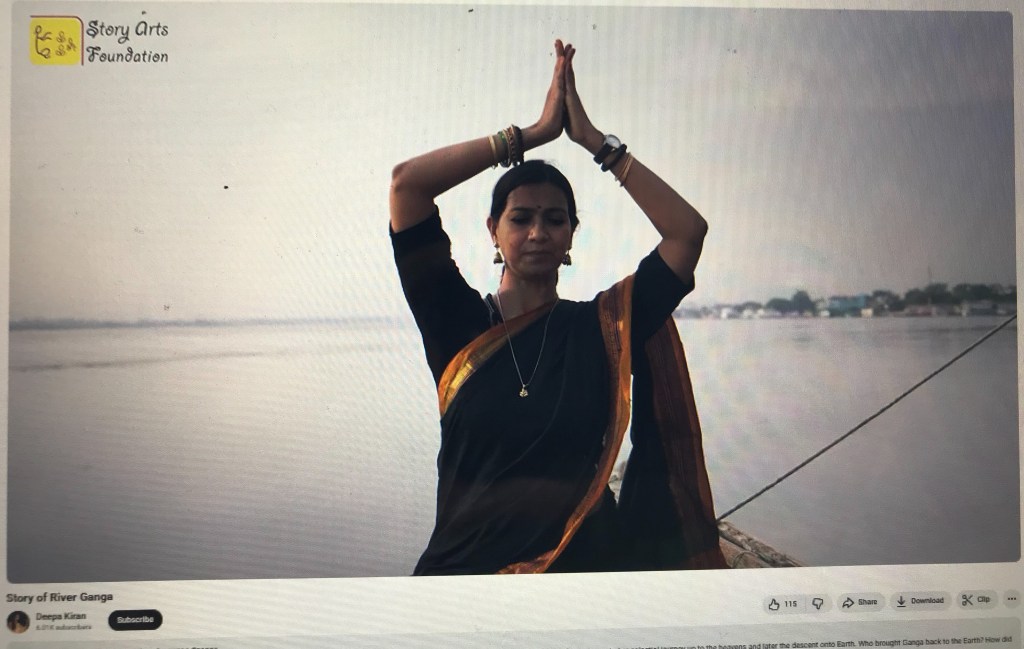
The story of Ganga – A storytelling video by Deepa Kiran

A myth or a sacred story holds much significance for a people and their culture. It is the lived belief system, a way of veneration. When a performing artist and international storyteller as proficient as Deepa Kiran performs the Ganges story – all one can do is stand up in applause. This story is performed on a boat in the Ganges in Varanasi. The boat sways gently in the river and Deepa Kiran seated in it tells us and the river the story of Ganga Devi. The power of Indic storytelling lies in the fact that the more we repeat our stories and the more we transmit them in a tradition approved method, the deeper we sink into yoga and a yogic experience of our culture. In Indian storytelling traditions it, the act of storytelling can be therapeutic for the audience where they attain salvation or Mukti through bhakti. Storytelling is one of the traditional forms of Bhakti yoga. This narration helps us the audience experience a Ganges like purification process, an attainment towards nirvana.

The story of Ganges as performed by Deepa Kiran offers a lens into the traditional Indian stories and storytelling. These traditional stories transport us back into the world of gods, rivers as goddesses and monumental crisis resolution through the tapas of yoga and determination. Told to the tune of the Shank, the sounds of the Ganges, Sanskrit Chants and traditional musical instruments, this is one compelling performance – Story of River Ganga

Dr. Abdul Mohammed Ali Jinnah brings awareness about Endangered Animals through series of stories – Part 2

Could you talk about postmodernism and the theory behind your book?

The books are not very postmodern to start with. But they do become more and more postmodern as we progress. In college, I teach postmodernism. But I don’t just teach postmodernism I live postmodernism, I follow postmodernism. I am situated within the postmodern praxis. It is a part of my life.

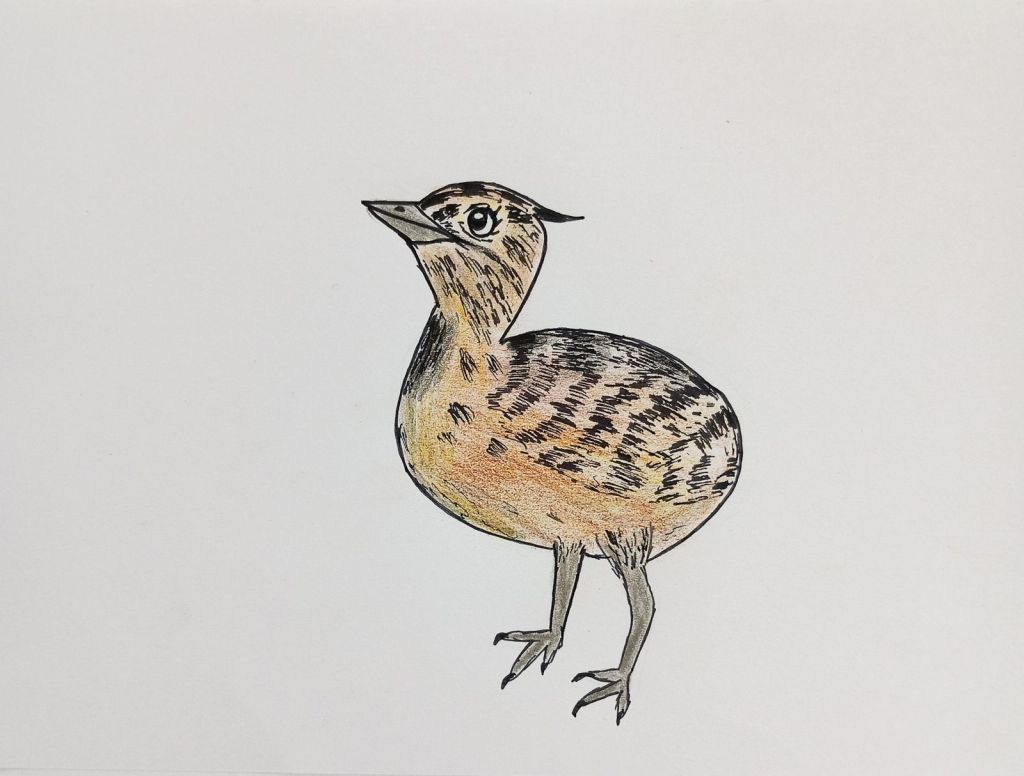
There was a deep urge to talk about ecology. There was not much that they were real books, they were stepping stones. There was this innate urge – I needed to explain how the ghariyal remained in my memory. I wanted to talk about the ghariyal and how it was going extinct. The idea was to communicate all this to children between 5-10.

One can examine these books in the context of eco theory.

Could you talk about children’s books in the ecology space?

When it comes to children’s books in the ecology space. I had read Kaziranga Trail by Shankar. This was Shankar from Children’s Book Trust. I read this in the fifth standard. It initiated me into the Indian Rhinosaurous which was being hunted for its horn. His book featured a Rhino which was being poached. That’s how I as a child got to understand how Rhinos are being hunted for their horns. I understood how animals are being cruelly killed for the material profits. I read the book 100 times, it was my go to book. It was a phenomenal book. I also read Swami and friends at that time which was written for adults but about children.

Then also read Tinkle, Amar Chitra Katha, I had met Uncle Pai also. It helped me balance away my identity as an Indian. Then there was Enid Blyton, Hardy Boys etc. I think detective fiction is needed for young adults. If we had equivalents of Three Investigators and Hardy Boys. There are a few Indian detective stories for children. There could be more focus on this area for rural and semi urban adventure.

Could you talk about the importance of reading encyclopaedias on ecology?

When I was young, one of my father’s friends Mr. Ramachandran, was collecting encyclopaedias for his unborn children. I got to read these books through his lending them to me. There were a lot of How and Why and other encyclopaedias. In these there was an animal encyclopaedia, with A to Z to animals featured. It would start with Aardvark and end with Zebra. I can recollect the names of the animals.

Also, Doordarshan had wildlife series. It was a series purchased from BBC by David Attenborough. Animals fascinated me. There were older ways of understanding nature such by Jim Corbett that were slightly problematic. There are certain things in Jim Corbett that needed questioning, such as when he was on a maneater hunter he would start by killing a King Cobra for good luck. The culture of hunting in the colonial times in gave rise to the English idiom “Big Game”. This idiom itself says a lot. There was no big game in UK so they would hunt foxes and then come to India to hunt the Big Game, as would the Maharajas.

Could you talk about the illustrations?

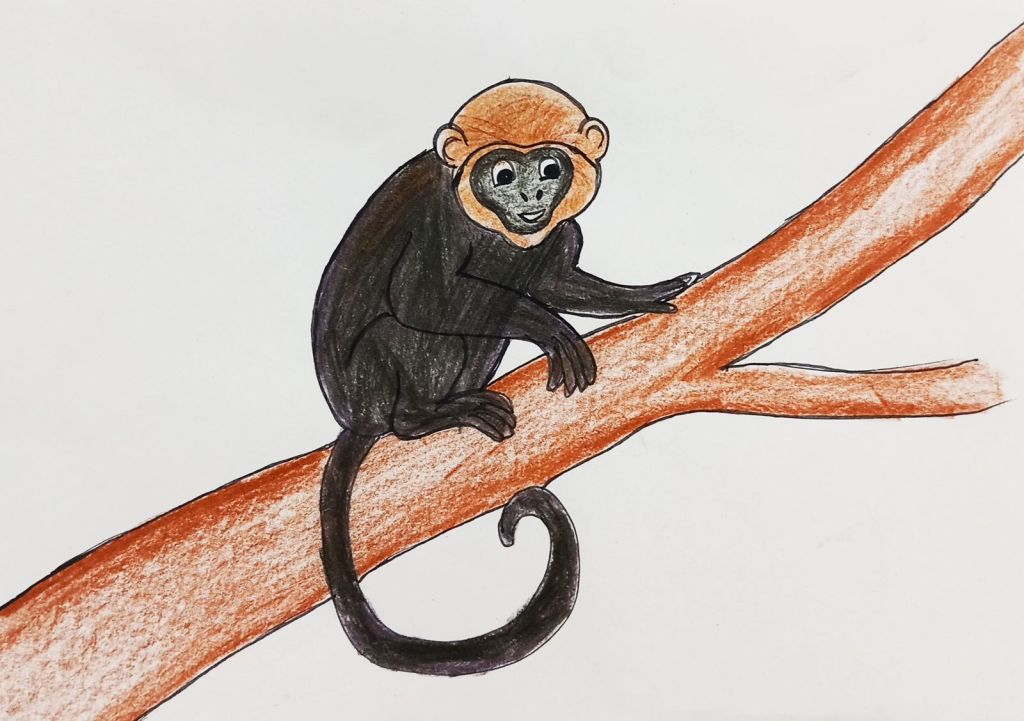
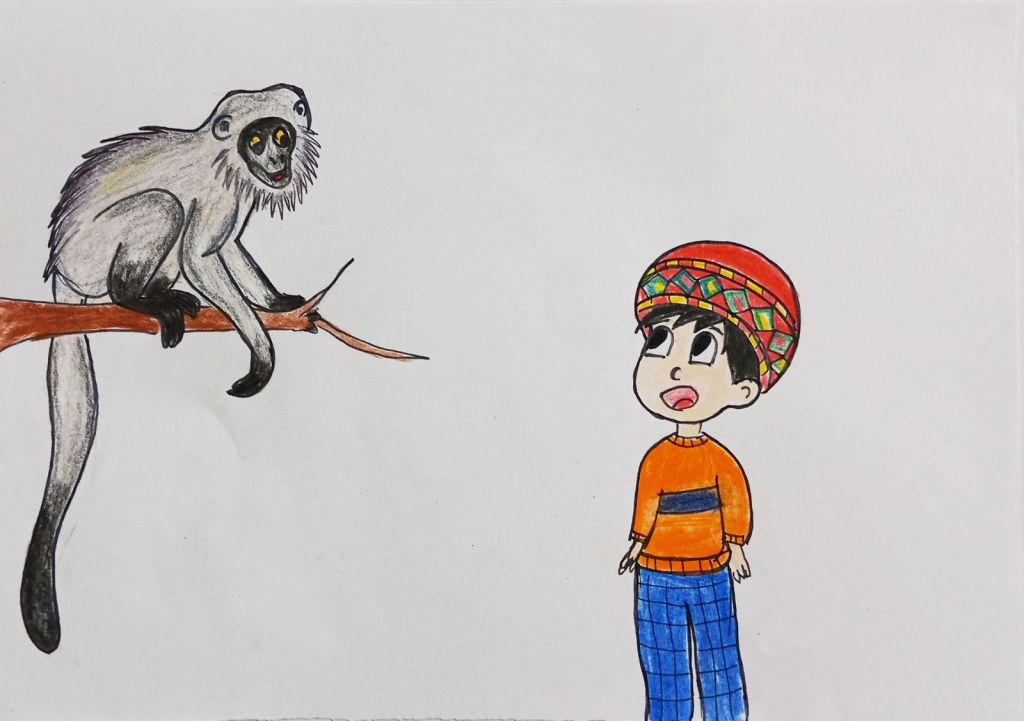
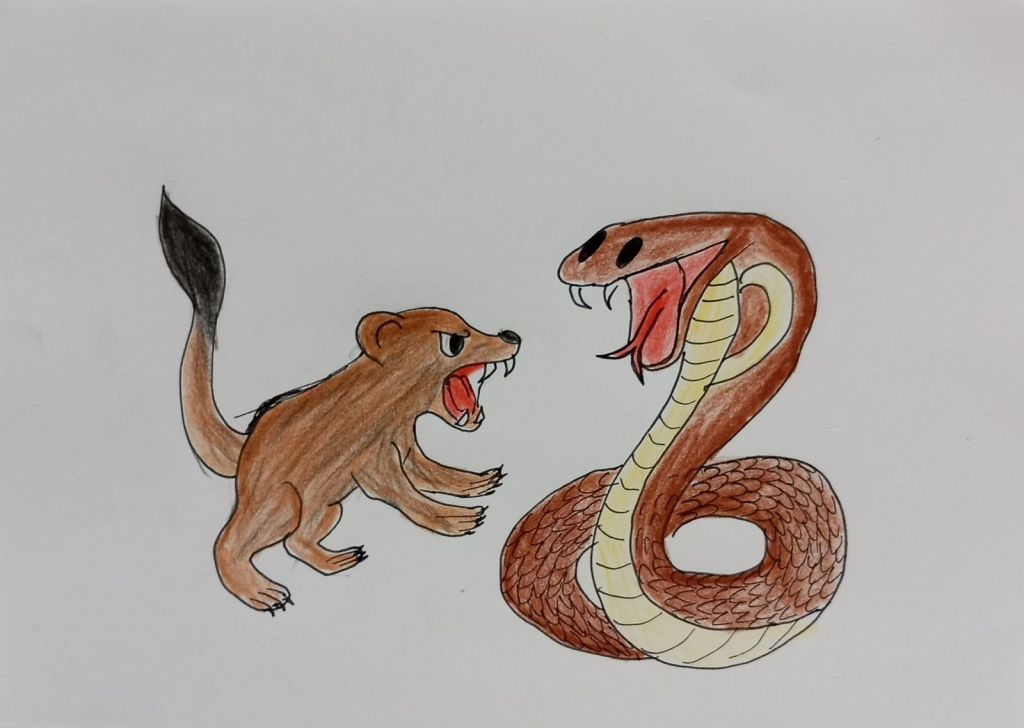
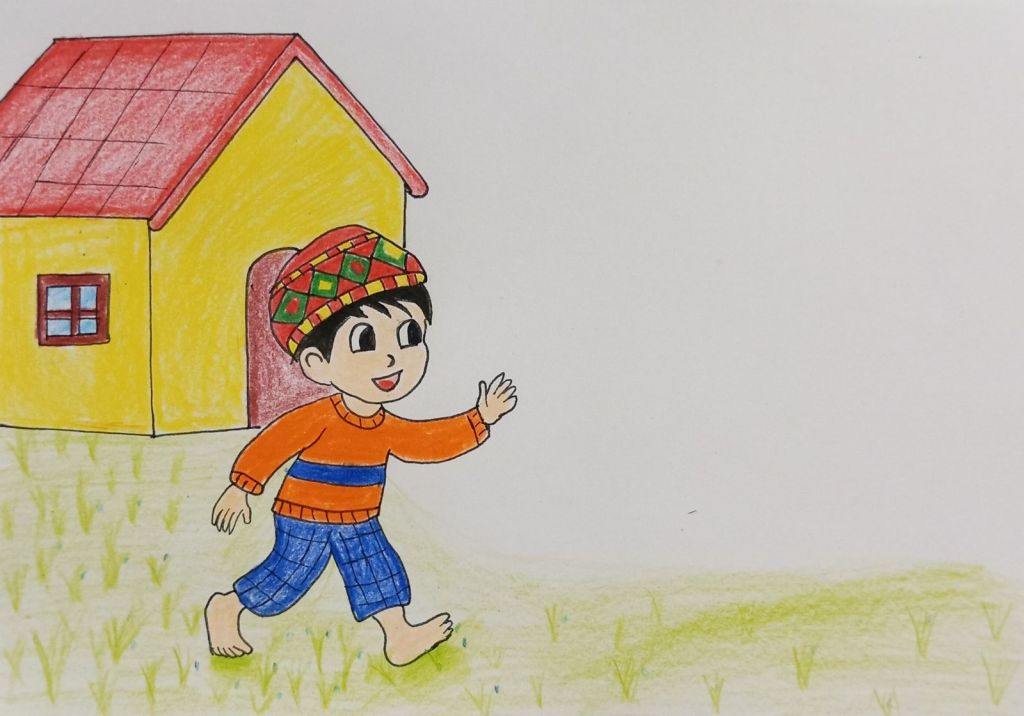
We went to Vellar College and had no idea we would meet two women who were interested in drawing and illustrating for us. We were thinking of doing the Prakriti series and needed illustrators. Samyuktha turned out some wonderful apt illustrations and we are very happy to work with her. The art work has been amazing and we had some idea with the Ghariyal book. We are really happy to have her on board. The art is really good.

Was there someone who enabled this book series?

I really have to thank Rtn. AKS Dr. K Srinivasan who is a philanthropist who funded 10 books.