Logrinn and Sjaelland
Author Archives: Story Practices
Stories from Prose Edda – Audio Retellings – Part 1
King Gylfi and Gefjun
Building a global community of storytellers – Interview with Vrushali Barbare – Part 2
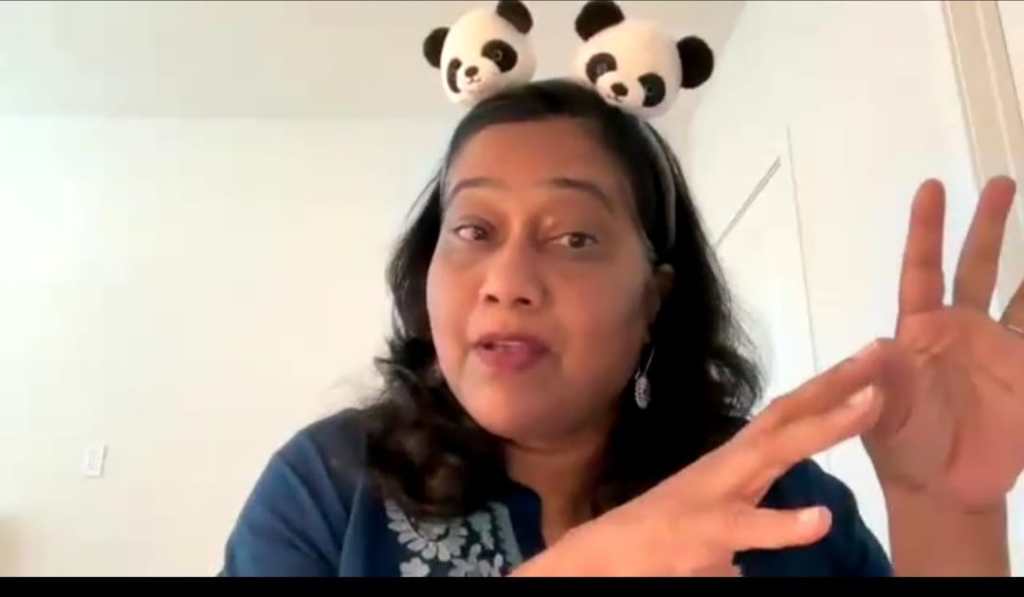
Could you talk about your future plans?
I work with NGOs and women entrepreneurs. I help women to start and manage their brands. I train on publicity, building the brand story and give advice on growing the brand. I conduct workshops on entrepreneurship.
To bring all this work under one roof, I am starting an NGO – Enlit Foundation for Art and Education. The registration is in process. Kathashtakam Global Storytellers Collective – our non profit initiative will be operating under the Enlit Foundation.
Could you talk about your models of functioning?
Enlit Kids is a proprietorship. My husband Amol Barbare is the Co-founder and handles the school consultancy.
Kathashtakam is a non profit initiative. Enlit Foundation for Education and Art will be a social enterprise.
Could you talk about how you promote regional language storytelling?
Most of the content for storytelling is in English. There are so many languages in India. Yet, most of the content is in English. Adults and children both benefit from listening to stories in regional languages. I have been reading Marathi novels. I was educated in Marathi till the 10th standard. When you talk in your mother tongue, it is a totally different experience. English is the language of the world, but we need to encourage and advocate our own regional languages. In Kathashtakam, we promote regional language storytelling and writing. We are doing multiple language storytelling – for instance in the Chennai Storytelling Festival we narrated in Tamil. Hindi, Gujrati and Marathi. I try to focus on regional languages.
Could you talk about the work you are doing in schools?
I work with schools, NGOs, CSR funded schools, tribal schools – we partner with them to create educational resources. We curate library books, teaching resources etc. We create lesson plans to teach through stories. We work with Tribal schools and different schools. For example, we worked with a school for children of commercial sex workers, a school in Pune – underprivileged in every sense of the word. The principal was very appreciative. They never had these kind of resources for these children. This is where impact is being created.
Could you talk about your focus on community building?
I am a part of many business platforms. There are a lot of business platforms for IT, architecture, food, fashion etc. But when it comes to storytelling and literature – it is not a high revenue business. And when it comes to children’s literature, the space is quite narrow and small.
The ecosystem needs to be built and we are building it for Kid lit professionals, storytellers and educators. We need to focus on paid models.
What has been your dream in this space?
Registering the NGO has been my dream. Now we have started the registration process for the NGO. We have a global community – in UK, US, Europe and India.
The imprint of storytelling – Interview with Nidhi Bagaria
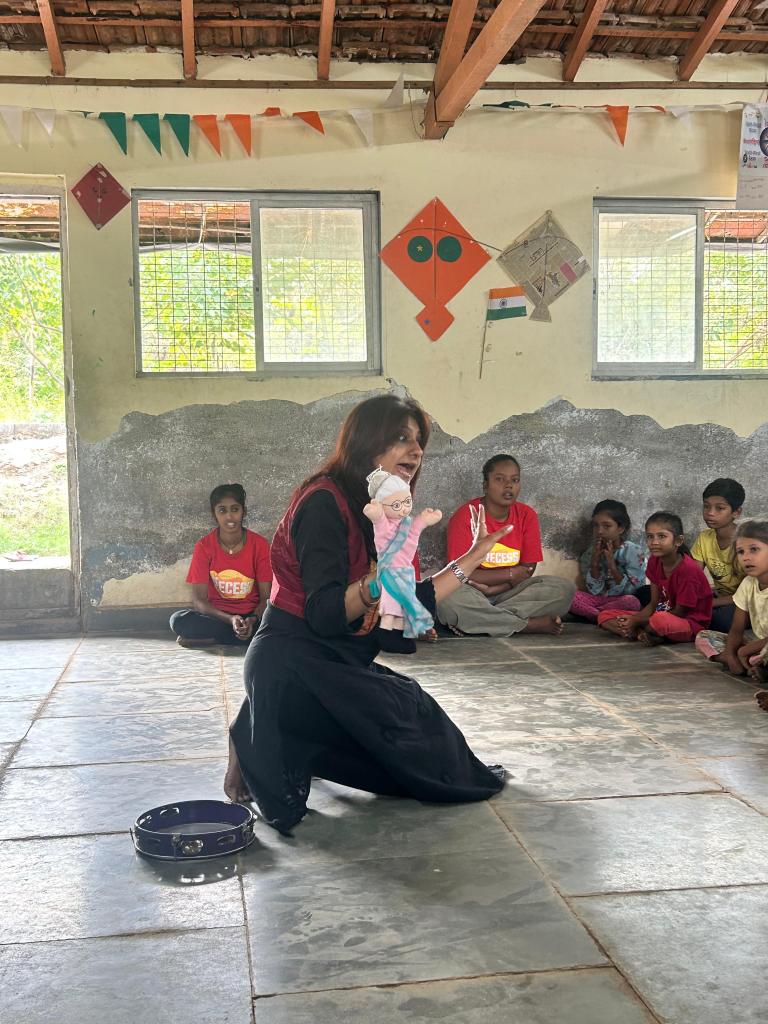
Your career journey?
I began working more than 20 years back. I had a young daughter. It was about living in a nuclear family and there being time constrains. Work would typically consist of 8-9 hours. There was a school in the neighbourhood, and I asked if I could join and teach. They observed me for a week. Then when I started going to the school and interacting with the children, I knew it was my calling. I learnt onsite – I learnt about the curriculum, how to go about teaching children. I started visiting crossword with my daughter – I had an idea that storytelling could be done around the books. I spoke to the store manager, and they asked me to come back in the evening for the interview. They gathered some children and I did the storytelling session. After that I did many events in bookstores. Storytelling helps children build life skills. It helps children imbibe values and character. I have done sessions for schools, NGOs etc. In 2013, I entered storytelling fulltime. I was in teaching, an early childhood educator, a principal, have managed centres. In 2013, I founded The Creative World. Through The Creative World, I have been spreading storytelling to schools. Schools call me to take storytelling session. And depending on the grade and age I prepare for the sessions. I have evolved as a person as a storyteller.
Storytelling has become very popular now. We have different groups. A lot of ways to share stories. I do believe stories are for all audiences. I have told stories to children suffering from cancer and the stories have a healing effect. Stories can bring in happiness. I have told stories to senior citizens. I tell stories to people from different age groups.
Could you talk about your storytelling initiative The Creative World?
I have been creative since I was a small child. I see children as being very creative. We are working with 4 different schools. We have a program for one day a week for 2-5 year olds. I work with adults and teachers and do teacher training. I have an online storytelling program for adults – where I concepts like basic understanding of storytelling and how to become a storyteller. Observation, listening and singing are all a part of these sessions. I like interactions and audiences and children responding to a story.
How do you collect stories for storytelling?
There are some stories that I have created. I have a team of teachers working with me. We gather stories. Stories include – folktales, stories from around the world, Panchatantra and mythology.
What are your personal favourite stories?
There is this folktale about this man called Biku Bhai. He is a miser. And the story revolves around his going to market and his adventures there.
Another favourite story is 5 Spoons of salts from Sudha Murthy’s Grandma’s Bag of stories. This story connects with all age groups.
Could you talk about the importance of stories to be included as a part of the classroom and the education system?
I believe it is very important to have stories in the classroom. As a teacher, I think it is important to have a bag of stories you can share with your students. Children can connect with stories. Stories evoke emotions. Stories should be an important part of the school curriculum. Through stories, children learn to express themselves better. I do remember the teachers who used to tell stories about themselves. Personal stories help us all connect.
Do you think are any specific age groups in school where stories are specifically relevant and useful?
I think storytelling is important for all age groups. I have done stories for 9th to 10th grade. Regardless of age groups, all children of all grades can benefit from stories and storytelling. I know that it helps a lot in the early years, it is however equally required in the later years.
I was doing a session on “Storytelling and Emotional Development” One of the participants was a history teacher. After the session, she did a session with her students on Freedom and incorporated elements from the workshop. She taught freedom in a different way and all enjoyed her class. Any topic and subject can be made interesting through stories.
Everything can be taught with stories – whether you are teaching about water or a plant. If you are teaching about a plant – tell the story of the plant – How the plant will talk about itself, describe itself, tell its own story.
Can you explain the secret of your magical storytelling?
I was told by cousins I had always been a storyteller. Schools and children keep me going. When I do workshops with teachers, I see them open up. To see them evolve in two hours, I am glad I have left an imprint on them.
Storytelling in Action – Some Pictures
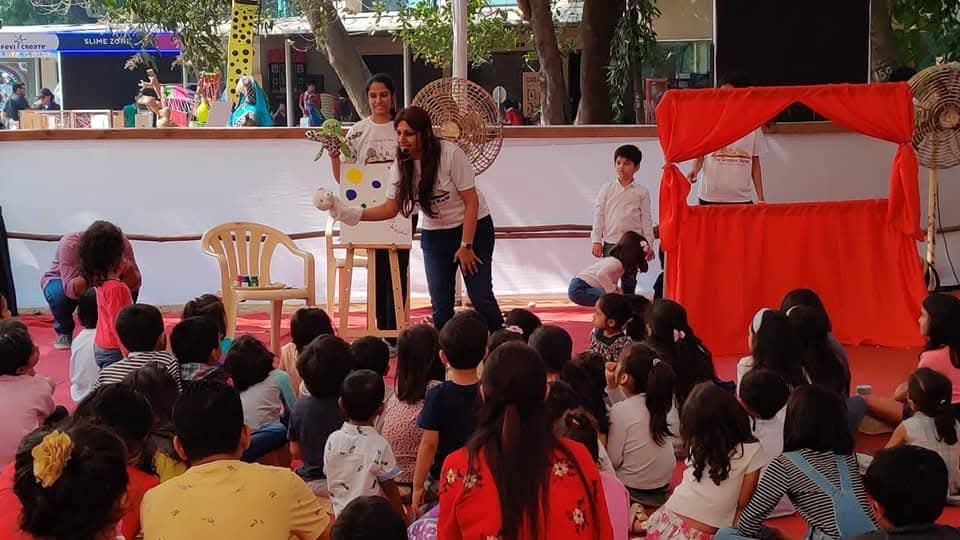
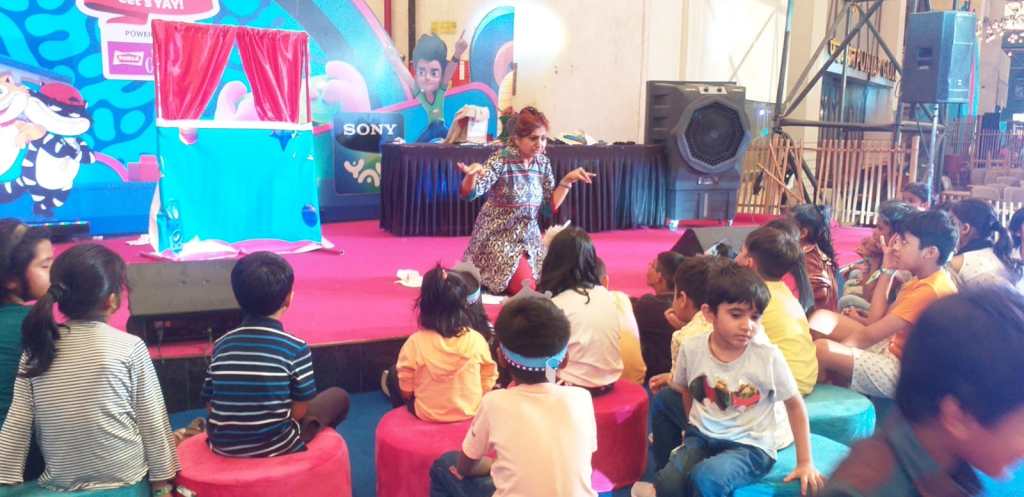
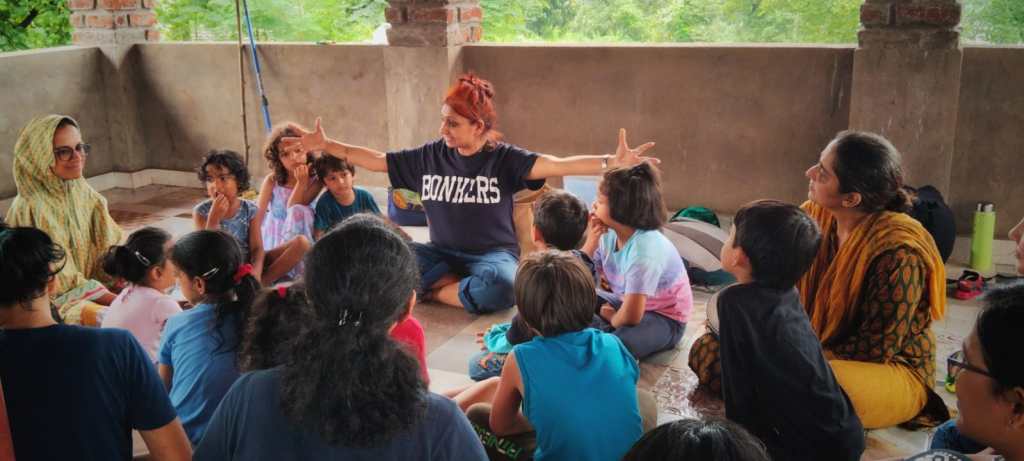
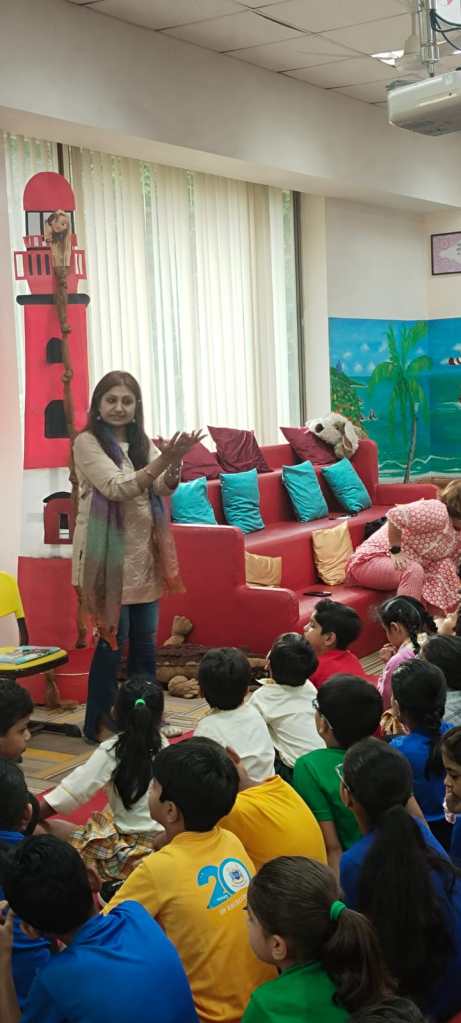
“Stories can create a wonderful imprint” – Interview with Vrushali Barbare – Part 1
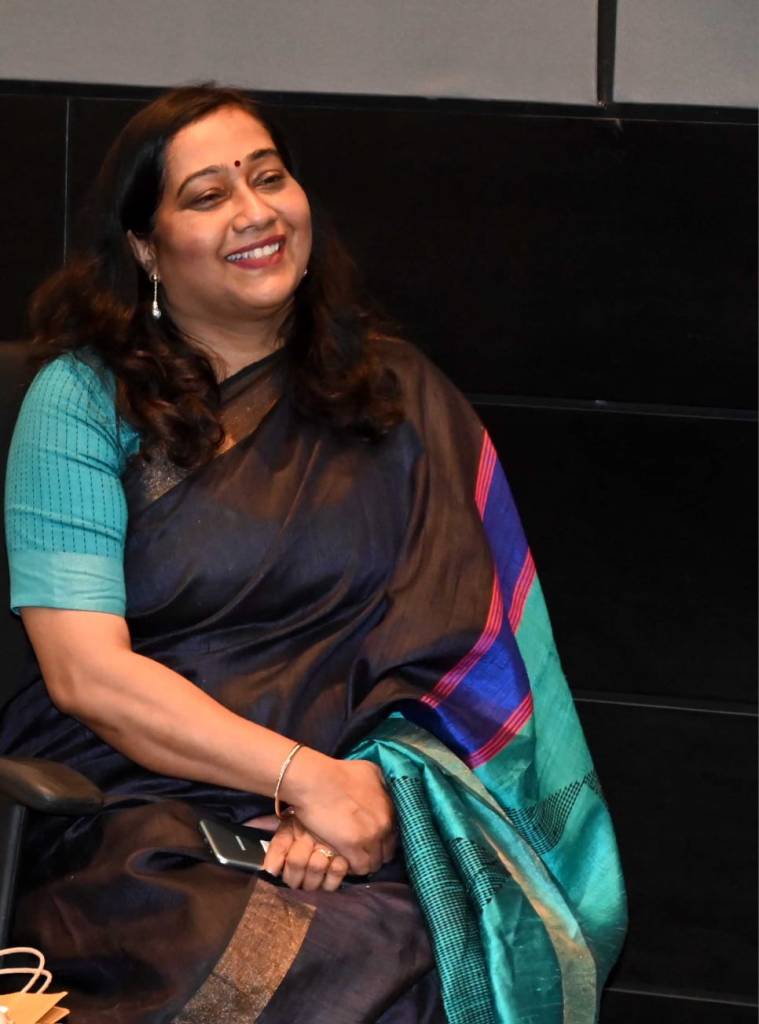
On your career journey?
I am an engineer by qualification. In 1996, I completed instrumental engineering and worked in Computer Education. At CMC, I was handling Authorised Training Centers in Maharashtra.
After that I moved to United States with my husband who was an IT professional. This was between 1998 and 2001. In the United States, I came across the library culture and storytelling,
I also observed that the education system there focused on reading and expression.
When I returned to India, I wanted to bring books and stories to the classroom. I first started a reading club in Pune. I did a two years Masters in Social Work and started working with NGOs. I was working with an Observation Centre for Boys. I would give the children books to read from my home and built a structured program for them. It helped them to imagine a happy world
outside the institutional walls. Out of the 15 boys, 4 boys went to back to school.
I thought that the program is working here – I started working with more with schools, NGOs. It was beautiful to see children read and express themselves through this program. In
2010, we started Enlit Kids in Pune India. We had a book shop with a reading club, book launches and other events. People liked our concept and schools started approaching us for library curation. We started providing resources for schools. Now we have more than 300 schools, from International to tribal schools, where we provide consultancy, meaningful resources and trainings.
Our third initiative is Kathasktakam – a global storyteller’s collective. We collaborated with various organisations in COVID for certification courses for storytellers. To showcase the skills
of the participants, we started our YouTube channel. During Diwali 2020, 8 storytellers did regional storytelling performances in Sanskrit, Marathi, Hindi, English, Konkani and Tamil. This
was our first event. We named the collective Kathashtakam – this name had the power of infinity and cultural significance.
We would meet every now and then to share our storytelling journeys with each other. In 2023, we started the membership program which offers upskilling webinars, trainings and power of a
supportive network.
We are bringing together people from Kid Lit, storytelling and education. We are building an ecosystem for Kid Lit professionals and storytellers to grow together. I believe storytelling is a very effective way to educate, communicate and channelize information.
I think stories can create a wonderful imprint even for adults – writing, teaching or creating brands. We are all moulded by stories. In Kathashtakam – more and more members are joining
from all over India, from Pune, where we are based, to storytellers from all over the world. I am now a certified Storyteller. I got my storytelling certificate from Kathalaya. Geeta Ramanujam had conducted a course for us in the Beginner’s Certificate Course in Pune. I am an alumni of Goldman Sach’s 10,000 women as a part of NSERCEL of IIM Bangalore and Enlit Kids is supported by the organization.
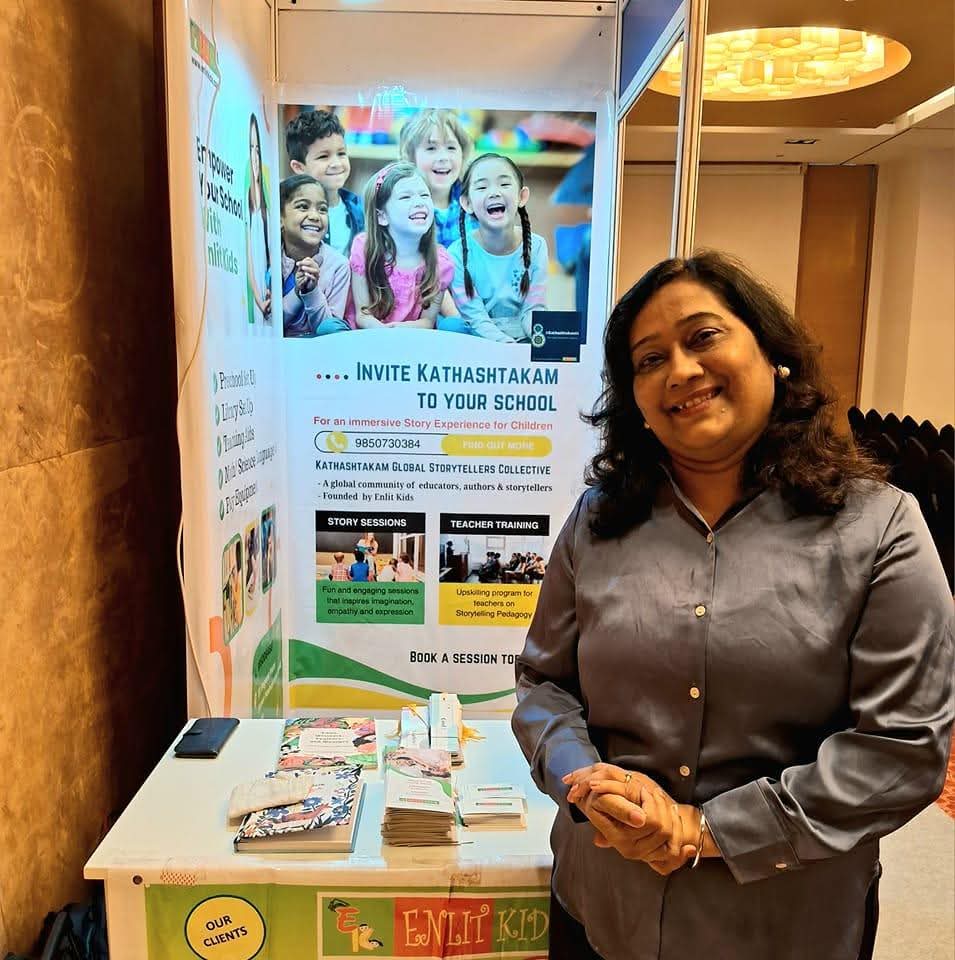
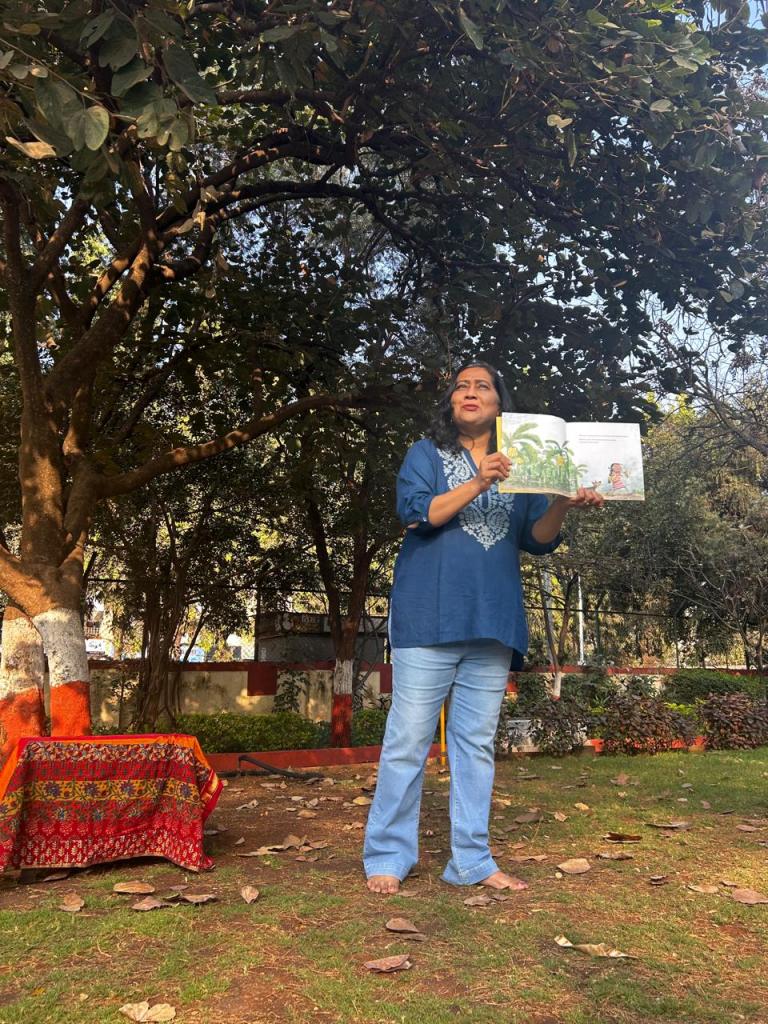
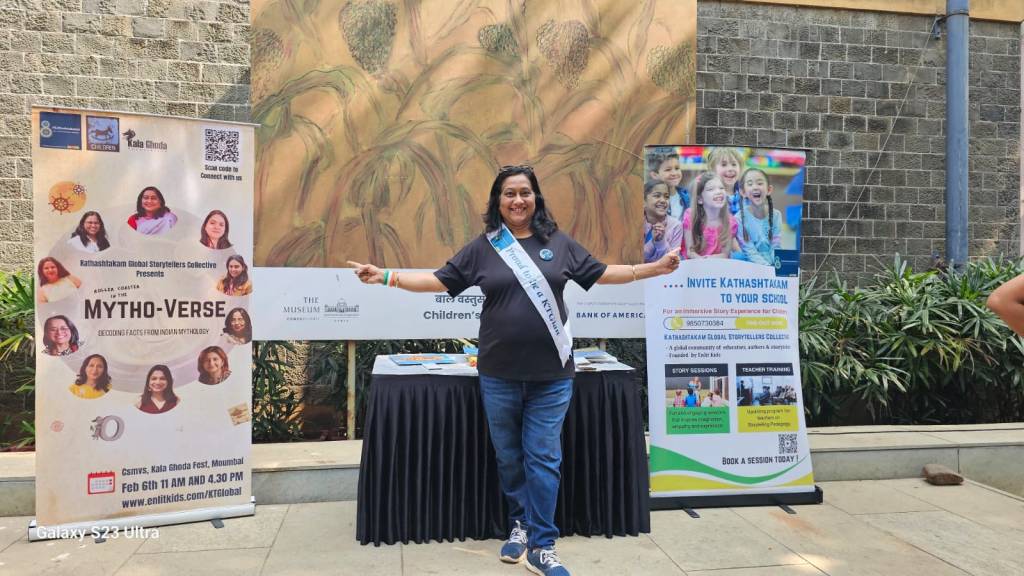
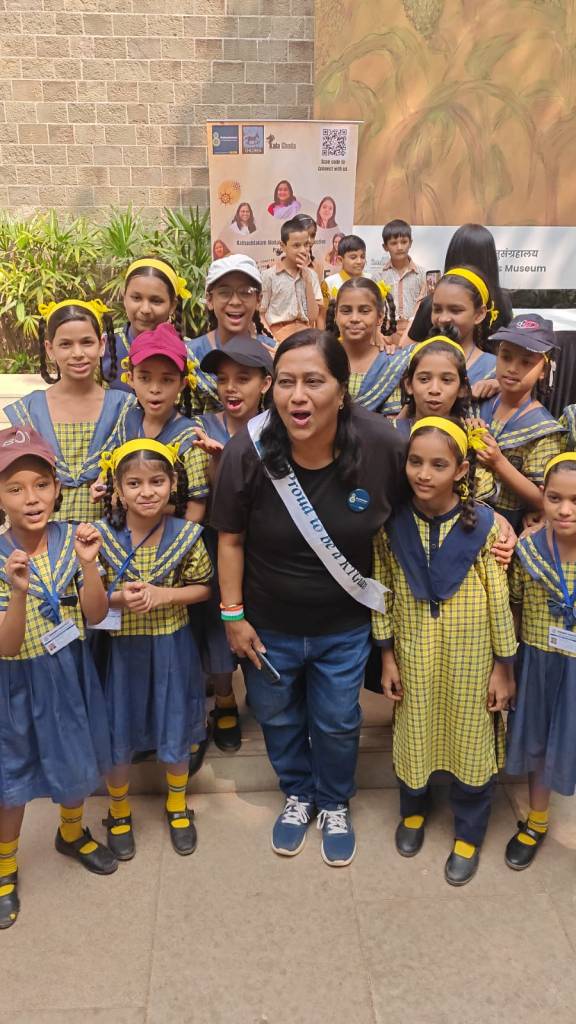
Storytelling in Action – Some Pictures
Excellence in teaching, brilliance in storytelling – Interview with Yeleswarapu Gayathri – Part 2
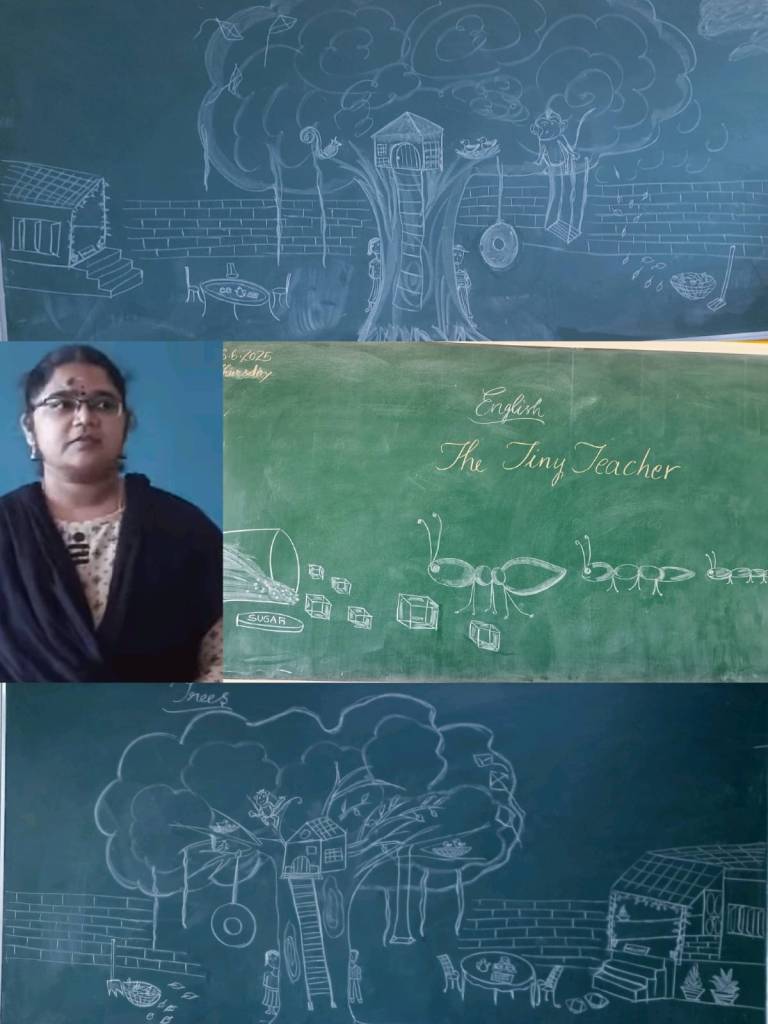
Could you talk about the Indian heritage of storytelling?
We have a great history of storytelling – the day starts and end with stories being shared with the family. Stories will be narrated to the whole family regardless of people who go out for job and people who stay at home, age and other considerations etc. When the stories are shared, the positive stories are shared and memories of negative stories are cancelled.
We have grown up in a such a world where everything is defined as good and evil. Everything is black and white, good and evil – the third option is not there. In the future, children will come to such a world where they will find it difficult to judge everything as good and bad. And it was also added by Sir at the end of the PPAI course, “Don’t teach children only about good and bad.” I like this and support this in all my work.
We have grown up in this world accepting the fact that there are only two things opposite to each other like good or bad Black or White but we must be ready to accept that are also something’s beyond good, bad like there is a stage called normal which is not good and also which is not bad. Through story telling we can prove some of the facts that won’t exist at all like “Doing nothing is also normal and ok if it’s not going to harm anyone”.
Can you talk about your use of music in storytelling?
Music is great. I won’t be able to start a day without music. I am doing my youtube channel only for the music.
Could you talk about your storytelling style?
I want that children should pass on their stories to others. My style consists of music, instruments and voice modulation. People do rely on content. We must be able to create each other’s every day.
Could you talk about why you would encourage others to take up storytelling?
Story telling is not like any other art like painting or drawing to be sit and learnt and then implement it later but it should be learnt practically.. it means lot of focus patience and accepting reality…
We must have the ability make people to travel through different worlds from their sitting room. We are living in the world of beliefs that Lord Krishna or Lord Rama lived like that so we also should be like that…which we learnt from their stories the mankind evolved….
It’s like
If you have great responsibility on changing the world and people
Keep going with story telling…
Make people believe your words such that the next moment, next day of their life starts with your words. The legacy of storytelling from Harikatha to Movie whether a short story or series of novel. We must make a move towards blending technology with storytelling and teach the next generation about Harikatha, Tholubommalata, our traditional arts and bring back the Art form of India.
“Teaching as a calling and a call within a calling” – Storytelling: Interview with Yeleswarapu Gayathri – Part 1
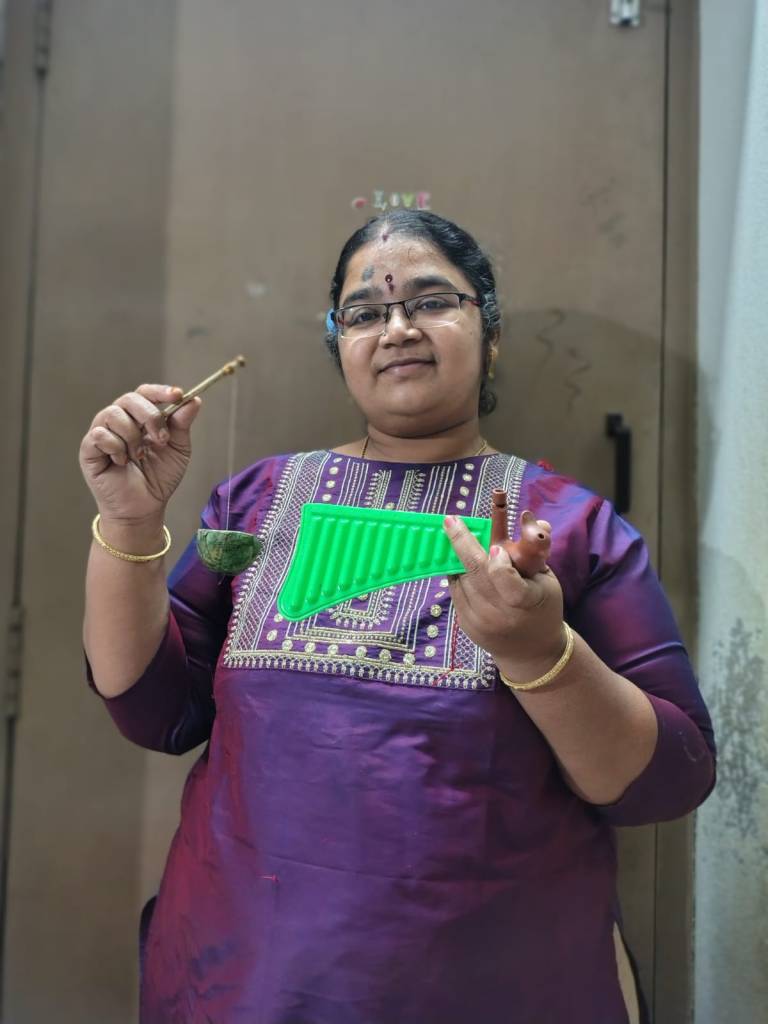
Could you talk about your career?
I have been teaching English since 16 years. Teaching was not in my career plan. It has been a passion now. Day by day I take up an assignment of teaching English not as a subject but as a language. Storytelling has become a major part of English teaching – using art, music, dance as my tools in the classroom teaching. I have been living in Nellore, Andra Pradesh since 2006.
I don’t believe in four wall teaching. I often take my classes in the garden or in the playground. Mostly classes are kinetic and radiating energy. They are playful, active and energetic.
Could you talk about the International storytelling sessions you have been doing?
I got introduced to the Chennai Storytelling Festival during Covid days. I found it online – a space where people can register and share stories – adults and children. I was a listener for a few years. After I did the storytelling course at Philosophical Practitioners Association of India and Story Arts Foundation conducted by Story Arts Foundation Founder Deepa Kiran. Deepa Kiran is my inspiration and she guided me through my teaching and storytelling activities. I participated in an adult storytelling session at the Chennai Storytelling Festival. I have an upcoming event for children at Chennai Storytelling Festival. The sessions are such that people can sit and listen too. We didn’t know how two hours passed with people from all over the world narrating stories – Africans, Americans etc,. everyone was in different time zones.
During my session, I started my introduction as being from Nellore, India. I was proud to be Indian. I was proud to be Indian in an international story festival. It was just smooth flow. They appreciated me for keeping up the time. I finished my story with a question. They said, “you finished an international storytelling session with a question not a moral.” All were feeling the narrative was great. I felt so happy to be there.
What was the theme of story?
The theme was the hope of living. We don’t have to wait for a great power to come from above. It comes to you at the right time and right place.
Why would you recommend storytelling as a practice to teachers?
I feel storytelling won’t work beyond language teaching contexts through there are people working in storytelling for maths, science etc. In English language teaching, storytelling can move children to sit in class and listen to values practicals.
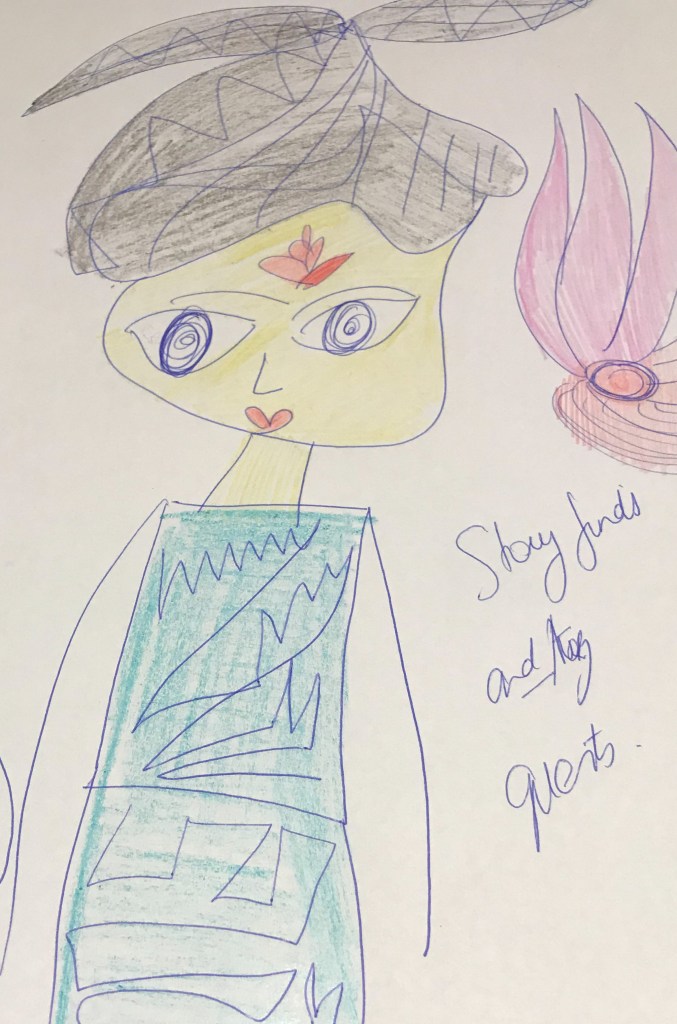
Story finds and story quests
Kuttu Thatha and the importance of good will – Interview with Uma Venkatesan – Part 2
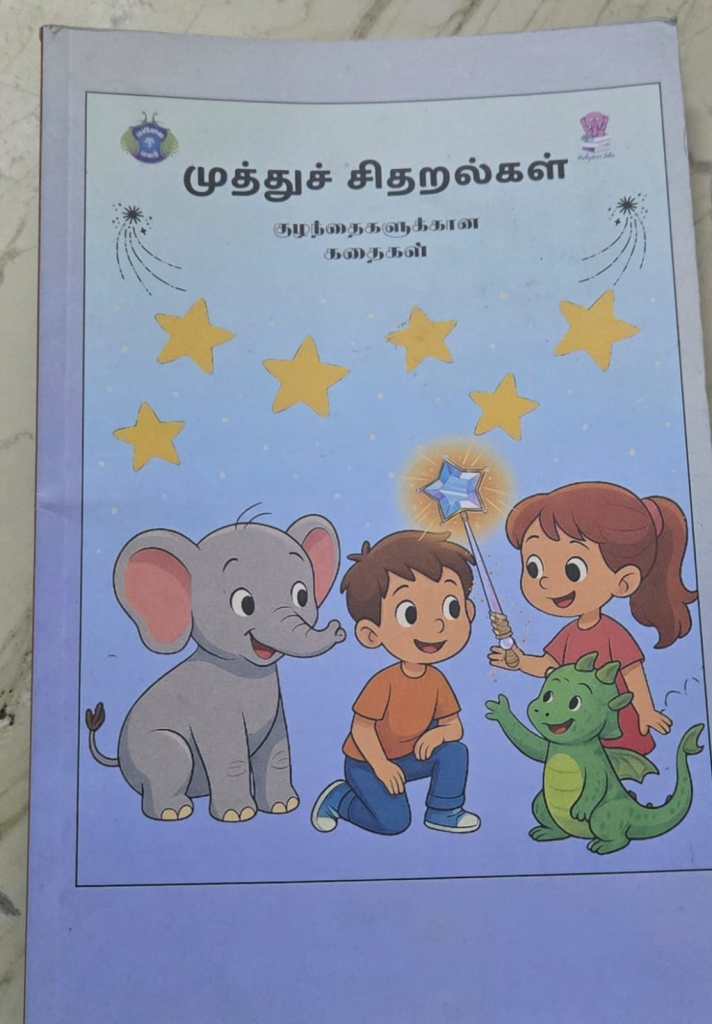
Could you talk about your books written for Pachyderm Tales?
I have written two books – Kuttu Thathavum Chutty Kuzhandaigalum and Paroupkaram idam sarira. More books are on the way.
Extending good attitude towards others, extending good words and good relationship with them are some of the themes in these two books.
Could you talking about working with Pachyderm Tales?
Uma Aparna is giving very good space for writers and keep on encouraging New Writers giving various titles for the Book on topic for Stories they wish to write. They are working with different audiences – children to old age persons. Uma is giving so many people a writing space. She is reenergizing the writers who are able to write for social causes. They encourage good writing. I won the Pachyderm Tales third prize for Kuttu Thatha and Chutty Kuzhandaigalum.
Could you talk about your writing process?
Books should not very scholarly and be able to talk to younger audiences. They should tell children how to be good to parents, society, in areas they are interested in working with, working for Indian causes and working in the global context with global understanding.
Children are growing as plants and fruits. Through books, they should learn about social development and their role in it. Whatever path they take up be it engineering, as authors, or saving human lives they should do it with social causes in mind.
Could you talk about your Story Kittu Thathavum Chutti Koyandigalum ?
“Kuttu Thathavum Chutty Kuzhandaigalum” is the imaginary story of a socially aware and concerned retired teacher. He starts and runs an orphanage for children – helping them, sending them to school starting from LKG, UKG and teaching them about getting up early in the morning, doing yoga, exercises, teaching them about punctuality etc. The orphanage started with 2-3 children and goes up with 40-50 children. The orphanage teaches children about different aspects of the world. Kuttu Thatha is in his 60s. I am 60 years old and I have seen many people of this age doing things like Kuttu Thatha.
Could you talk about your second Story Paropakaram idam sariram?
The second Story is on how the purpose of the body is to be utilised to live for others. It is an imaginary collection of short stories. The tongue is something that can do wonders – it can spread both good and evil. The stories talk about the important of being kind and courteous.
Aspects of Indian Culture – Interview with Uma Venkatesan – Part 1
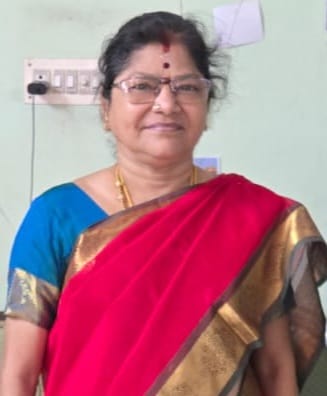
Could you talk about aspects of Indian culture?
Indian Culture is based on shastrangal. It has been with Indians before the fields of science and technology. It comes from the Vedic heritage. The Saptha Swaras have come to us starting from the Vedas. There are 4 vedas – Rig, Yajur, Sama and Atharvana. I hail from a Yajur Veda family. In the olden days, the rishis followed the Hindu culture. Indians are now taking this culture to the whole world. Attracted by the Vedic Heritage of India, many foriegn People from different countries come and settle in India and follow Indian culture.
Could you talk about aspects of Vedic culture?
Our Madi, acharam, following our religeous rites, all came to us from the Vedas. You need to realise the Atman. Yogic protocols have to be followed to realise the Atman. The Self is to be realised. The Atman or the Self is to be realised through the Vedas.
Siva, Vishnu and Brahma are the three aspects of the universal consciousness.
Sivan has no mother or father. He creates the world for people to do well in it. Vedic knowledge has to be followed.
The creation is done by Brahman (Padaithal)
The preservation is done by Narayana, just to repeat his name is to preserve ( kathal)
The transformation is done by Sivan (azhithal)
Could you talk about Atman or Vedanta?
Atman is inside us. Atman is equal to life. The body perishes but the Atman does not perish. The Atman is in reality Paramatman only.
The three gunas are
Sattva – Doing everything positively
Rajas – Opposite of tamas, doing everything at lightning speed.
Tamas – Sleeping, non awareness of time, lethargic activity
Could you talk about Indian shastragal?
It is important to teach slokangal. The Thirukural has many verses that teach dharma. Wearing vibhuti, telling slokas, getting up before sunrise which is Brahmamuhurtam and sanctified time, lighting oil lamps, are some shastrangal that make life prosperous.
In the Geeta, Krishna is in human form. He accepts all and befriends all – cows, gopis etc. He shows how to live. Avaiyar in Athichudi discusses dharma for all to understand. All this is satsang – Bal Vikas, slokamgal, Vedas to be taught to children.
Karakre vasate Lakshmi
Kara madhye Saraswathi
Kara mooletu Govinda
Parabhate kara darshanam
Our culture talks about how Jeevatman and Paramatman are same.
Tat tvam Asi and Aham Bhramasmi in the Vedanta mean that ‘I am God myself’ but not in egoistic manner. We need to look within ourselves to find Atman.
Could you talk about the philosophy of Bhakti?
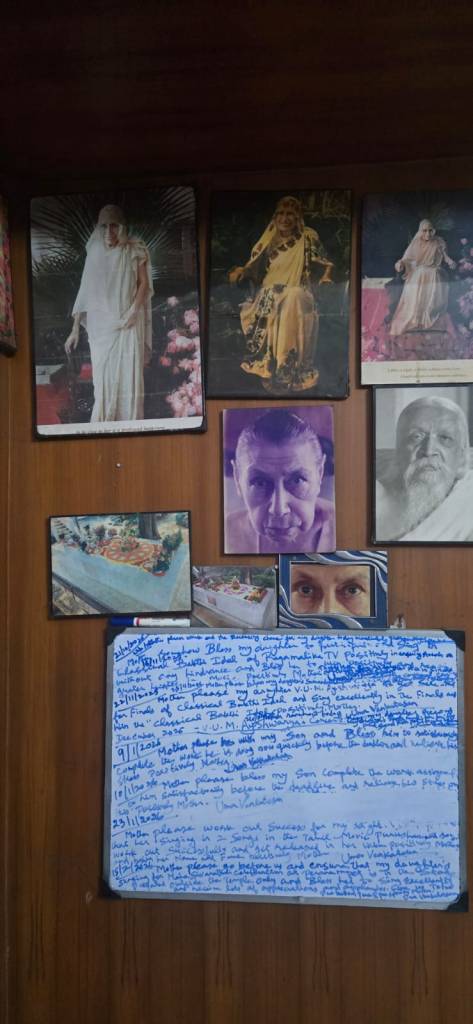
We all want to do something. We do take help from someone else. Through Bhakti and dhyan you take help from God. We call God is the various names. We say Muruga with affection. Bhakti is shakti and an opening into the supramental.
What is Sri Vidya?
Ambhal is respected in this marg. Bhakti is moola marga to realise the Supreme Power, the God. SriVidya is the path of Ambhal. When we progress in Srividya we get Tejas. There are many levels in Sri Vidya Upasana. We extol Ambha in this pathway as Jadadamba.
Could you talk about Sthree Dharma?
The woman is expected to be philosophical guide of the household. Shakti was given to women only. Women can use both left and right brains
 Story Practices